

Most American bettors rely on gut instincts rather than hard numbers, even though professional sports investors have proven the power of data analysis. In the high-stakes world of sports betting, misunderstanding or misusing statistics can lead to avoidable losses. With over 90 percent of recreational bettors falling into predictable analytical traps, learning how to separate quality data from misleading patterns can make all the difference in finding genuine value and avoiding costly mistakes.
Table of Contents
- Betting Data Defined And The Common Pitfalls
- Comparing Data-Driven Vs. Gut-Driven Betting
- Key Analytical Strategies For Positive Ev Bets
- Spotting Sportsbook Bias And Hidden Value
- Critical Mistakes Sharps Avoid With Data
Key Takeaways
| Point | Details |
|---|---|
| Understanding Betting Data | Betting data requires rigorous analysis; raw numbers without context can mislead, emphasizing the importance of a systematic approach. |
| Avoiding Statistical Pitfalls | Recognize the limitations of data, such as publication bias and sample size issues, to prevent flawed decision-making. |
| Data-Driven vs. Gut-Driven Betting | Professional bettors rely on data-driven strategies that emphasize statistical analysis, while amateur gamblers often make emotional, intuitive bets. |
| Critical Mistakes to Avoid | Successful bettors maintain discipline by implementing clear models and sound bankroll management, avoiding emotional and impulsive decisions. |
Betting Data Defined and the Common Pitfalls
Betting data is not just a collection of numbers—it’s a mathematical framework for making strategic sports investment decisions. Professional bettors understand that raw data means nothing without proper analysis and context. Data interpretation separates the sharp investors from recreational gamblers.
The most dangerous trap in betting analytics is misusing statistical arguments, which can lead to false conclusions. Most amateur bettors fall into predictable patterns: they mine massive datasets searching for correlations without predefined hypotheses, dramatically increasing their chances of drawing spurious results. This statistical fishing expedition creates a dangerous illusion of insight.
Professional bettors recognize that data has inherent limitations. Publication bias means most available information skews toward positive or significant findings, potentially misleading investors who don’t understand statistical nuance. Smart bettors triangulate information from multiple sources, understanding that no single dataset tells the complete story.
Key red flags in betting data include:
- Overemphasizing small sample sizes
- Ignoring contextual variables
- Assuming past performance guarantees future results
- Failing to account for regression to the mean
Pro Tip: Statistical Discipline: Develop a systematic approach to data analysis. Treat betting like an investment strategy—create clear criteria for evaluating information before placing any wagers, and always be willing to discard data that doesn’t meet rigorous analytical standards.
Comparing Data-Driven vs. Gut-Driven Betting
The battle between data-driven and gut-driven betting strategies represents the fundamental divide between professional sports investors and amateur gamblers. Intuitive betting relies on emotional impulses, personal hunches, and unverified assumptions—a dangerous approach that transforms sports wagering into little more than sophisticated guesswork.

The language of betting as a statistical communication tool reveals why data-driven methods systematically outperform intuition. Professional bettors understand that emotions are statistical noise, while cold, mathematical analysis provides reproducible insights. Gut-driven bettors chase momentum and make reactive decisions based on recent performance, while data-driven investors create predictive models that account for multiple variables and long-term trends.
The core difference between these approaches isn’t just methodology—it’s philosophical. Gut-driven bettors believe in luck and personal intuition, whereas data-driven investors treat sports betting like a mathematical investment strategy. They construct predictive models that:
- Analyze comprehensive historical performance data
- Weight variables objectively
- Minimize emotional interference
- Calculate precise probability distributions
Pro Tip: Systematic Approach: Transform your betting from gambling to investing by creating a standardized decision matrix. Document every bet’s rationale, track your performance meticulously, and continuously refine your statistical models based on empirical results.
Here’s a comparison of data-driven and gut-driven betting approaches:
| Approach | Decision Basis | Impact on Consistency | Risk Mitigation Method |
|---|---|---|---|
| Data-Driven | Statistical analysis, models | High—decisions reproducible | Bankroll and probability modeling |
| Gut-Driven | Intuition, emotion | Low—prone to swing and bias | Reliance on luck, little control |
Key Analytical Strategies for Positive EV Bets
Positive Expected Value (EV) represents the mathematical holy grail of sports betting—a strategic approach that transforms gambling from a game of chance into a calculated investment. Professional bettors don’t chase wins; they hunt for statistical advantages that consistently tilt the probability landscape in their favor.
Advanced machine learning techniques have revolutionized how bettors identify value opportunities. Modern analytical strategies leverage complex algorithms like support vector machines and neural networks to dissect historical performance data, uncovering inefficiencies that traditional handicappers miss. These computational models can process thousands of variables simultaneously, revealing nuanced patterns invisible to human intuition.
The core of positive EV betting revolves around three critical analytical strategies:
- Market Inefficiency Exploitation: Identifying systemic biases in betting lines
- Probabilistic Modeling: Constructing predictive frameworks that quantify risk
- Comparative Performance Analysis: Measuring team/player metrics beyond surface-level statistics
Understanding these strategies requires rejecting conventional wisdom. Professional bettors recognize that betting markets aren’t perfectly efficient—they’re human systems prone to psychological and structural biases that create exploitable mathematical opportunities.
Pro Tip: Systematic Approach: Build a disciplined betting model that assigns numerical weights to each analytical variable, allowing you to consistently identify and isolate bets with statistically proven positive expected value.
The following table summarizes the most critical analytical concepts for finding positive EV bets:
| Analytical Strategy | Key Focus | Typical Outcome |
|---|---|---|
| Market Inefficiency Analysis | Detecting line-setting errors | Find undervalued betting options |
| Probabilistic Modeling | Estimating event probabilities | Select bets with higher expected return |
| Comparative Performance | In-depth team/player metrics | Uncover hidden value opportunities |
Spotting Sportsbook Bias and Hidden Value
Sportsbook bias represents the mathematical goldmine that separates professional bettors from recreational gamblers. These systemic inefficiencies are not random errors but predictable patterns embedded within betting markets—waiting to be exploited by those with analytical precision.
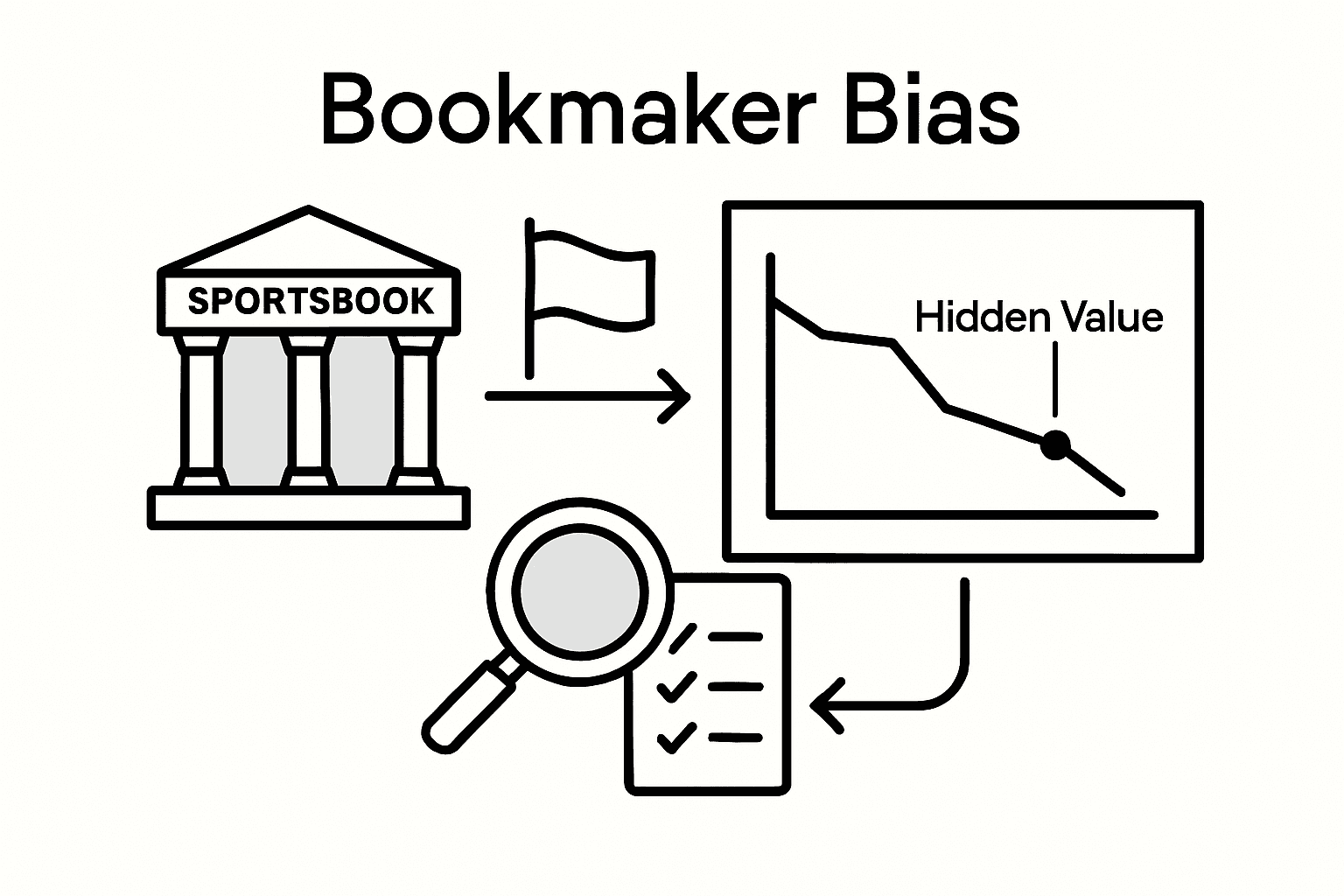
Mispricing in online sportsbooks reveals crucial insights into how betting platforms create exploitable opportunities. Most sportsbooks rely on standardized algorithms that overreact to recent performance, creating consistent blind spots that sophisticated bettors can strategically leverage. These biases emerge from fundamental human psychological tendencies: recency bias, overconfidence, and incomplete statistical modeling.
Key indicators of sportsbook bias include:
- Dramatic line movements without substantive performance changes
- Consistent overvaluation of public-favorite teams
- Systematic underpricing of specific player or team matchups
- Predictable patterns in point spread and total adjustments
Understanding these biases requires a disciplined, mathematical approach. Professional bettors don’t just identify these inefficiencies—they build systematic models that quantify and predict them with statistical precision. The goal isn’t to win every bet, but to consistently find value where the market has miscalculated risk.
Pro Tip: Value Hunter: Develop a comparative analysis framework that tracks sportsbook line movements across multiple platforms, identifying consistent discrepancies that signal potential mispricing and hidden statistical advantages.
Critical Mistakes Sharps Avoid With Data
Data discipline separates professional sports investors from recreational gamblers. Sharp bettors understand that raw information means nothing without rigorous analytical frameworks and strict psychological control. They treat betting as a mathematical investment strategy, not an emotional rollercoaster.
Betting behavior analysis reveals critical patterns that distinguish successful investors from losing players. Less experienced bettors typically make catastrophic errors: placing oversized single bets, chasing losses, and allowing emotional impulses to override statistical probability. Professional bettors construct systematic approaches that eliminate these fundamental weaknesses.
The most destructive mistakes sharp bettors methodically avoid include:
- Betting without a predefined mathematical model
- Ignoring bankroll management principles
- Overvaluing recent performance
- Making emotional reactions to short-term losses
- Failing to track and analyze individual bet performance
- Assuming past results guarantee future outcomes
Successful sports investors recognize that consistent profitability requires more than intelligent data—it demands iron-clad psychological discipline. They build probabilistic models that remove human emotion from decision-making, treating each bet as a calculated investment with measurable risk and potential return.
Pro Tip: Risk Management: Create a strict betting protocol that limits individual wager size to 1-2% of your total bankroll, ensuring no single bet can catastrophically damage your long-term investment strategy.
Gain a Sharp Edge with Data-Driven Betting
The article highlights a common challenge in sports investing: relying on gut feelings and misinterpreted data leads to costly mistakes and missed opportunities. You want to avoid emotional swings and statistical pitfalls like overemphasizing small samples or ignoring sportsbook bias. The key is adopting a systematic, mathematical approach that focuses on Positive Expected Value bets and rigorous data discipline.
At Stats Bench, we understand these exact struggles. Our daily models analyze thousands of data points including usage rates and defensive matchups to uncover hidden market inefficiencies that sportsbooks overlook. Whether you are focused on NBA Player Props or NFL Spreads, our tools provide the analytical edge you need to transform your betting from guesswork into a long-term investment strategy. Explore how you can build a data-driven betting discipline by visiting our Cheat Sheet tools.

Take control of your sports betting today by moving beyond gut instincts and emotional reactions. Visit Stats Bench Cheat Sheet now to discover actionable insights and start identifying positive EV opportunities before the market adjusts. Your sharp edge awaits with disciplined, statistically backed analysis.
Frequently Asked Questions
What is betting data and why is it important for sports betting?
Betting data is a systematic collection of quantitative information used to make informed decisions in sports betting. It helps bettors analyze trends and probabilities, providing a sharper edge over recreational gamblers who rely on intuition.
How do professional bettors use data to gain an advantage?
Professional bettors analyze historical performance, market inefficiencies, and statistical models to identify value bets. They eliminate emotional factors from their decision-making, treating betting as a mathematical investment.
What are some common pitfalls in interpreting betting data?
Common pitfalls include overemphasizing small sample sizes, ignoring contextual variables, and assuming past performance guarantees future results. These mistakes can lead to false conclusions and poor betting decisions.
How can I develop a disciplined approach to betting using data?
To develop a disciplined approach, create a systematic framework for evaluating data, document your betting rationale, and manage your bankroll effectively. Regularly review your performance to refine your models and strategies.
Recommended
- StatsBench – Sports Analytics & Betting Props
- StatsBench – Sports Analytics & Betting Props
- Free Player Prop Cheatsheet | StatsBench Newsletter
- Free NBA Player Prop Cheatsheet (Daily Trends & Edge) | StatsBench
- What are prediction markets? The booming industry bypassing US gambling laws
Free preview
See today’s MLB player props on StatsBench
Live lines, last-10 hit rates and the best price across about 60 books. No account needed to look.
Open the MLB player props board →
Prefer email? Get the daily picks newsletter.