

Over 90 percent of American bettors rely on just a handful of familiar sources when making decisions, yet the most successful strategies begin with deeper data collection. In a world where every piece of information can tip the odds, knowing how and where to gather betting data matters more than ever. This guide reveals how careful sourcing, bias detection, and smart analytics can separate winning American sports investors from the casual crowd.
Table of Contents
- Step 1: Collect Accurate Betting Data Sources
- Step 2: Identify Market Bias And Volume Shifts
- Step 3: Apply Statistical Models To Spot Edge
- Step 4: Validate Positive Expected Value Opportunities
- Step 5: Automate Analysis Using Stats Bench Tools
Quick Summary
| Key Insight | Explanation |
|---|---|
| 1. Use Diverse Data Sources | Collect data from various reputable sources for better accuracy in betting analysis. |
| 2. Identify Market Bias | Recognize patterns and inefficiencies in betting markets to gain a strategic advantage. |
| 3. Develop Statistical Models | Use advanced statistical methods to uncover hidden advantages in sports betting. |
| 4. Validate Positive Expected Value | Focus on wagers where potential returns exceed risks using structured evaluation methods. |
| 5. Implement Automated Analysis | Automate data processing and analysis to enhance efficiency and accuracy in betting strategies. |
Step 1: Collect Accurate Betting Data Sources
Building a successful betting strategy requires gathering high-quality data from multiple authoritative sources. Your goal is to compile a comprehensive dataset that provides statistical insights beyond basic surface level information.
Start by leveraging professional sports data providers like Elias Sports Bureau, which offers certified league statistics essential for rigorous betting analysis. These professional databases track granular performance metrics including player usage rates, historical matchup trends, and advanced analytics that most casual bettors overlook. The most successful sports investors treat data collection like a scientific process, systematically aggregating information from multiple reputable sources.
To build a robust data collection system, diversify your sources across different categories. Key data streams should include:
- Official league statistical databases
- Advanced sports analytics websites
- Real time performance tracking platforms
- Historical betting market trend archives
- Professional sports research institutions
Professional Tip: Cross reference multiple data sources to validate statistical consistency and eliminate potential reporting biases that could skew your betting models.
Here’s a comparison of common betting data sources and their unique contributions:
| Data Source Type | Example Provider | Unique Contribution |
|---|---|---|
| League Statistical Databases | Elias Sports Bureau | Official, certified game statistics |
| Sports Analytics Platforms | FiveThirtyEight | Advanced predictive metrics |
| Real Time Tracking Platforms | STATSCORE | Live in-game data and updates |
| Historical Betting Market Archives | Sports Insights | Past odds, trends, and outcomes |
| Professional Research Institutions | MIT Sports Analytics Lab | Academic insights and analyses |
Step 2: Identify Market Bias and Volume Shifts
Identifying market bias and understanding betting volume shifts are critical skills for any serious sports investor seeking to gain a competitive edge in wagering decisions. Your objective is to detect systematic patterns that reveal how betting markets deviate from pure statistical probability.

Research demonstrates that bettors frequently misinterpret new information in predictable ways. Analyzing betting transaction patterns reveals that market participants tend to over or under react to emerging data, creating exploitable inefficiencies. For instance, when examining NFL and NCAA football markets, betting volume significantly impacts the percentage bet on favorites, which can create strategic opportunities for sharp investors who understand these dynamics.
Key Market Bias Detection Strategies:
- Track line movement and public betting percentages
- Monitor significant changes in betting volume
- Analyze historical overreaction patterns
- Compare implied probabilities against actual outcomes
- Identify systematic biases in specific sports or leagues
Professional Tip: Develop a systematic approach to quantifying market bias by creating a standardized tracking sheet that records betting volume shifts, line movements, and divergences between public sentiment and statistical probability.
Step 3: Apply Statistical Models to Spot Edge
Advanced sports betting demands more than intuition. You must develop sophisticated statistical models that reveal hidden market inefficiencies and quantify potential betting advantages. The goal is transforming raw data into actionable betting insights that consistently outperform standard market predictions.
Recent research demonstrates that developing non parametric win probability models can effectively identify inefficiencies in sports betting markets. Professional investors understand that successful modeling goes beyond simple accuracy metrics. Calibration techniques provide a more robust approach to model selection, enabling bettors to generate more consistent long term returns by understanding the probabilistic nuances of betting outcomes.
Key Statistical Modeling Strategies:
- Develop multi variable predictive algorithms
- Use machine learning regression techniques
- Incorporate advanced performance metrics
- Create dynamic probability adjustment models
- Test and validate model performance consistently
Professional Tip: Treat your statistical model like a living document. Continuously refine your approach by backtesting against historical data and adjusting your algorithms to account for emerging trends and changing game dynamics.
Step 4: Validate Positive Expected Value Opportunities
Positive Expected Value (EV) represents the holy grail of sports betting strategy – identifying wagers where the potential reward mathematically outweighs the inherent risk. Your mission is to develop a systematic approach that transforms betting from gambling into a calculated investment strategy.
Research into betting markets reveals fascinating inefficiencies that sophisticated investors can exploit. Analyzing betting market biases demonstrates how systematic patterns like the favorite-longshot bias create predictable opportunities for sharp bettors. The key is distinguishing between statistical anomalies that represent genuine value and those that are statistical noise.
EV Validation Framework:
- Calculate implied probability versus actual likelihood
- Quantify potential return against risk exposure
- Assess historical performance of similar betting scenarios
- Eliminate emotional decision making
- Implement strict bankroll management protocols
Professional Tip: Develop a standardized EV scoring system that assigns numerical weights to different probabilistic factors, enabling you to consistently and objectively evaluate potential betting opportunities across multiple sports and markets.
Step 5: Automate Analysis Using Stats Bench Tools
Automation transforms sports betting from guesswork into a sophisticated data driven investment strategy. Your goal is to leverage technology that can process thousands of data points faster and more accurately than manual analysis ever could.
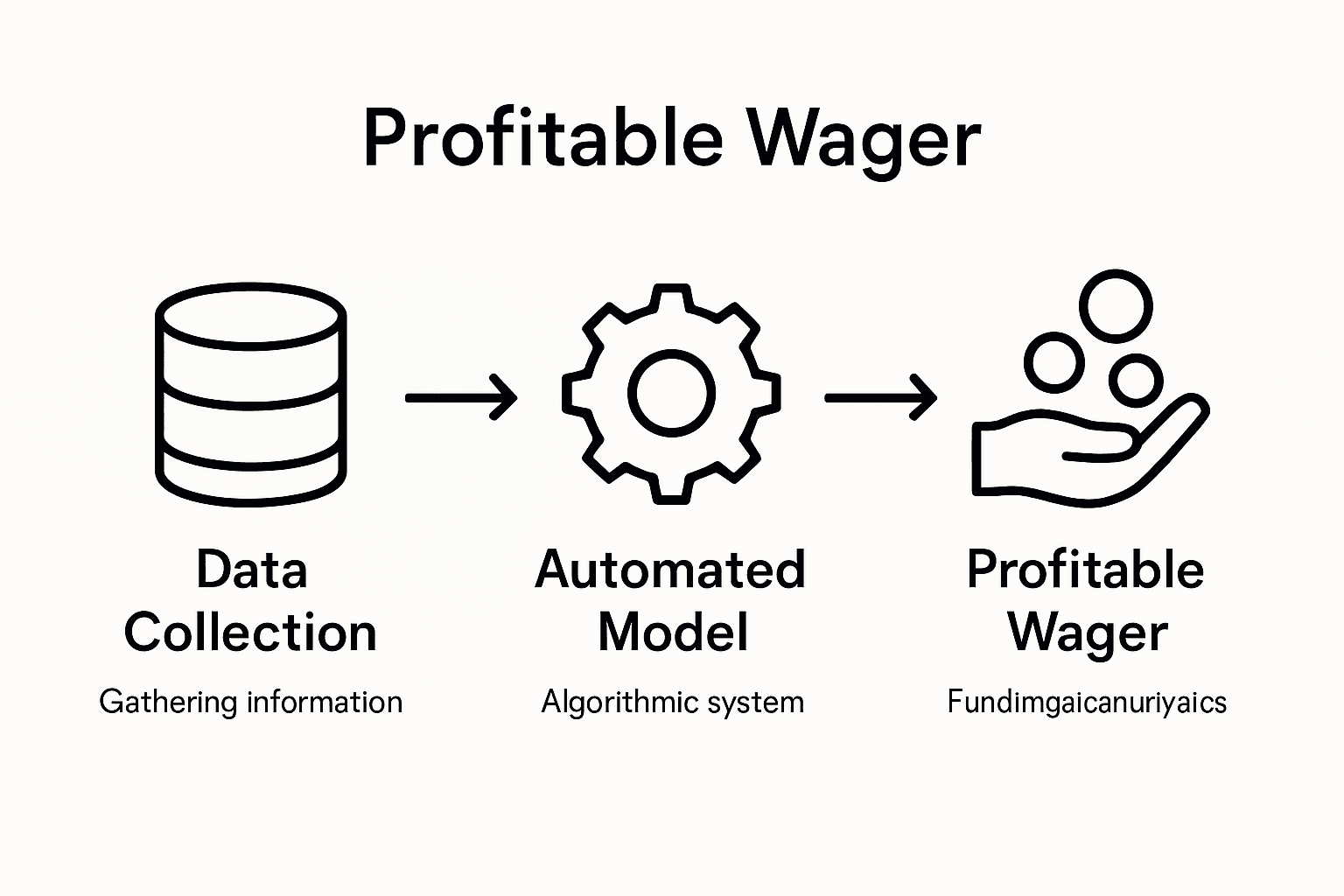
Agent based simulation models represent the cutting edge of betting analysis technology, enabling investors to generate high resolution synthetic data and test complex betting strategies with unprecedented precision. Modern sports data platforms like STATSCORE provide comprehensive APIs that can be integrated directly into automated analysis systems, allowing real time performance tracking and predictive modeling.
Automation Implementation Strategies:
- Select robust sports data platforms
- Build machine learning prediction models
- Create automated data collection pipelines
- Implement real time performance tracking
- Develop custom algorithmic betting rules
Professional Tip: Design your automation framework with built in flexibility, allowing periodic manual review and algorithmic adjustment to maintain peak performance as sports dynamics continuously evolve.
This summary shows how statistical modeling, EV analysis, and automation work together to enhance betting strategy:
| Method | Key Benefit | Typical Use Case |
|---|---|---|
| Statistical Modeling | Identifies market inefficiencies | Model-based wager selection |
| Expected Value Analysis | Quantifies risk versus reward | Confident, value-focused betting |
| Automation Platforms | Increases speed and accuracy | Large-scale, real time analysis |
Gain the Analytical Edge to Profit from Betting Trends
The article highlights the challenge of transforming complex betting data into consistent profits by detecting market biases and spotting positive Expected Value opportunities. If you find it difficult to interpret raw statistics or build sophisticated models to identify these hidden advantages in NBA Player Props, NFL Spreads, or NHL Shot Totals, you are not alone. Stats Bench addresses these pain points by offering daily updated models that analyze thousands of data points including usage rates and defensive matchups. This takes the guesswork out of betting and replaces it with a proven mathematical investing approach.
If you want to stop relying on gut feelings and start maximizing your long-term returns, Stats Bench is designed for you. Our platform bridges the gap exposed in the article between casual gambling and informed betting by delivering clear Positive EV alerts. Learn more about how you can harness these tools on our cheatsheet page and explore how our models work in practice.
Take control of your betting strategy now and build an advantage no sportsbook wants you to have.

Explore the proven betting edge with Stats Bench Cheatsheet. Start applying statistical modeling and EV analysis tailored to today’s market trends and gain confidence in every wager you place.
Frequently Asked Questions
What are the best data sources for analyzing betting trends?
Gather data from authoritative sources like official league statistical databases and advanced sports analytics websites. Start by compiling information from at least three different categories to ensure comprehensive insights.
How can I identify market biases in sports betting?
To identify market biases, monitor betting volume shifts and analyze line movements regularly. Create a standardized tracking sheet to document these patterns, enabling you to recognize potential betting opportunities.
What statistical models should I use for developing a betting strategy?
Employ multi-variable predictive algorithms and machine learning regression techniques to develop sophisticated statistical models. Focus on incorporating advanced performance metrics to enhance the accuracy of your betting predictions.
How do I calculate Positive Expected Value (EV) for my wagers?
Calculate Positive EV by comparing the implied probability of a wager with its actual likelihood of winning. Assess the potential return against your risk exposure, allowing you to identify wagers that offer a favorable risk-to-reward ratio.
How can I automate my betting analysis process?
To automate your betting analysis, select robust sports data platforms and build machine learning prediction models. Create automated data collection pipelines to efficiently process thousands of data points in real time.
Recommended
- Betting Trend Insights: How They Influence Wagering Decisions
- Why Use Betting Data: Gaining a Sharp Edge
- Why Track Betting Data: Boosting Smart Wagers
- How to Interpret Player Props Like a Data-Driven Pro
- What are prediction markets? The booming industry bypassing US gambling laws
Free preview
See today’s MLB player props on StatsBench
Live lines, last-10 hit rates and the best price across about 60 books. No account needed to look.
Open the MLB player props board →
Prefer email? Get the daily picks newsletter.