

Over 90 percent of American sports bettors lose money over the long term. That reality makes it clear why understanding data and improving your approach matters so much. Turning intuition into a structured process is what sets profitable bettors apart in the fast-moving American market. This guide reveals the practical steps that can elevate your results and help you make smarter, more consistent wagers using advanced data-driven methods.
Table of Contents
- Step 1: Audit Personal Betting Habits With Data
- Step 2: Build Reliable Statistical Models For Props
- Step 3: Identify Positive EV Bets Using Advanced Metrics
- Step 4: Integrate Market Movements To Sharpen Analysis
- Step 5: Verify Results And Adjust Your Strategy
Quick Summary
| Key Insight | Explanation |
|---|---|
| 1. Track Every Betting Detail | Maintain a detailed log of each bet’s specifics to identify performance patterns and areas for improvement. |
| 2. Use Advanced Statistical Models | Employ machine learning and regression techniques to enhance betting predictions and understand outcome probabilities. |
| 3. Identify Positive Expected Value | Quantify potential betting opportunities by comparing your calculated probabilities to market odds for an edge. |
| 4. Monitor Market Movements | Track line changes and betting volume to make informed decisions based on professional money activity. |
| 5. Regularly Review and Adjust | Conduct frequent audits on your betting performance to refine strategies and ensure continual improvement in results. |
Step 1: Audit Personal Betting Habits with Data
Successful sports betting requires more than intuition it demands rigorous self analysis. By systematically examining your historical betting performance understanding gambling behavior patterns, you transform random guessing into strategic investing.
To effectively audit your betting habits start by creating a comprehensive tracking spreadsheet. Document every wager including sport type league matchup date bet amount odds outcome and net profit or loss. Break down your performance across multiple dimensions tracking win rates by sport league bet type and stake level. This granular data reveals hidden patterns most bettors miss.
Focus on identifying statistically significant trends in your betting behavior. Look for specific scenarios where your win rate diverges from expected performance. Are you consistently losing money on NBA totals? Do NFL road underdogs crush your bankroll? Quantify these insights to understand your blind spots.
Professional Tip: Create a data visualization dashboard that automatically tracks your betting metrics allowing instant performance assessment without manual calculations.
Here’s a concise summary of key metrics to track when auditing personal betting habits:
| Metric | Why It Matters | Example Use |
|---|---|---|
| Win Rate by Sport | Pinpoints strengths and weaknesses | Higher success in MLB |
| Stake Level Outcomes | Identifies bet sizing effectiveness | Losses at high stakes |
| Bet Type Performance | Reveals most/least profitable bet types | Props outperform spreads |
| ROI by League | Measures efficiency of wagers | NFL returns positive ROI |
Step 2: Build Reliable Statistical Models for Props
Developing accurate prop betting models requires a sophisticated approach that goes beyond simple predictive accuracy. Machine learning techniques provide advanced frameworks for transforming raw sports data into actionable betting insights.
Start by collecting comprehensive player and team performance datasets. Focus on granular metrics like player usage rates shooting percentages defensive matchups and historical performance trends. Use statistical regression techniques to identify correlations and build predictive models. The key is not just predicting outcomes but understanding the probability distribution of potential results.

Implement advanced modeling techniques like Bayesian regression to account for uncertainty and variability. Bivariate Conway-Maxwell-Poisson regression models can help you analyze correlated performance metrics more precisely capturing the complex interactions between different player and team statistics.
Professional Tip: Always validate your statistical models against out-of-sample data and continuously refine your approach by tracking model performance over multiple betting seasons.
Step 3: Identify Positive EV Bets Using Advanced Metrics
Advanced machine learning forecasting systems provide sophisticated techniques for uncovering betting opportunities that traditional analysis misses. Positive expected value bets represent mathematical advantages where your potential return exceeds the inherent risk of the wager.
To effectively identify these opportunities analyze complex performance metrics beyond standard statistics. Examine granular data points like player efficiency ratings defensive matchups recent form trends and situational performance variations. Calculate implied probabilities against bookmaker lines to detect discrepancies where your calculated odds differ from market pricing.
Probabilistic modeling techniques allow you to estimate outcome likelihoods with greater precision. Look for scenarios where your calculated probability suggests a higher win potential than the current betting market indicates. This requires building robust statistical models that account for multiple variables and potential outcome variations.
Professional Tip: Develop a systematic scoring mechanism that quantifies the potential edge for each bet opportunity helping you consistently filter and prioritize your most promising wagers.
Step 4: Integrate Market Movements to Sharpen Analysis
Agent-based simulation models of sports betting exchanges reveal the complex dynamics underlying market movements that can dramatically improve your analytical approach. Understanding these shifts is not about following the crowd but decoding the mathematical signals hidden within betting patterns.
Track real time line movements across multiple sportsbooks to identify significant shifts in market sentiment. Pay attention to sudden changes in odds volume and line movement speed which often indicate professional betting activity. Calculate the percentage of money wagered versus the percentage of total bets to distinguish between public perception and sharp money flow.
Market dynamics provide critical insights into betting behaviors that go beyond surface level analysis. Look for divergences between line movement and public betting percentages these discrepancies can reveal opportunities where bookmakers might have mispriced a betting market. Develop a systematic approach to quantify and interpret these market signals transforming raw data into actionable betting intelligence.
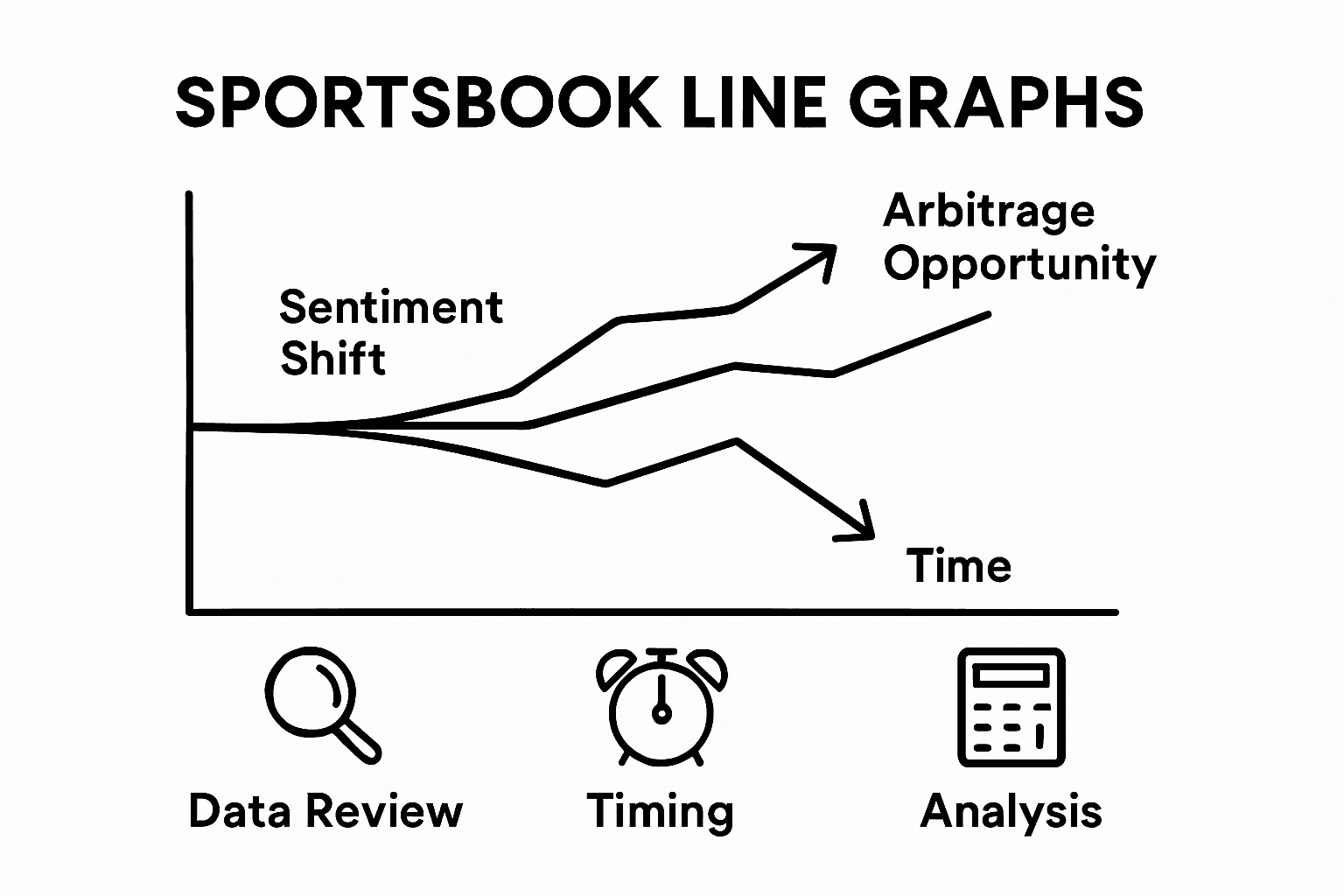
Professional Tip: Create a standardized tracking system that automatically logs market movement patterns allowing you to quickly identify and exploit emerging betting opportunities before they disappear.
Step 5: Verify Results and Adjust Your Strategy
Advanced auditing techniques reveal the critical importance of systematically reviewing and refining your betting approach. Successful sports betting is not about creating a static model but developing a dynamic system that continuously learns and adapts.
Conduct a comprehensive performance audit by tracking key metrics across multiple dimensions. Calculate your return on investment profit margin win rate and risk adjusted returns. Compare your actual results against your initial predictive models to identify systematic biases or unexpected performance variations. Segment your analysis by sport league bet type and specific betting scenarios to pinpoint precise areas of strength and weakness.
Digital age betting strategies require adaptive approaches that leverage automation and advanced analytics. Use statistical significance testing to determine whether your model variations represent genuine improvements or random fluctuations. Implement a rolling evaluation window that weights recent performance more heavily allowing your strategy to remain responsive to evolving market conditions.
This comparison outlines essential differences between traditional and advanced betting strategies:
| Approach | Data Depth | Analysis Method | Key Advantage |
|---|---|---|---|
| Traditional | Basic statistics | Gut feeling/manual | Quick decisions |
| Data-Driven Advanced | Granular metrics | Machine learning models | Detect hidden patterns |
Professional Tip: Establish a quarterly review process where you completely deconstruct your betting model rebuild it from first principles and critically examine every assumption to prevent strategy stagnation.
Gain a Winning Edge with Advanced Betting Analytics
If you are serious about transforming betting from guesswork to a calculated strategy this article highlights the importance of auditing habits leveraging statistical models and identifying positive EV bets. Many bettors struggle with hidden biases and inconsistent performance that arise from relying on gut feelings or incomplete data. Key challenges include analyzing granular player metrics applying machine learning techniques and interpreting market movements to detect sharp money flows.
Stats Bench bridges this very gap by providing you with powerful daily models that analyze thousands of data points—from player usage rates to defensive matchups—helping you uncover the Positive EV opportunities that sportsbooks overlook. Our approach empowers you to make informed bets on NBA Player Props NFL spreads NHL shot totals and more while refining your strategy through continuous performance audits.
Ready to stop guessing and start winning with proven analytics? Take your betting to the next level today with Stats Bench’s Betting Analytics Cheat Sheet.

Discover the power of data driven sports betting at Stats Bench and learn how to consistently spot value bets. With tools designed for serious bettors you can assess your personal betting trends track advanced metrics and adapt your models to changing market conditions. Don’t let another profitable opportunity slip away. Visit Stats Bench’s Betting Analytics Cheat Sheet now and start betting smarter.
Frequently Asked Questions
How can I audit my personal betting habits effectively?
To audit your personal betting habits, create a comprehensive tracking spreadsheet that records every wager, including details like sport type, league, matchup, date, bet amount, odds, outcome, and net profit or loss. Focus on identifying trends in your win rates by sport, league, and bet type to uncover strengths and weaknesses.
What metrics should I track to improve my sports betting strategy?
Key metrics to track include win rate by sport, stake level outcomes, bet type performance, and return on investment (ROI) by league. By quantifying these metrics, you can identify which betting strategies are successful and which need adjustment.
How do I build reliable statistical models for prop betting?
To build reliable statistical models for prop betting, collect detailed player and team performance data and use statistical regression techniques to identify correlations. Implement advanced modeling methods to account for uncertainty and ensure your models are accurate by validating them against out-of-sample data.
What are positive expected value (EV) bets, and how can I identify them?
Positive expected value bets are opportunities where your potential return exceeds the inherent risk of the wager. Analyze complex performance metrics and calculate implied probabilities against bookmaker lines to find discrepancies that indicate higher win potential than market pricing suggests.
How can market movements improve my betting analysis?
Monitoring market movements allows you to understand shifts in betting sentiment that can present opportunities. Track real-time line changes and look for divergences between line movement and public betting percentages to identify potential mispricing in the market.
What steps should I take to verify results and adjust my strategy?
Regularly conduct a performance audit by tracking key metrics like ROI and win rate, comparing actual results against previous predictive models. This process will help you identify biases and refine your approach, so establish a quarterly review to continuously enhance your betting strategy.
Recommended
- Betting Trends Analysis Process for Profitable Wagers
- Why Use Betting Data: Gaining a Sharp Edge
- StatsBench – Sports Analytics & Betting Props
- Betting Trend Insights: How They Influence Wagering Decisions
- Understanding Predictive Analytics Marketing for Businesses – seo analytic
- Why Emotional Analytics Matter: Complete Guide – Wisdom
Free preview
See today’s MLB player props on StatsBench
Live lines, last-10 hit rates and the best price across about 60 books. No account needed to look.
Open the MLB player props board →
Prefer email? Get the daily picks newsletter.