

Most American sports bettors miss out on value because they rely only on surface-level stats. For serious bettors tracking NBA and NFL markets, building a competitive edge demands deeper analysis and broader data coverage. When you gather, clean, and model the right sources, you can reveal insights that even sportsbooks overlook. This guide shows how a structured, analytical approach turns diverse datasets into actionable bets, helping you stay ahead in American and global betting markets.
Table of Contents
- Step 1: Gather Relevant Sports Betting Data Sources
- Step 2: Prepare And Clean Your Betting Datasets
- Step 3: Build Analytical Models To Highlight Positive EV
- Step 4: Validate Findings Against Real Market Odds
- Step 5: Refine Your Strategy With Historical Outcome Checks
Quick Summary
| Key Point | Explanation |
|---|---|
| 1. Utilize Diverse Data Sources | Compile data from league websites, analytics platforms, and injury databases for comprehensive insights. |
| 2. Clean and Validate Your Data | Implement data cleaning techniques to ensure accurate and consistent datasets for analysis. |
| 3. Build Predictive Models | Develop analytical models using historical data to identify positive expected value betting opportunities. |
| 4. Validate Against Market Odds | Test your models against actual market odds to assess their effectiveness in identifying value. |
| 5. Regularly Review Historical Outcomes | Analyze past betting results to refine strategies and improve predictive accuracy over time. |
Step 1: Gather relevant sports betting data sources
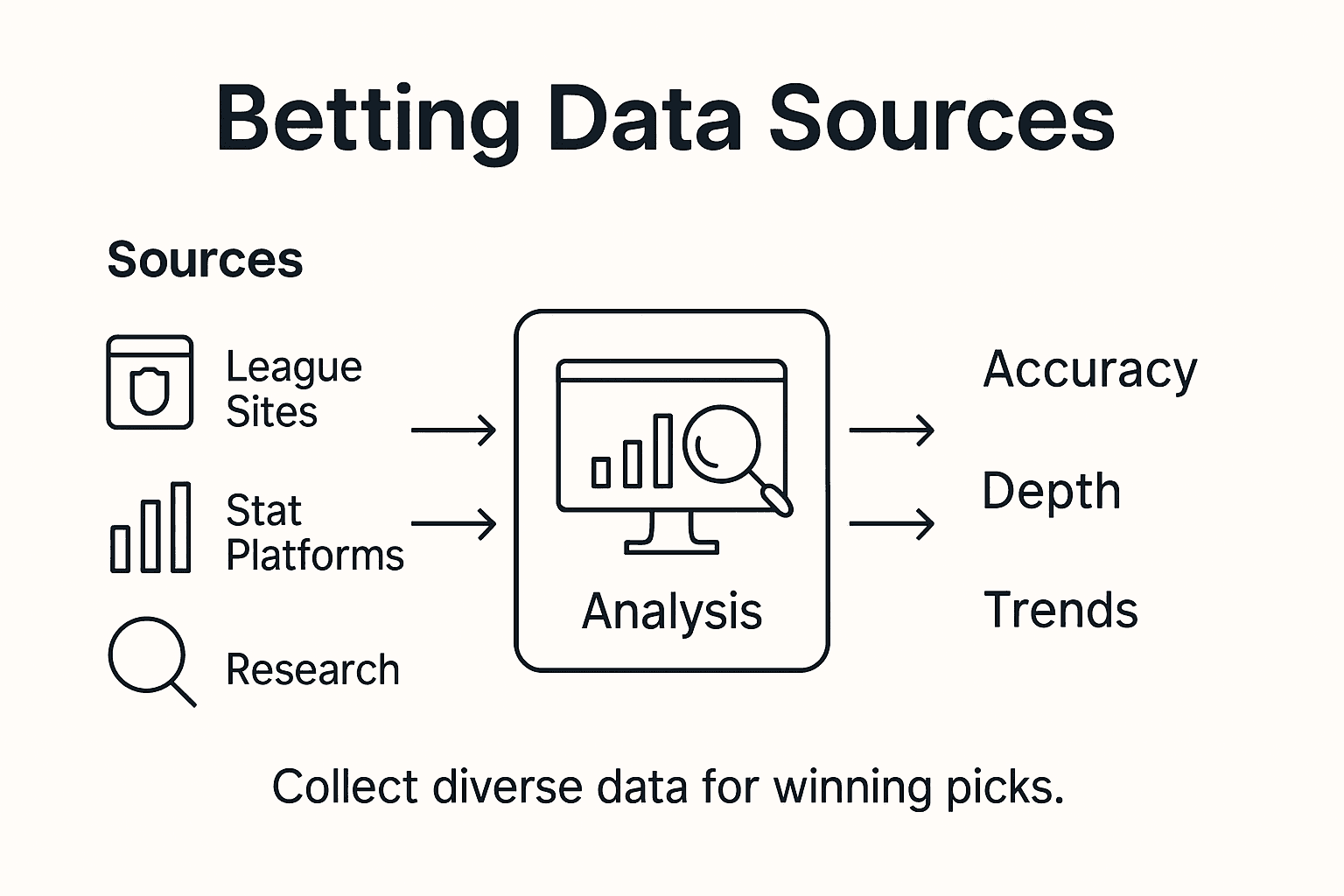
Building a solid sports betting strategy requires collecting comprehensive and reliable data from multiple sources. Your goal is to compile a robust dataset that provides deep insights into team performance, player statistics, and betting market dynamics.
Start by identifying key data sources that offer granular information. Academic research provides critical insights into betting patterns and statistical modeling. For instance, researchers have demonstrated how sportsbooks use sophisticated odds reflecting historical and real-time information to predict game outcomes. Professional bettors typically aggregate data from multiple channels including official league websites, sports analytics platforms, injury reports, weather databases, and specialized betting statistical services.
Consider creating a structured data collection approach that includes quantitative metrics like player performance ratings, team efficiency metrics, historical head-to-head records, and recent game trends. Advanced bettors often develop custom spreadsheets or utilize specialized betting analysis software to centralize and analyze these diverse data streams. Pay special attention to sources that offer real-time updates and comprehensive statistical breakdowns, as these provide the most actionable intelligence for making informed betting decisions.
Here’s a quick reference overview of common sports betting data sources and what each provides:
| Data Source Type | Example Providers | Data Insights Offered |
|---|---|---|
| League Websites | NFL.com, NBA.com | Official stats, schedules, rosters |
| Analytics Platforms | SportsRadar, DataSportsGroup | Advanced metrics, live stats |
| Injury Databases | Rotoworld, PhysioRoom | Player injury status, return dates |
| Weather Services | AccuWeather, NOAA | Game-time weather, forecasts |
| Betting Stat Services | Betfair, OddsPortal | Market odds, line movement history |
Pro Tip: Create a standardized data tracking template that allows you to quickly input and compare statistical information across different games and sports, enabling faster and more systematic analysis.
Step 2: Prepare and clean your betting datasets
Transforming raw sports betting data into a reliable analytical resource requires meticulous preparation and strategic cleaning techniques. Your objective is to develop a pristine dataset that enables accurate predictive modeling and intelligent betting decisions.
Professional data scientists emphasize the critical importance of thorough dataset preparation. Data cleaning techniques such as handling missing values, removing duplicates, and standardizing inconsistent formats are essential for creating high-quality analytical foundations. Focus on establishing key data quality measures including completeness, consistency, and integrity. This means systematically reviewing each data point for potential errors, inconsistencies in formatting, and outliers that could skew your analytical results.
Start by implementing a structured data validation process. Use spreadsheet tools or programming languages like Python to automate data cleaning tasks. Remove duplicate entries, correct inconsistent team or player names, standardize date formats, and ensure numerical statistics are entered correctly. Advanced bettors often create custom scripts that can rapidly process and clean large volumes of sports data, transforming raw information into actionable insights that provide a competitive edge in sports betting analysis.

Pro Tip: Create a master data cleaning checklist that you can quickly apply across different sports and datasets to ensure consistent and rapid data preparation.
Step 3: Build analytical models to highlight positive EV
Developing robust analytical models represents the critical bridge between raw sports data and profitable betting strategies. Your primary objective is to construct predictive frameworks that consistently identify betting opportunities with positive expected value.
Machine learning techniques offer sophisticated approaches for building advanced sports betting predictive models, enabling bettors to systematically analyze complex datasets and uncover hidden value opportunities. Professional data scientists leverage techniques like support vector machines, random forests, and neural networks to transform historical performance data into intelligent betting insights. These models can evaluate multiple variables simultaneously including player performance metrics, team dynamics, historical win rates, and situational factors that traditional analysis might overlook.
Successful model development requires a multifaceted approach. Begin by establishing clear performance metrics and creating training datasets that represent diverse sporting scenarios. Use programming languages like Python or R to develop scalable models that can rapidly process and analyze large volumes of sports data. Implement cross validation techniques to ensure your model maintains predictive accuracy across different contexts. Remember that building an effective analytical model is an iterative process requiring continuous refinement and adaptation to changing sports dynamics.
Pro Tip: Develop multiple models targeting different sports and betting markets to diversify your analytical approach and reduce overall predictive risk.
Step 4: Validate findings against real market odds
Validating your analytical models against actual market odds is the critical final step in ensuring your betting strategy generates consistent positive expected value. Your goal is to rigorously test whether your predictive models can consistently outperform sportsbook lines.
Regression-based methods provide sophisticated techniques for comparing model predictions with market-implied probabilities, enabling bettors to systematically evaluate their analytical frameworks. Professional handicappers use normalized probability methods to identify subtle market inefficiencies and potential value betting opportunities. This process involves comparing your model’s predicted outcomes against the implied probabilities embedded in sportsbook betting lines, carefully analyzing where your calculations diverge from market expectations.
Implement a comprehensive validation approach by developing a structured backtesting framework. Use historical data to simulate your model’s performance across multiple seasons and sporting events. Calculate key metrics like return on investment, predictive accuracy, and edge percentage to quantitatively assess your model’s reliability. Pay close attention to situations where your model consistently identifies value opportunities that the broader market might have overlooked. Remember that successful validation is an ongoing process requiring continuous refinement and adaptation to changing sports dynamics and market conditions.
Below is a comparison of key model validation metrics used by professional bettors:
| Metric Name | What It Measures | Business Impact |
|---|---|---|
| Predictive Accuracy | Correct outcome rate vs market | Confidence in strategy |
| Return on Investment | Profit earned per dollar staked | Overall profitability |
| Edge Percentage | Value found vs market odds | Uncovering inefficiencies |
| Risk Adjusted Return | Profit adjusted for variance | Long-term stability |
Pro Tip: Maintain a detailed performance log documenting your model’s predictive accuracy and monetary outcomes to enable data-driven continuous improvement.
Step 5: Refine your strategy with historical outcome checks
Refined sports betting strategies emerge from rigorous historical analysis that transforms past performance data into actionable insights. Your goal is to systematically evaluate previous betting outcomes to identify patterns, weaknesses, and potential improvements in your analytical approach.
Leveraging historical sports data enables sophisticated trend analysis and strategic performance enhancement, allowing bettors to uncover nuanced insights that casual observers might miss. Professional handicappers meticulously examine comprehensive datasets including situational statistics, head-to-head records, performance under specific conditions, and long-term team and player trends. This forensic approach helps you understand not just what happened, but why specific outcomes occurred and how those insights can inform future betting decisions.
Implement a structured historical review process by creating detailed performance logs that track every aspect of your betting model. Analyze your model’s performance across different sports, seasons, and betting markets to identify consistent strengths and potential blind spots. Calculate key performance metrics such as return on investment, predictive accuracy, and risk adjusted returns. Pay special attention to scenarios where your model significantly over or underperformed expected outcomes and use these insights to refine your predictive algorithms and betting approach.
Pro Tip: Develop a quarterly review process where you comprehensively audit your betting strategy performance, treating your approach as a dynamic investment portfolio that requires continuous optimization.
Gain the Analytical Edge for Profitable Sports Betting
If you find yourself overwhelmed by the challenge of collecting, cleaning, and analyzing vast sports data to find positive expected value bets, you are not alone. This article highlights key pain points like transforming raw information into winning models and validating predictions against sportsbook odds. You want to move beyond gut feelings and focus on data-driven insights that reveal hidden betting opportunities.
Stats Bench bridges this exact gap by offering daily models that analyze thousands of key metrics, including player performance and matchup efficiencies. Our approach mirrors the professional methods discussed here—leveraging machine learning and comprehensive datasets to identify bets with genuine long-term value. Instead of spending hours building and refining your own systems, use the power of Stats Bench’s Cheatsheet to gain an immediate advantage across NBA Player Props, NFL Spreads, NHL Shot Totals, and more.
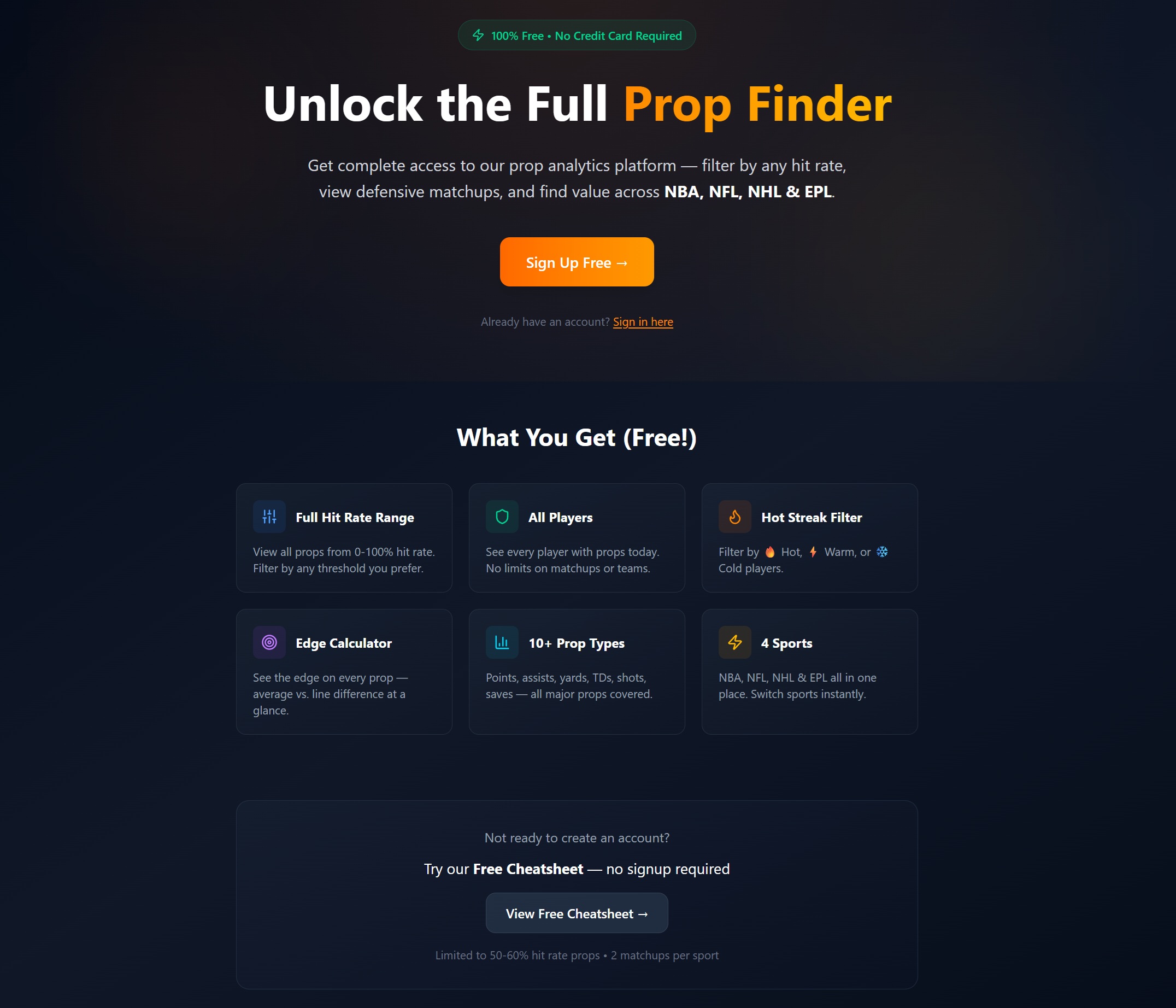
Take control of your betting strategy today. Visit Stats Bench Cheatsheet now to start accessing expertly modeled positive EV opportunities that sportsbooks miss. Don’t just predict outcomes, profit from them with a winning, data-driven edge.
Frequently Asked Questions
How can I gather reliable sports betting data for analysis?
To gather reliable sports betting data, identify key data sources such as official league websites, analytics platforms, and injury databases. Compile this information into a structured dataset that covers player statistics, team performance, and historical trends, focusing on obtaining real-time updates whenever possible.
What steps should I take to clean my betting datasets?
To clean your betting datasets, start by removing duplicates, standardizing formats, and handling any missing values. Use tools like spreadsheets or programming languages to automate this process, ensuring data quality and reliability for your analysis.
How do I build analytical models to find profitable betting opportunities?
You can build analytical models by utilizing machine learning techniques to analyze historical performance data and identify betting opportunities with positive expected value. Start by defining clear performance metrics and developing training datasets to create flexible models that can adapt to various sports scenarios.
How can I validate my findings against market odds?
Validate your findings by comparing your model’s predictions to actual market odds, ensuring they consistently outperform sportsbook lines. Develop a backtesting framework to simulate your model’s performance using historical data, focusing on key metrics like return on investment and predictive accuracy.
What should I do to refine my betting strategy using historical outcomes?
Refine your betting strategy by systematically reviewing historical outcomes to identify patterns and opportunities for improvement. Create detailed performance logs, analyze your model’s results, and adjust your approach based on scenarios where your predictions diverged from actual outcomes.
How often should I review my sports betting analysis and strategies?
You should review your sports betting analysis and strategies at least quarterly to assess performance and make necessary adjustments. Conduct comprehensive audits of your strategies, treating them like a dynamic investment portfolio that needs regular optimization to maintain effectiveness.
Recommended
- Betting Trends Analysis Process for Profitable Wagers
- Why Use Betting Data: Gaining a Sharp Edge
- Why Track Betting Data: Boosting Smart Wagers
- Betting Trend Insights: How They Influence Wagering Decisions
Free preview
See today’s MLB player props on StatsBench
Live lines, last-10 hit rates and the best price across about 60 books. No account needed to look.
Open the MLB player props board →
Prefer email? Get the daily picks newsletter.