

Most American sports investors already know data moves the market, but few realize betting software can process thousands of player stats every second to spot hidden NBA prop value. This technology is turning betting into a calculated investment, offering predictive analytics and advanced risk management. Whether you track player performance or compare odds across continents, understanding software types helps you navigate information overload and uncover strategic opportunities others miss.
Table of Contents
- Defining Betting Software for Sports Investors
- Comparing Major Types of Betting Software
- How Data Models and Trackers Operate
- Legal and Ethical Considerations Worldwide
- Choosing the Right Software for Profitability
- Pitfalls and Common Misconceptions in Betting Software
Key Takeaways
| Point | Details |
|---|---|
| Betting Software Enhancements | Betting software utilizes advanced analytics, machine learning, and real-time data to shift sports betting from chance to informed investment. |
| Types of Betting Software | Major categories such as Odds Comparison Tools, Predictive Analytics Platforms, and Bankroll Management Systems cater to different investor needs. |
| Legal and Ethical Considerations | Navigate complex legal frameworks and uphold ethical responsibilities like consumer protection and algorithmic fairness in betting practices. |
| Continuous Evaluation and Adaptation | Successful investors consistently test and adapt their betting software choices to align with evolving market inefficiencies and personal strategies. |
Defining Betting Software for Sports Investors
Betting software represents a technological ecosystem designed to empower sports investors with data-driven insights and strategic decision-making capabilities. These sophisticated platforms transform raw sports data into actionable intelligence, enabling bettors to approach wagering as a calculated investment rather than a game of chance. Advanced betting platforms combine statistical models, machine learning algorithms, and real-time performance tracking to deliver precise predictive analytics.
The core functionalities of modern betting software extend far beyond simple bet placement. Professional sports investors now leverage tools that provide comprehensive analytics, including player performance metrics, historical trend analysis, live odds comparisons, and automated risk management strategies. These platforms aggregate massive datasets from multiple sources, processing complex information faster than human analysts can manually calculate. Key features typically include:
- Real-time odds tracking and comparison
- Advanced statistical modeling
- Performance trend visualization
- Automated bet sizing recommendations
- Bankroll management tools
- Machine learning predictive algorithms
Understanding the technological infrastructure behind betting software reveals its true power for serious sports investors. Integrated betting platforms now offer seamless user experiences that transform raw data into strategic opportunities. These systems do not just present information they actively help investors identify value propositions by highlighting statistical anomalies and potential positive expected value scenarios.
Pro tip: Always evaluate betting software based on its predictive accuracy, data sources, and transparency of algorithmic methodology rather than marketing promises.
Comparing Major Types of Betting Software
The sports betting software landscape is diverse, offering specialized tools designed to meet different investor needs and strategic approaches. Sports betting software types range from basic odds tracking platforms to sophisticated predictive analytics systems that leverage advanced machine learning algorithms. Understanding these variations helps sports investors select the most appropriate tool for their specific betting methodology and risk tolerance.
Primary categories of betting software can be broadly classified into three main types:
-
Odds Comparison Tools
- Real-time line movement tracking
- Cross-platform price monitoring
- Identifying arbitrage opportunities
- Quick market sentiment analysis
-
Predictive Analytics Platforms
- Advanced statistical modeling
- Machine learning algorithms
- Performance trend prediction
- Risk assessment calculations
-
Bankroll Management Systems
- Automated stake sizing
- Portfolio tracking
- Performance reporting
- Investment strategy optimization
Betting software providers typically offer three fundamental deployment approaches: turnkey solutions, white-label platforms, and custom-developed systems. Turnkey solutions provide immediate, standardized functionality perfect for beginners. White-label platforms offer moderate customization, allowing investors to adapt the software to their specific requirements. Custom systems represent the most sophisticated option, delivering tailored solutions designed around unique betting strategies and advanced analytical needs.
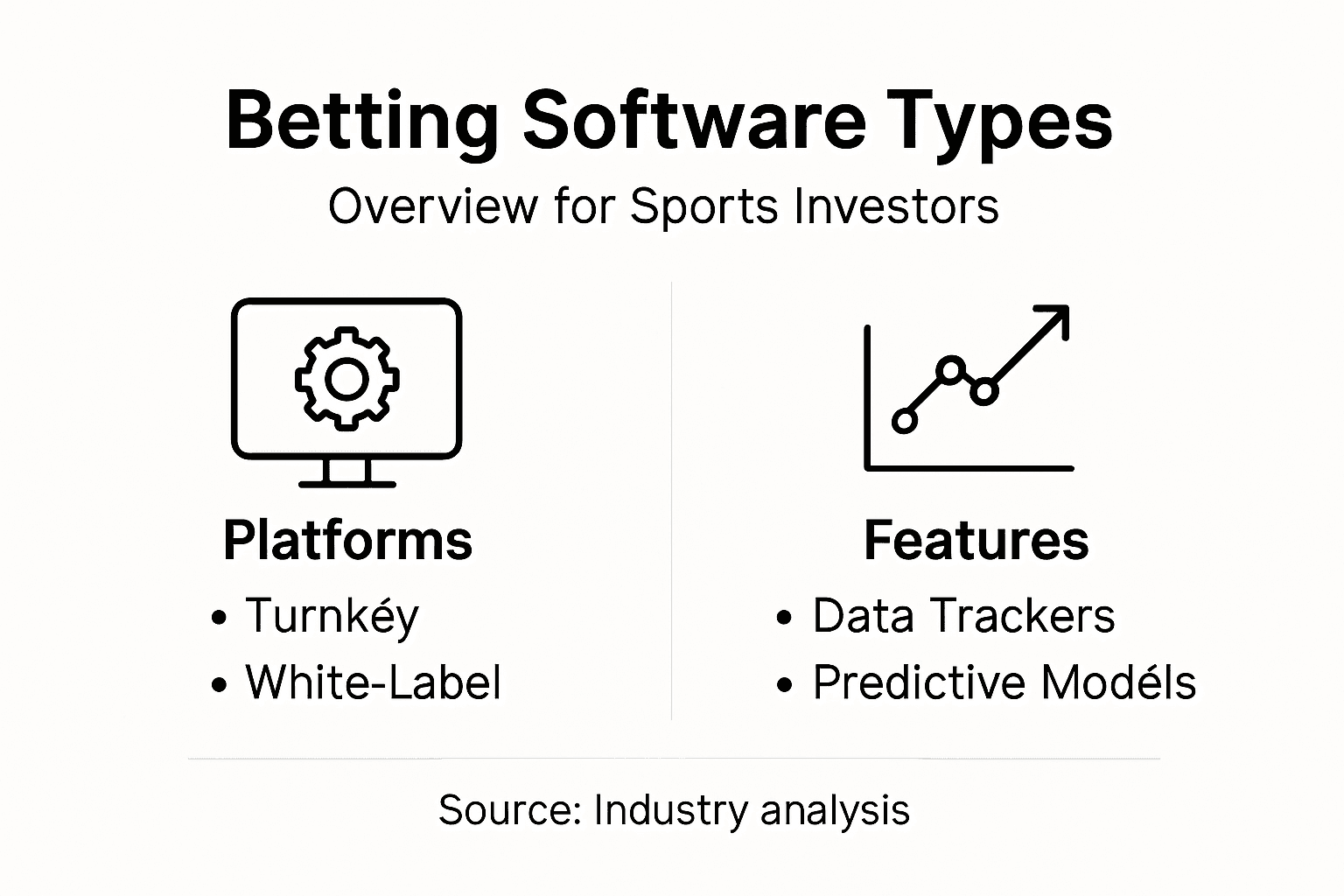
Here’s a comparison of the main betting software deployment options and their ideal user types:
| Deployment Approach | Customization Level | Ideal User Profile |
|---|---|---|
| Turnkey Solution | Minimal, ready-to-use | Beginners, small-scale investors |
| White-Label Platform | Moderate, adaptable | Mid-level investors, small operators |
| Custom Development | Full, highly tailored | Large-scale, professional investors |
Pro tip: Always test betting software using small stakes and compare its predictive performance across multiple sports and betting markets before making a significant financial commitment.
How Data Models and Trackers Operate
Machine learning algorithms have transformed sports betting from intuition-based guesswork into a data-driven scientific approach. Advanced sports betting models leverage complex computational techniques like support vector machines, random forests, and neural networks to analyze massive datasets and generate predictive insights. These sophisticated systems transform raw sports data into actionable intelligence, allowing investors to make statistically informed betting decisions.
The core operational framework of data models and trackers involves several critical components:
-
Data Collection
- Real-time game statistics
- Player performance metrics
- Historical match outcomes
- Weather and environmental factors
- Injury and team composition data
-
Algorithmic Processing
- Pattern recognition
- Probability calculations
- Risk assessment modeling
- Dynamic odds adjustment
- Predictive trend analysis
Sports betting data trackers utilize multiple data acquisition methods, including web scraping, API integrations, and sensor-based tracking systems. These technologies enable continuous information gathering, allowing models to update predictions in real time. The most advanced systems can process thousands of data points per second, creating a comprehensive view of potential betting opportunities and associated risks.

The ultimate goal of these data models is not just prediction but strategic value identification. By uncovering statistical anomalies and market inefficiencies, these tools help sports investors locate bets with positive expected value, transforming sports betting from gambling to a calculated investment strategy.
Pro tip: Regularly validate your data model’s performance by tracking its prediction accuracy across different sports and maintaining a detailed log of its successes and failures.
Legal and Ethical Considerations Worldwide
The sports betting technology landscape involves complex legal and ethical challenges that extend far beyond simple regulatory compliance. Gambling industry ethics demand a nuanced approach balancing technological innovation with consumer protection, requiring sports investors to navigate intricate regulatory environments worldwide.
Key ethical considerations for betting software include:
-
Consumer Protection
- Preventing gambling addiction
- Protecting vulnerable populations
- Ensuring transparent algorithmic practices
- Implementing responsible betting mechanisms
-
Regulatory Compliance
- Jurisdiction-specific legal requirements
- Data privacy regulations
- Fair algorithmic design
- Anti-money laundering protocols
- Age verification systems
AI risks in gambling technologies reveal profound challenges in maintaining algorithmic fairness and preventing potential exploitation. Advanced betting platforms must implement robust governance frameworks that prioritize transparency, accountability, and user well-being. This involves developing sophisticated risk management strategies that proactively identify and mitigate potential ethical breaches.
Sports investors must recognize that technological capabilities do not supersede ethical responsibilities. Responsible engagement requires continuous evaluation of betting software’s societal impact, ensuring that data-driven strategies remain fundamentally committed to individual and collective welfare.
The table below summarizes major challenges and safeguards for legal and ethical betting software use:
| Challenge | Key Safeguard |
|---|---|
| Preventing addiction | Built-in usage limits and self-exclusion |
| Regulatory compliance | Regular third-party audits and documentation |
| Algorithmic transparency | Publicly available model explanations |
| Data privacy | Encrypted storage and secure access controls |
Pro tip: Always review the ethical guidelines and regulatory compliance of your betting software, ensuring it demonstrates commitment to responsible gambling practices.
Choosing the Right Software for Profitability
Successful sports betting demands strategic software selection that aligns precisely with an investor’s unique analytical approach and performance goals. Betting software selection requires a comprehensive evaluation of platforms that deliver measurable competitive advantages through advanced data processing and predictive capabilities.
Key criteria for assessing betting software profitability include:
-
Performance Analytics
- Historical accuracy rates
- Predictive model success percentages
- Detailed tracking of expected value
- Transparent reporting mechanisms
-
Technical Capabilities
- Real-time data integration
- Machine learning algorithms
- Multi-sport coverage
- Customizable dashboard features
- Advanced statistical modeling
The most profitable betting software transcends basic statistical tracking, offering sophisticated analytical frameworks that identify subtle market inefficiencies. These platforms provide investors with granular insights, enabling precise bet sizing, risk management, and strategic decision making across diverse sporting events. Successful investors recognize that technology is not just a tool but a critical partner in generating consistent positive expected value.
Intelligent software selection requires ongoing assessment and willingness to adapt. No single platform represents a permanent solution, and top sports investors continuously evaluate and rotate their technological resources to maintain a competitive edge in dynamic betting markets.
Pro tip: Develop a systematic evaluation process for betting software, including running controlled tests with small stakes to objectively measure each platform’s performance before full implementation.
Pitfalls and Common Misconceptions in Betting Software
Sports betting technologies represent powerful analytical tools, but they are not guaranteed profit machines. Machine learning challenges reveal significant pitfalls that can undermine even the most sophisticated betting strategies, demanding a nuanced and critically aware approach to software implementation.
Common misconceptions about betting software include:
-
Predictive Infallibility Myth
- Models cannot predict 100% of outcomes
- Past performance does not guarantee future results
- Randomness remains an inherent sports characteristic
- Statistical models have probabilistic limitations
-
Technology Overreliance Risks
- Software cannot replace strategic thinking
- Human judgment remains crucial
- Automated systems have inherent biases
- Continuous model refinement is essential
Sportsbook software implementation requires understanding that technological tools are just one component of a comprehensive betting strategy. Successful investors recognize that software should augment human analytical capabilities, not replace critical thinking. The most effective approaches integrate advanced computational insights with experienced human interpretation, creating a synergistic approach to sports betting.
Professional sports investors must maintain a skeptical and adaptive mindset. Software is a tool, not a magic solution. Continuous learning, rigorous testing, and maintaining a balanced perspective are key to navigating the complex landscape of sports betting technologies.
Pro tip: Allocate at least 20% of your software evaluation time to stress testing predictive models under various hypothetical market conditions.
Elevate Your Betting Strategy with Data-Driven Positive EV Insights
The article highlights the critical challenge sports investors face in choosing the right betting software types that consistently maximize Positive Expected Value (EV). Understanding machine learning models, bankroll management, and predictive analytics are essential but complex tasks that require both expertise and trustworthy tools. Many bettors struggle to move beyond gut instincts and random luck to adopt a mathematically grounded approach that uncovers undervalued opportunities.
At Stats Bench, we transform these challenges into winning advantages. Our platform bridges the gap between casual gambling and mathematical investing by analyzing thousands of data points covering usage rates, defensive matchups, and more. This empowers you to confidently bet NBA Player Props, NFL Spreads, or NHL Shot Totals with a reliable analytical edge. Discover how to harness advanced positive EV models and bankroll recommendations tailored to your strategy by exploring our detailed cheatsheet.

Don’t settle for software that only tracks odds or offers vague predictions. Experience the power of precision with Stats Bench today and start making data-backed decisions that sportsbooks miss. Take control of your betting outcomes now by visiting Stats Bench and unlock the full potential of profitable sports investing.
Frequently Asked Questions
What types of betting software are available for sports investors?
The main types of betting software include odds comparison tools, predictive analytics platforms, and bankroll management systems, each catering to different investor needs and strategies.
How can predictive analytics platforms enhance sports betting strategies?
Predictive analytics platforms utilize advanced statistical modeling and machine learning algorithms to forecast performance trends and assess risks, helping bettors make informed decisions based on data-driven insights.
Why is bankroll management important in sports betting?
Bankroll management systems help investors track their performance, optimize staking strategies, and maintain financial discipline, which are crucial for long-term success and minimizing losses in betting activities.
What features should I look for in betting software?
Key features to consider include real-time data integration, machine learning capabilities, customizable dashboards, detailed performance analytics, and transparent reporting mechanisms, which help in identifying market inefficiencies.