

Every serious American bettor knows that statistics are the backbone of smarter wagers, not just lucky guesses. With over 90 percent of professional bets relying on statistical models, the global landscape for NBA Player Props and NFL Spreads gets more competitive each year. Understanding core statistical concepts sets you apart from the pack, helping you pinpoint value where others see only noise and elevate your chance for consistent, data-driven profit.
Table of Contents
- Statistics In Betting: Core Concepts Explained
- Types Of Betting Statistics And Their Uses
- Predictive Modeling And Positive Ev Opportunities
- Avoiding Common Pitfalls In Statistical Betting
- Long-Term Profitability And Analytical Strategies
Key Takeaways
| Point | Details |
|---|---|
| Understanding Statistical Metrics | Implied Probability and Expected Value (EV) are essential metrics for determining the value of bets and identifying profitable opportunities. |
| Leveraging Predictive Modeling | Successful bettors use predictive modeling and machine learning to analyze complex data sets, increasing their chances of identifying positive EV. |
| Avoiding Cognitive Biases | Recognizing and addressing common pitfalls, such as the small sample size fallacy and emotional betting, is crucial for long-term success. |
| Implementing Bankroll Management | Adopting a strict bankroll management strategy, such as the fractional Kelly approach, helps ensure sustainability and mitigates risks associated with variance. |
Statistics in Betting: Core Concepts Explained
Betting is fundamentally a game of probabilities where mathematical models transform gambling from random chance into strategic decision making. Understanding core statistical concepts allows bettors to move beyond intuition and develop systematic approaches to wagering. Probability distributions and expected value calculations provide the essential framework for identifying profitable betting opportunities.
At the heart of statistical betting analysis are key metrics that transform raw data into actionable insights. Implied probability represents the likelihood of an outcome as calculated by betting odds, while expected value (EV) determines whether a bet offers a mathematical advantage. Professional bettors use these metrics to identify scenarios where sportsbooks have mispriced lines, creating opportunities for strategic wagers. Identifying mispriced betting lines requires sophisticated statistical analysis that goes far beyond simple win-loss predictions.
The most successful betting strategies leverage advanced statistical techniques to analyze multiple variables simultaneously. These include player performance metrics, historical matchup data, situational trends, and contextual factors that traditional betting models might overlook. By developing comprehensive statistical models, bettors can systematically assess risk and potential returns across different sporting events and betting markets.
Pro tip: Always calculate the implied probability of betting odds to determine whether a wager provides genuine statistical value beyond emotional or intuitive decision making.
Here is a summary of key statistical betting metrics and their roles:
| Metric | Definition | How Bettors Use It |
|---|---|---|
| Implied Probability | Chance of outcome as inferred from betting odds | Identifying value in odds |
| Expected Value (EV) | Average return if bet placed many times | Assessing long-term advantage |
| Historical Data | Past performance and outcomes | Forecasting future trends |
| Predictive Modeling | Statistical analysis to estimate future results | Pinpointing favorable bets |
Types of Betting Statistics and Their Uses
Betting statistics represent a complex ecosystem of data points that transform raw information into strategic insights for bettors. Machine learning techniques applied to sports betting reveal multiple categories of statistical data that enable more sophisticated wagering strategies. These statistical types can be broadly classified into historical performance data, real-time metrics, player-specific analytics, and contextual situational information.

The primary categories of betting statistics include historical performance data, which tracks past team and player outcomes, and real-time metrics that capture live game dynamics. Advanced statistical approaches also incorporate predictive modeling techniques that analyze complex interactions between multiple variables. Professional bettors leverage structural characteristics of online sports betting to identify nuanced patterns that traditional analysis might overlook, creating opportunities for more precise and calculated betting decisions.
Each statistical category serves a unique purpose in betting analysis. Historical data helps predict future performance trends, real-time metrics allow for in-game betting adjustments, player-specific analytics provide granular insights into individual athlete capabilities, and situational statistics reveal contextual factors that influence game outcomes. By integrating these diverse statistical approaches, bettors can develop comprehensive models that go beyond simple win-loss predictions and create more sophisticated risk assessment strategies.
Pro tip: Develop a systematic approach to collecting and analyzing multiple statistical categories rather than relying on a single data point for making betting decisions.
Predictive Modeling and Positive EV Opportunities
Predictive modeling transforms sports betting from a game of chance into a strategic analytical pursuit. Predictive modeling techniques in betting leverage sophisticated mathematical approaches to identify betting opportunities with positive expected value (EV). These advanced models analyze complex datasets, integrating historical performance, player statistics, situational variables, and real-time game dynamics to uncover betting scenarios with mathematically favorable outcomes.
Modern predictive modeling employs multiple machine learning techniques to generate more accurate probabilistic assessments. Neural networks and random forest algorithms can process vast amounts of statistical information, revealing patterns that human analysts might miss. Machine learning models for sports betting enable bettors to develop nuanced predictive strategies that go beyond traditional statistical analysis, creating opportunities to identify mispriced betting lines and exploit market inefficiencies.
The core objective of predictive modeling in sports betting is to consistently generate positive expected value opportunities. This requires a disciplined approach that combines rigorous statistical analysis, comprehensive data collection, and sophisticated risk management techniques. Successful bettors understand that positive EV is not about winning every single bet, but about creating long-term mathematical advantages that generate consistent returns over extended periods.
Pro tip: Develop a systematic approach to evaluating predictive models by continuously testing, measuring, and refining your statistical strategies using quantitative performance metrics.
Avoiding Common Pitfalls in Statistical Betting
Betting market analysis misconceptions reveal that most bettors fall into predictable statistical traps that systematically undermine their long-term success. These pitfalls often stem from cognitive biases, incomplete data interpretation, and a fundamental misunderstanding of probabilistic thinking. Successful bettors must develop a disciplined approach that critically evaluates statistical evidence and recognizes the difference between genuine insights and random noise.
One of the most dangerous misconceptions is the small sample size fallacy, where bettors draw sweeping conclusions from limited data points. This error leads to false confidence and misguided betting strategies. Statistical errors in betting decisions frequently originate from overinterpreting short-term trends, ignoring natural variance, and failing to understand the complex probabilistic nature of sports outcomes. Professional bettors understand that consistent success requires a comprehensive approach that accounts for multiple variables and acknowledges the inherent uncertainty in predictive modeling.
Critical pitfalls include emotional betting, confirmation bias, and the inability to objectively evaluate statistical models. Bettors must learn to separate their intuitive judgments from data-driven analysis, continuously refine their statistical approaches, and maintain a rigorous methodology for assessing betting opportunities. This means developing robust frameworks for data collection, implementing strict risk management protocols, and maintaining a long-term perspective that prioritizes consistent mathematical advantages over short-term wins.
Pro tip: Create a systematic review process for your betting models, rigorously tracking performance metrics and being willing to discard strategies that do not demonstrate statistical significance over extended periods.
The following table compares major pitfalls in sports betting and ways to avoid them:
| Pitfall | Description | Avoidance Strategy |
|---|---|---|
| Small Sample Size Fallacy | Trusting conclusions from limited data | Use larger, robust datasets |
| Confirmation Bias | Only seeing info that fits beliefs | Rely on objective analysis |
| Emotional Betting | Basing decisions on feelings, not data | Stick to data-driven approaches |
| Ignoring Variance | Overreacting to short-term outcomes | Focus on long-term trends |
Long-Term Profitability and Analytical Strategies
Bet sizing and risk control strategies are fundamental to achieving sustainable success in sports betting. Long-term profitability demands a systematic approach that transcends individual bet outcomes, focusing instead on consistent mathematical advantages. Professional bettors understand that winning consistently is not about hitting every single wager, but about developing robust analytical frameworks that generate positive expected value over extended periods.
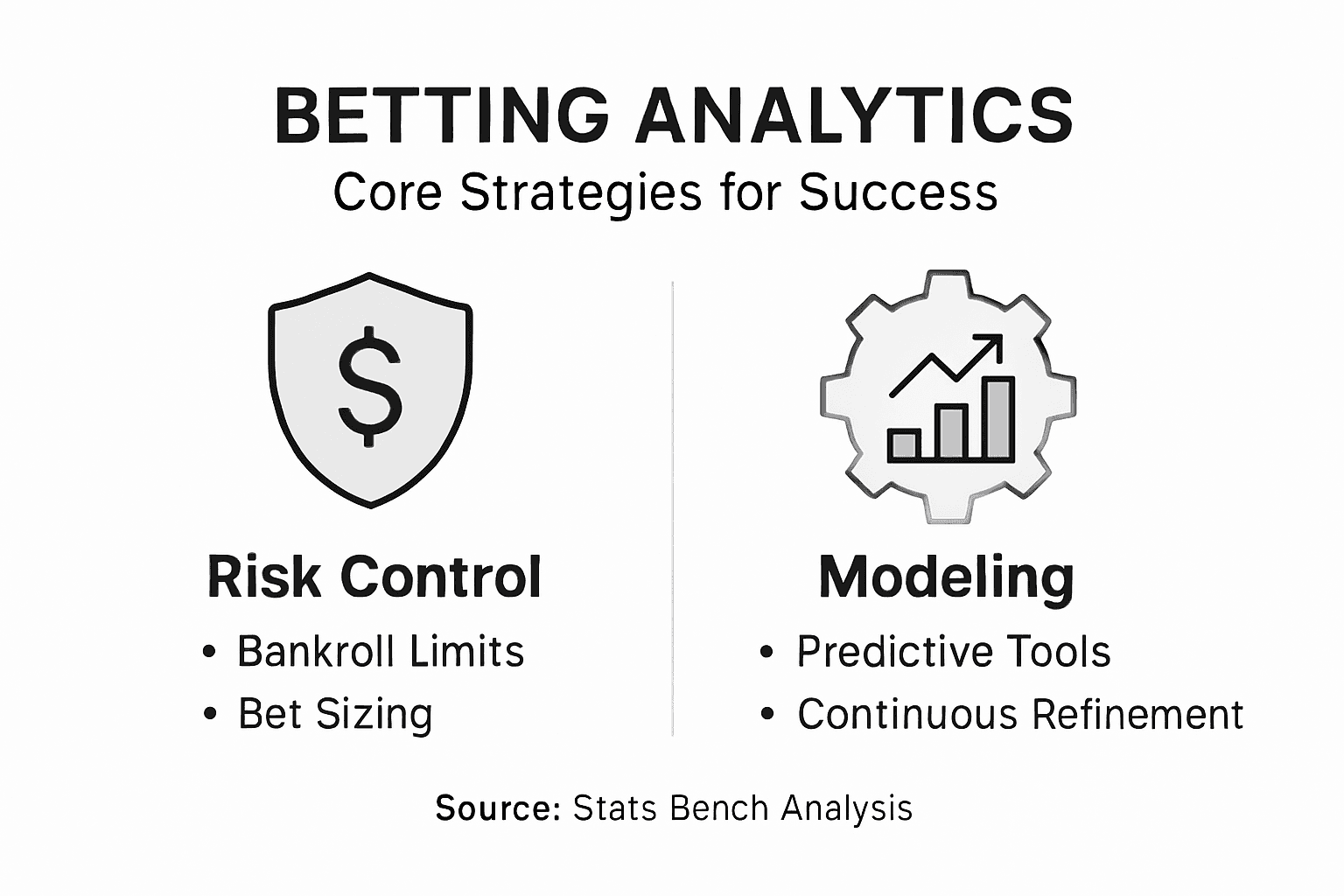
The Kelly Criterion represents a cornerstone of analytical betting strategies, providing a mathematical model for optimal bet sizing based on statistical probability. Professional bettors typically use a fractional Kelly approach, which allows for more conservative betting while still capturing potential value opportunities. Statistical modeling of betting opportunities reveals that disciplined bankroll management is just as crucial as identifying profitable betting lines. This means carefully calculating bet sizes relative to your total bankroll, never risking an amount that could potentially wipe out your entire betting capital.
Successful long-term betting requires continuous model refinement and a commitment to data-driven decision making. This involves maintaining detailed records of every bet, analyzing performance metrics, identifying systemic biases, and being willing to adapt strategies as market conditions evolve. The most sophisticated bettors treat their approach like a quantitative investment strategy, constantly testing hypotheses, measuring outcomes, and incrementally improving their predictive models.
Pro tip: Implement a strict bankroll management protocol that limits individual bet sizes to 1-3% of your total betting capital, ensuring you can withstand inevitable statistical variance without risking total financial ruin.
Master Betting with Data-Driven Analysis and Positive EV Models
The article highlights the challenge many bettors face in moving beyond intuition and embracing rigorous statistical methods like implied probability and expected value. If you have struggled to avoid common pitfalls like emotional betting or small sample size fallacies, it is clear that systematic data analysis and predictive modeling are essential. Achieving long-term profitability requires disciplined strategies that identify genuine positive EV opportunities while effectively managing risk.

Take control of your betting edge today with Stats Bench. Our daily models analyze thousands of data points from NBA player props to NHL shot totals, uncovering mispriced odds the sportsbooks miss. Designed to prevent costly biases and emotional traps, our tools provide the kind of sophisticated statistical insights discussed in the article. Don’t rely on gut feelings—discover how a mathematically sound approach can transform your wagers into consistent returns. Start exploring our comprehensive betting cheatsheet and elevate your strategy now.
Frequently Asked Questions
What is implied probability in betting?
Implied probability represents the likelihood of an outcome based on betting odds. It helps bettors assess whether a wager has genuine statistical value compared to the actual chances of an outcome occurring.
How does one calculate expected value (EV) in betting?
Expected value (EV) is calculated by multiplying the potential outcomes of a bet by their respective probabilities and summing those values. A positive EV indicates a mathematically advantageous bet over time.
What are common pitfalls in sports betting related to statistics?
Common pitfalls include relying on small sample sizes, falling for confirmation bias, emotional betting, and ignoring the natural variance in outcomes. Avoiding these traps is essential for making informed betting decisions.
Why is bankroll management important in sports betting?
Bankroll management is crucial as it ensures bettors do not risk their entire betting capital on individual wagers. A disciplined approach allows for sustainable betting practices and long-term profitability by controlling bet sizes relative to total bankroll.
Recommended
- Why Use Betting Data: Gaining a Sharp Edge
- Role of Analytics in Betting: Maximizing Your Edge
- What Is Sports Betting: Unlocking Analytical Edge
- Why Use Betting Systems: Gaining a Real Analytical Edge
Free preview
See today’s MLB player props on StatsBench
Live lines, last-10 hit rates and the best price across about 60 books. No account needed to look.
Open the MLB player props board →
Prefer email? Get the daily picks newsletter.