

Start here: what you’re actually betting on
Valorant esports betting means wagering on professional Valorant matches, either on the match result or on smaller markets like map winners and individual player kill totals. The workflow is simple: pick a market you understand, check the player’s or team’s recent numbers on that exact stat, compare prices across books, then size the bet. That’s it. Everything below is just detail on each of those four steps.
Valorant is a 5v5 tactical shooter played in best-of-three or best-of-five series. Riot Games runs the top-tier circuit (VCT), and you can check the official schedule at valorantesports.com. Matches are structured, repeatable and stat-heavy, which is exactly what a props bettor wants.
Key takeaway: the map is the unit of analysis, not the series. A team can lose 2-1 and still smash the kill totals in the maps they played.
Step 1: Learn the four markets that matter
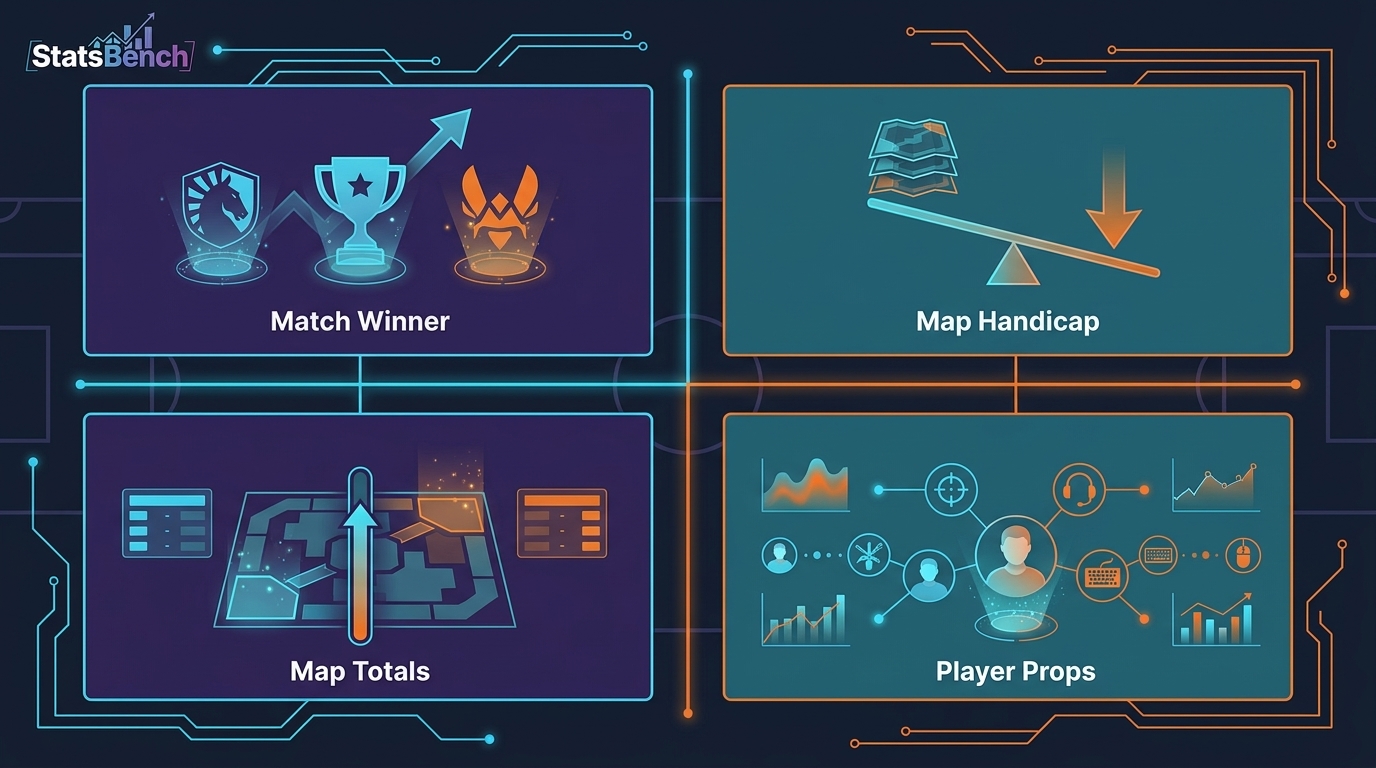
You only need four market types to start. Most Valorant slates on a book are built from these, and each one asks a different question.
- Match winner (moneyline): who wins the series. Simple, but heavily shopped and usually the tightest priced.
- Map handicap / correct score: 2-0 vs 2-1 outcomes. Requires an opinion on map pool depth, not just team strength.
- Map totals: total rounds played on a map, usually around 20.5 to 22.5.
- Player props: map 1 kills, map 2 kills, headshots, deaths, first blood. This is where soft pricing lives.
Player props are the beginner-friendly entry point for one reason: the sample you need is small and public. You need a player’s kill counts over their recent maps, the roles they play, and the line. Compare that to a moneyline, where you’re pricing a full team, a coach, a patch and a map veto in one number.
Step 2: Read the stat that matches the market
Match the research to the exact prop. Kills props care about role and round count. Deaths props care about entry duty. Headshots props care about agent and weapon habits. Mixing them up is the single most common beginner mistake.
Which stats actually move a kills prop?
- Role: duelists (Jett, Raze, Reyna) carry entry duty and post the highest kill ceilings. Sentinels and controllers sit lower.
- Expected round count: a 13-11 map has far more kill opportunity than a 13-3 stomp. Blowout risk is the hidden killer of an over.
- Opponent pace: teams that force fast contact inflate both sides’ kill totals.
- Map: the veto decides which maps get played, and map pools shift kill distribution by agent comp.
Why deaths props are underrated
Deaths are steadier than kills. An entry fragger dies on a fairly predictable schedule because their job forces contact every round. That stability shows up in the data. In a StatsBench cheatsheet snapshot from September 4, 2026, a Nongshim RedForce vs Global Esports series had multiple map 2 deaths lines sitting at 60% hit rates over the last 10 maps, including Francis over 15.5 and Autumn under 14.5. Neither carried much modeled edge, which is the point: high hit rate does not equal a good price.
Step 3: Turn a hit rate into a decision
A hit rate tells you how often a line cleared. The price tells you how often it needs to clear. Compare those two numbers and you have a bet or a pass.
Here’s the math in one line. A prop at -135 needs to win about 57% of the time to break even. So a 60% hit rate at -135 is roughly a coin flip against the vig once you account for a 10-map sample being tiny. Run the numbers yourself with the implied probability calculator before you click bet.
Real example from that same September 4, 2026 StatsBench snapshot:
| Player (series) | Prop | Hit rate (L10) | Edge | Best price |
|---|---|---|---|---|
| Dambi (NS vs GE) | Map 2 kills o/u 16.5 | 60% (6/10) | 1.0% | -135 |
| Dambi (NS vs GE) | Map 1 kills o/u 17.5 | 60% (6/10) | 0.3% | -106 |
| PatMen (GE @ NS) | Map 2 kills o/u 15.5 | 60% (6/10) | 0.3% | -120 |
| Francis (NS vs GE) | Map 2 deaths o/u 15.5 | 60% (6/10) | -0.3% | +108 |
Four props, identical 60% hit rates, four different edges. One is actually negative. Hit rate without price is a vanity metric. If that distinction is new, read our breakdown of hit rate vs edge and what a 60% hit rate really means.
Step 4: Shop the price before you bet
Same prop, different books, different numbers. Esports lines are posted by fewer traders than NFL lines, so the spread between books is often wider. Taking -106 instead of -120 on the same side is free expected value, and it compounds over a season.
Two things to check every time:
- The number: is one book at 16.5 kills while another sits at 17.5? A full kill of line movement matters more than 15 cents of juice.
- The juice: at the same number, take the shorter price. Always.
StatsBench tracks roughly 60 sportsbooks and surfaces the best available price per prop, which is the boring, unglamorous part of the edge. For choosing where to actually hold an account, our guide to comparing Valorant betting sites covers market depth, prop menus and payout speed.
Step 5: Size the bet and accept variance
Flat staking beats gut staking. Pick a unit (1% to 2% of your bankroll is a common starting point), bet the same size on every play, and let the sample grow. If you want to scale stakes to edge, run the numbers through the Kelly criterion calculator and then use a fraction of what it spits out.
Expect losing weeks. A genuine 55% win rate still loses 45 bets out of 100, often in clumps. That’s not a broken process, that’s math. Our piece on why good bets lose walks through the distribution honestly.
Betting is entertainment, not income. Bet only what you can afford to lose, 21+ where legal, and if it stops being fun, call 1-800-GAMBLER.
How does valorant esports betting differ from traditional sports?
Three practical differences change how you research. Lines move faster, rosters change more often, and the game itself gets patched.
- Patch risk: an agent nerf can reshape kill distribution overnight. A player’s 10-map sample from two patches ago may describe a different game. Riot publishes patch notes on the official Valorant site.
- Roster churn: substitutions and role swaps happen mid-season. Always confirm the starting five before betting a player prop.
- Thinner markets: lower limits and later posting times, but softer pricing. That’s the trade-off, and it favors the prepared bettor.
- Schedule density: international events stack matches. Fatigue and travel are real inputs that books price loosely.
The upside: Valorant produces clean, granular per-map stats. Kills, deaths, assists, headshot percentage and first bloods all log per map, per player. That’s a better research surface than most traditional sports offer at the prop level.
A 15-minute pre-match routine you can copy
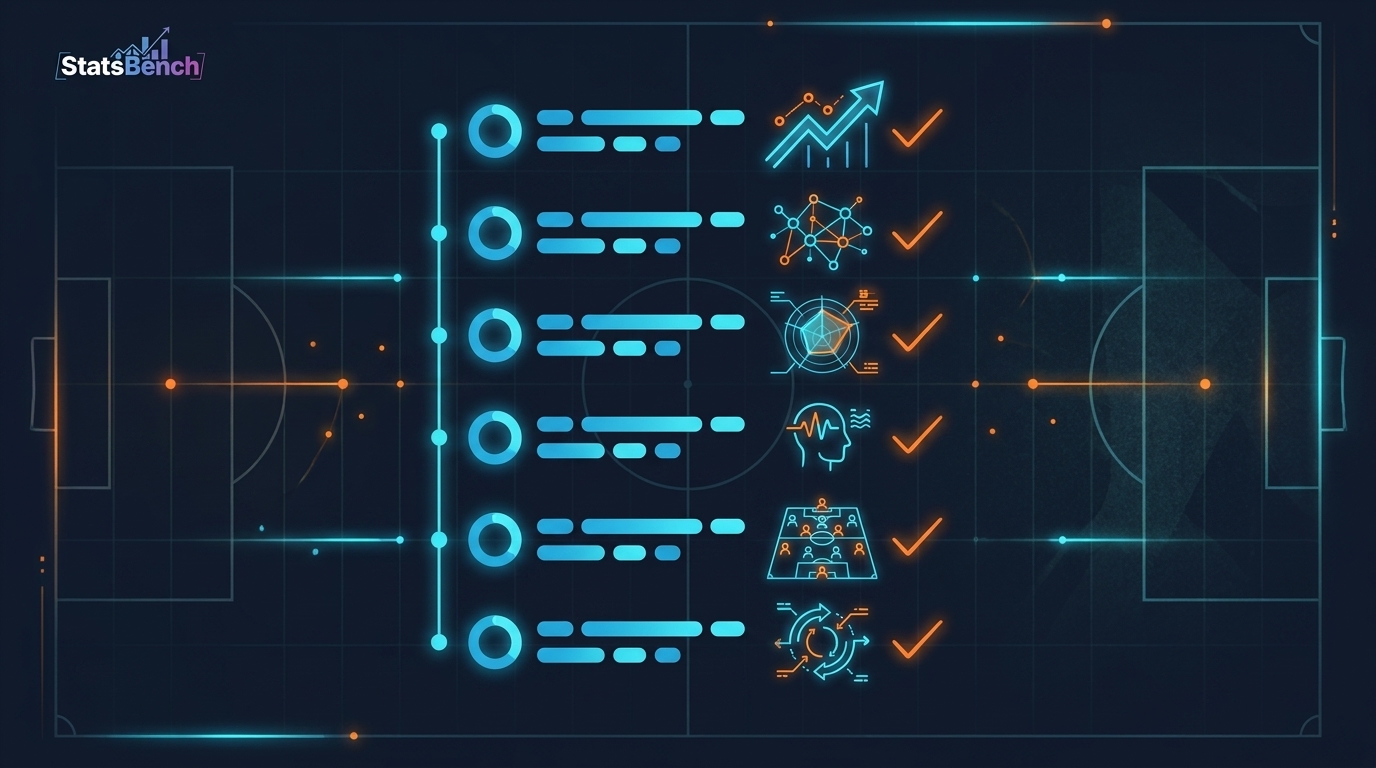
Do these six things in order. It takes about 15 minutes per series once you’ve done it a few times.
- Confirm the rosters and check for stand-ins.
- Pull the last 10 maps for the players you’re considering, per stat.
- Note the likely map veto and whether it favors either team’s comp.
- Estimate blowout risk. Big favorites shorten maps and kill overs.
- Convert the price to a break-even percentage and compare it to your read.
- Shop the number across books, then bet one unit.
Skip step 5 and you’re guessing. Skip step 6 and you’re paying more than you have to.
Should you parlay Valorant props?
Usually no, at least not blindly. Parlays multiply the vig, and correlated legs on the same map (two teammates’ kill overs) can both die in one 13-4 blowout. If you do build one, understand the math first: our parlay math guide is honest about the cost, and the parlay calculator shows what you’re actually being paid.
Where the research tool fits
Doing steps 2 through 4 by hand across a full esports slate is slow. That’s the whole reason prop research tools exist. StatsBench pulls per-map hit rates, consistency grades, modeled edge and the best available price into one sortable view, so you’re picking from a filtered list instead of scrolling a sportsbook menu.
The tool doesn’t hand you picks and never will. It hands you the numbers so you can make the call. If you want more grounding on esports pricing generally, start with our esports odds guide.
Ready to work a slate properly? Pull up the StatsBench Prop Finder and filter Valorant props by hit rate, edge and best price before the maps go live.
Live board
See today’s Valorant player props on StatsBench
Live lines, last-10 hit rates and the best price across about 60 books.
Open the Valorant player props board →
Prefer email? Get the daily picks newsletter.
Frequently Asked Questions
Is betting on Valorant legal?
It depends entirely on where you live. Esports wagering is regulated the same way as other sports betting in most jurisdictions, so legality varies by state and country. Check your local rules, and only bet if you are of legal age (21+ in most US states).
What is the easiest Valorant market for a beginner?
Map 1 player kills. You only need one player’s recent per-map kill numbers, their role, and the line, which is far less research than pricing a full series. Just remember to convert the odds to a break-even percentage before betting.
How many maps of data do I need before betting a player prop?
Ten maps is a common starting sample, but it is small. Treat a 6-for-10 hit rate as a hint, not proof, and weight it against the price and any recent roster or patch changes.
Do kills props push if a match ends early?
Rules vary by book. Most sportsbooks void player props if the map is not completed or the player does not participate, but some settle differently on forfeits and technical pauses. Read the specific book’s esports rules before you bet.
Why do two books offer different kill lines on the same player?
Esports markets are priced by fewer traders and move less efficiently than major US sports. That creates real gaps, so shopping the number across books is one of the simplest ways to improve your long-run return.