
A sack prop asks one question: will this defender get home at least once? NFL sacks props are one of the thinnest markets on the board, which is exactly why they’re interesting and exactly why they’re easy to misprice.
The lines are tiny. Most sit at 0.5 for an edge rusher and 0.25 for a rotational player. One pressure decides the whole bet.
Here’s how the lines settle, what actually drives sack production, and what a real StatsBench snapshot shows about the gap between a hit rate and an edge.
What Is an NFL Sacks Prop?
A sacks prop is a player market on how many times one specific defender records a sack in a game. Books post an over/under, usually 0.5 for a starting edge rusher or 0.25 for a rotational player, and you pick a side.
Sacks are rare events. A good rusher might record one in roughly half his games and two in a handful. That shapes everything about how these lines are set and priced.
| Line | Over cashes with | What happens at zero sacks |
|---|---|---|
| 0.25 | 1 or more sacks | Half the stake pushes, half loses |
| 0.5 | 1 or more sacks | Full loss |
| 1.5 | 2 or more sacks | Full loss |
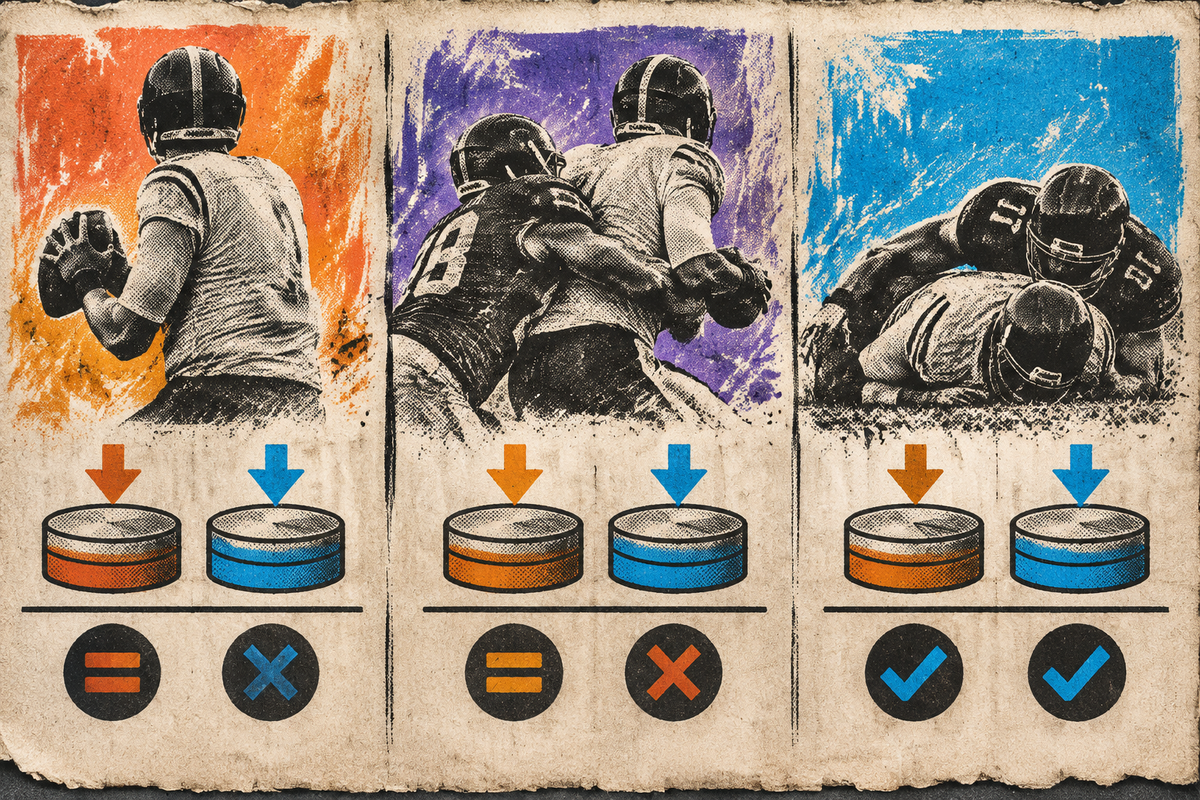
The 0.25 line is the one that trips people up. Some books split your stake between a 0 line and a 0.5 line. Zero sacks means half your bet pushes and half loses. One sack and the whole thing wins.
That structure matters. On a 0.25 line you aren’t really betting on a stat. You’re betting on what a single pressure is worth to you.
The 60% Trap: Why Hit Rate Alone Won’t Find an Edge
Hit rate tells you how often a player cleared a line in the past. It says nothing about whether the price is fair. The market already knows the hit rate, and it bakes that number into the odds.
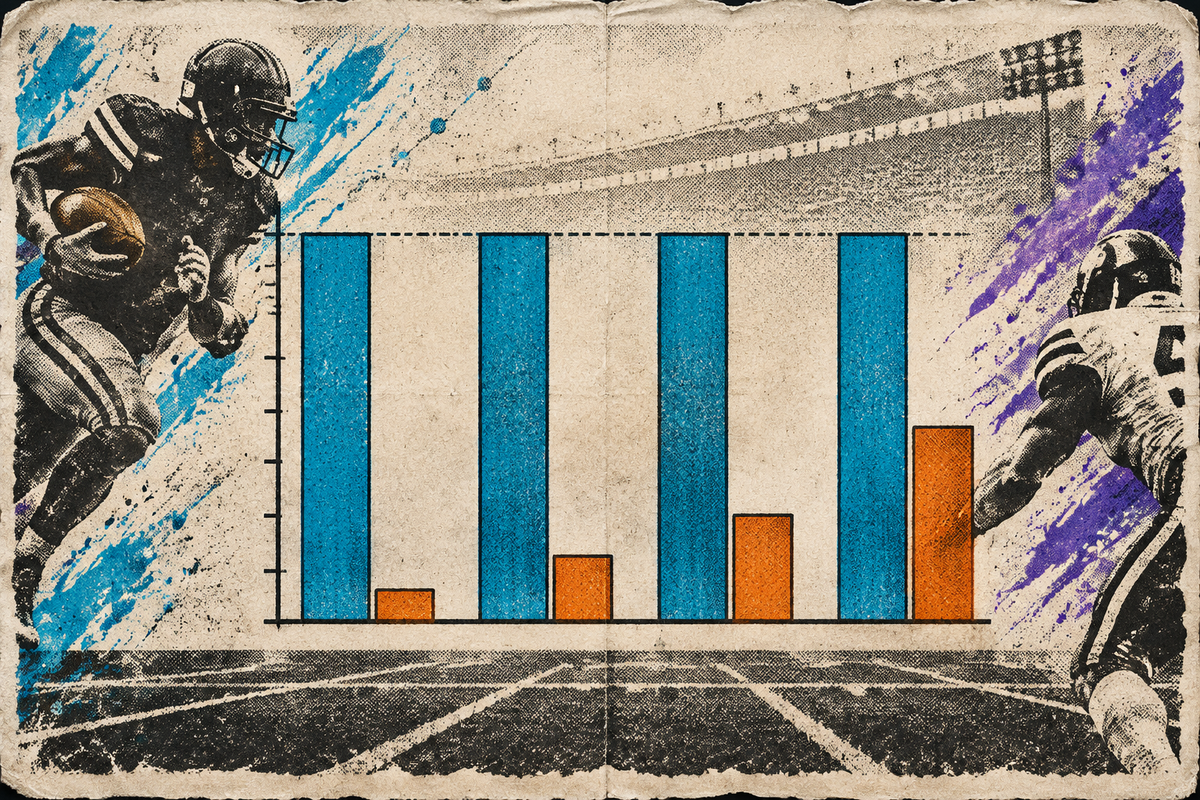
A StatsBench snapshot from November 1, 2026 makes this obvious. Every NFL prop in that sample showed a 6-of-10 hit rate, a clean 60%. The edges ranged from 0.6% to 8.1%.
- Greg Rousseau, sacks over 0.25: 6/10 (60%), edge 0.8%, best price -118
- Greg Rousseau, solo tackles over 1.5: 6/10 (60%), edge 0.6%, best price -135
- Ty Johnson, rushing yards over 3.5: 6/10 (60%), edge 8.1%, best price -110
- Keon Coleman, receiving yards over 30.5: 6/10 (60%), edge 7.3%, best price -110
Same hit rate across all four. Wildly different edges. Sort those bets by the percentage alone and you’d have no way to tell them apart.
The edge figure compares the implied probability of the best available price against StatsBench’s projection for that prop. On sacks the edges tend to be small, because the market is thin and the outcomes are loud. That -118 on Rousseau converts to about 54.1% implied, so a sub-1% edge leaves almost no margin. Run the conversion yourself with the implied probability calculator.
What Actually Drives Sack Production?
Four things move a sack line more than a defender’s reputation does.
- Pass-rush snaps. A defender who rushes the passer on 45 snaps gets more chances than one who plays 25. Snap share shifts before sack totals do.
- Opponent pressure allowed. Some offensive lines and quarterbacks surrender pressure at a high rate. Pressure is not the same as sacks, but the two travel together.
- Time to throw. A quarterback who holds the ball invites contact. A quick-game offense can erase a great rusher for 60 minutes.
- Game script. A team playing from behind throws more, which hands the opposing front more pass-rush chances. Spread and total both matter.
Blitz rate belongs on that list too. Extra rushers create more one-on-one matchups, so a defense that pressures heavily can lift the whole front.
Sample Size: Why 6-of-10 Is Not a Trend
Ten games is a small sample, and sacks are a low-frequency event inside it. A defender who sits 6-for-10 on a 0.5 line has already lived through several games decided by a hurry that never landed.
That noise cuts both ways. A cold stretch doesn’t mean a rusher forgot how to finish. A hot streak doesn’t mean he unlocked something new. Most of the time it means the ball bounced his way.
Pricing a sack prop well means asking whether a defender’s pressure rate, not his sack total, justifies the number. For a longer look at how many games is enough, the piece on sample size in betting walks through the math.
Sacks vs Tackles: Which Defensive Market Is Steadier?
Tackles props settle on a much higher number, often 4.5 to 7.5 for a starter, and they lean on scheme and snap count more than on one explosive play. That makes them steadier than sacks, though not automatically easier to beat.
The trade-off is real. Sacks bring fatter prices and louder variance. Tackles bring thinner prices and quieter variance. Which one fits depends on whether your read comes from the matchup or from the role.
If you want the tackles side, the NFL tackles props guide runs the same line-reading process from the other direction.
How to Bet NFL Sacks Props Without Overpaying
A thin market means the price gap between books is where the value hides. A rusher at -118 at one book and -140 at another is the same bet with a very different tax.
StatsBench shows the best price across 30+ sportsbooks, DFS apps and exchanges on every prop, so you can see that gap before you commit. The NFL props preview is the fastest way to look at a slate.
Three habits that pay for themselves over a season:
- Convert every price to implied probability before comparing two books.
- Check whether the line is 0.25 or 0.5. Half a stake is real money.
- Confirm the defender is active and projected for his normal snap share. Depth charts and injury reports live on the prop page for a reason.
A Real Example: Greg Rousseau, Bills at Ravens
Back to the November 1, 2026 snapshot. Rousseau’s sack line sat at 0.25 with a 60% hit rate (6/10), an 0.8% edge and a best price of -118.
Read that closely. He cleared the line in six of his last ten. The edge is under a percentage point. That’s not a screaming bet, it’s a near coin flip with a small nudge in your favor, and the price already carries most of it.
Now set it next to Ty Johnson’s rushing yards line at 3.5, also 60%, priced at -110, with an 8.1% edge. Same hit rate, roughly ten times the edge. That’s the difference between an efficient market and a soft one.
Neither is a promise. Both can lose. The point is that one pays you for the research and the other barely does.
Edge is also a long-run idea. One game settles one bet, and sacks are a market where a single hurry flips the result. Log your bets, judge the process over months, and stake only what you can afford to lose. 21+, and help is available at 1-800-GAMBLER if betting stops being fun.
A Quick Checklist Before You Bet a Sack Line
- Is the line 0.25, 0.5 or 1.5? Know what a zero-sack game does to your stake.
- Is the pass-rush matchup real, or are you reading last week’s box score?
- Is this the best price available, or just the first book you opened?
- Does the edge survive the vig once you convert the odds?
- Is the sample big enough to trust, or are you chasing noise?
Sort by Best EV in the Prop Finder and the snapshot pattern repeats: plenty of props, far fewer real edges. The guide to variance in betting explains why a good number still loses more often than feels fair, and why that’s the cost of doing business.
Sacks are a small-line market with loud results. Treat them as research, not certainty, and let the price do the work.
Free preview
See today’s NFL player props on StatsBench
Live lines, last-10 hit rates and the best price across 30+ books and pick’em apps. No account needed to look.
Open the NFL player props board →
Prefer email? Get the daily picks newsletter.
Frequently Asked Questions
What is a sack prop in NFL betting?
It’s a player prop on how many sacks a specific defender records in a game. Books usually post 0.5 for a starting edge rusher, 0.25 for a rotational player, or 1.5 for a player who consistently lives in the backfield.
How does a 0.25 sack line settle?
Some books split your stake between a 0 line and a 0.5 line. If the defender records zero sacks, half the bet pushes and half loses. One sack and the full bet wins.
Are sacks props a good bet?
They can be, but the edges are usually thin and the variance is loud. A defender’s hit rate is already priced in, so the work is finding a soft number across books, not just a player with a strong recent line.
How many games should I look at before betting a sack prop?
More than a handful. Sacks are low-frequency events, so a four or five game stretch is mostly noise. Ten games is a starting point, and even then you should lean on pressure data rather than sack totals alone.
Where can I compare sack prop prices?
StatsBench shows the best price across 30+ sportsbooks, DFS apps and exchanges on every prop. The free NFL props preview is the quickest way to see a full slate before you commit.
 Today's NBA picks


 Today's NFL picks

 Today's NHL picks



 Today's College Football picks

 Today's EPL picks



 Today's La Liga picks



 Today's Serie A picks


 Today's Bundesliga picks



 Today's Ligue 1 picks



 Today's EFL Championship picks



 Today's CS2 picks
 Today's LoL picks



 Today's Valorant picks
 Today's Dota 2 picks

 PHI
 DET
 BOS
 ATL
 TOR
 CLE
 NY
 WSH
 MIA
 CHA
 IND
 ORL
 BKN
 CHI
 MIL
 POR
 LAL
 HOU
 OKC
 SA
 MEM
 MIN
 GS
 DEN
 NO
 DAL
 PHX
 LAC
 UTAH
 SAC
 BUF
 DEN
 PIT
 JAX
 KC
 CIN
 NE
 CLE
 LV
 BAL
 HOU
 NYJ
 IND
 MIA
 TEN
 LAC
 SF
 MIN
 NYG
 CAR
 CHI
 DET
 GB
 SEA
 LAR
 TB
 ATL
 ARI
 DAL
 WSH
 NO
 PHI
 CAR
 BOS
 MTL
 OTT
 TB
 NJ
 FLA
 TOR
 BUF
 NYR
 DET
 WSH
 NYI
 CBJ
 PIT
 PHI
 EDM
 MIN
 VGK
 UTA
 DAL
 SEA
 COL
 NSH
 STL
 ANA
 CGY
 SJ
 WPG
 LA
 CHI
 VAN
 MIA
 UGA
 UTAH
 ND
 UCLA
 IU
 BYU
 UK
 ALA
 TEX
 OSU
 MISS
 TTU
 WAKE
 LSU
 TENN
 HOU
 USC
 MIZ
 BOIS
 IOWA
 UNM
 SC
 ARIZ
 FLA
 ARS
 MCI
 BHA
 CHE
 LIV
 BRE
 EVE
 BOU
 TOT
 AVL
 Hull City
 LEE
 NEW
 IPS
 FUL
 Coventry
 MUN
 CRY
 NFO
 SUN
 BAR
 ATM
 RMA
 BET
 RSO
 SEV
 ATH
 DEP
 VIL
 CEL
 ALA
 RAY
 GET
 ESY
 OSA
 RAC
 ELC
 LVT
 VAL
 MAL
 LAZ
 INT
 ROM
 COM
 MIL
 Frosinone
 JUV
 NAP
 BOL
 TOR
 GEN
 CAG
 ATA
 LEC
 PRM
 FIO
 SAS
 MON
 UDI
 VEN
 FCB
 BVB
 SCF
 RBL
 SVW
 B04
 SV Elversberg
 SGE
 M05
 FCA
 VFB
 TSG
 KOE
 SC Paderborn 07
 HSV
 FCU
 FC Schalke 04
 BMG
 PSG
 LOSC
 LYO
 PFC
 REN
 OM
 ASM
 NCE
 LEN
 B29
 LOR
 TOU
 STR
 AUX
 ANG
 Troyes
 Le Mans
 LEH