

Corners betting is about one number: how many corner kicks a match will produce. You back the over or the under on a posted total, or you take one team to win the corner count. Finding the market is easy. Working out whether the line is too high or too low is the job.
This guide covers how corner markets are priced, what actually creates corners, and how to check a total before you stake. The examples use football (soccer), so the same method carries across the Premier League, La Liga, Serie A and anything else you follow.
What is corners betting?
Corners betting means wagering on corner kicks instead of the match result. A bookmaker posts a total for the game, such as 9.5 or 10.5, and you bet whether the real count finishes above or below that number. Team-level and novelty versions exist too.
- Total corners over/under. The main market, usually posted with a half line so there is no push.
- Team corners. One side’s count against its own line. Useful when you expect the game to be one-way traffic.
- Corner handicap and corner match bet. Which team wins the corner count, with a start given to the underdog.
- First corner and race to N corners. Short prices that hinge on early tempo more than anything else.
- Corner bands. Ranges like 8 to 10 corners. Better prices, but you need a tighter read.
One thing to accept early: corner counts are noisy. Two similar-looking matches can finish 4-3 and 11-8. That variance is why the totals sit where they do, and why a good corner bet usually comes from a matchup read rather than a gut feel about a team being “due” for corners.
Why corner totals sit where they do
A corner total is a forecast of attacking volume, not a coin flip. The trader starts with each team’s corner rate, adjusts for the opponent’s style, then adds assumptions about tempo and game state. Your edge comes from disagreeing with one of those inputs for a reason.
Watch the line format as well as the number. A half line like 9.5 cannot push, so the price carries the full risk. A whole number like 10.0 can push, and exactly 10 corners returns your stake. That changes the maths, and it changes what a fair price looks like.
What actually drives corner counts
Corners come from attacks that get stopped late: a blocked shot, a deflected cross, a keeper pushing the ball around the post, a defender sliding one behind. So the count tracks how often a team reaches the final third and how crowded it is when they get there.
The inputs that matter most:
- Cross volume and cutbacks. Balls into the box create deflections and blocks, which is where corners come from.
- Blocked shots. A deep defence that bodies shots away concedes corners along with the pressure.
- Saves. A busy goalkeeper is a sign of a team pinned back, and keepers push plenty of shots wide.
- Game state. A side chasing a goal after 60 minutes throws bodies and crosses forward. A side protecting a lead usually does not.
- Low blocks. Parked buses concede territory and corners. They also cut down clear chances, which is why the two markets can diverge.
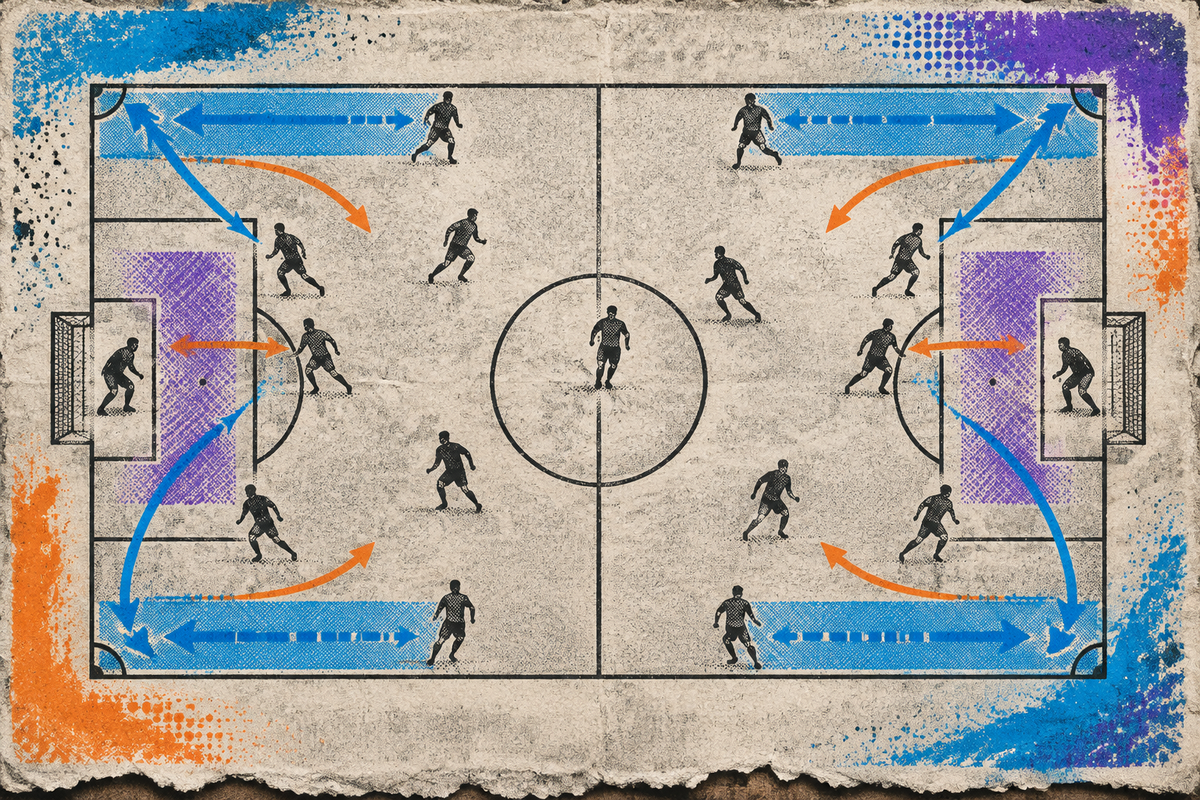
Possession on its own tells you very little. A team can hold 65% of the ball with sideways passes and finish with three corners. What you want is possession that reaches wide areas and ends in a cross or a shot, because that is the sequence that produces corners.
How to read the numbers before you stake a corner total
A corner line is only as good as the attacking inputs behind it. Before you take an over, look at who is shooting, which keeper is busy and where the fouls are being won. Then ask whether the posted total already reflects all of it.
Here is a real StatsBench snapshot from a November 2026 club slate, chosen because it shows the kind of match-level detail that sits next to a corner view:
| Match | Market | Record | Best price |
|---|---|---|---|
| Venezia vs Udinese (Serie A) | Antoine Hainaut shots over 0.5 | 8/10 (80%) | 1.53 (-188) |
| Venezia vs Udinese (Serie A) | Gianluca Busio tackles over 1.5 | 5/6 (83.3%) | 1.65 (-155) |
| Coventry vs Everton (Premier League) | B. Thomas shots over 0.5 | 6/8 (75%) | 1.73 (-137) |
| Coventry vs Everton (Premier League) | J. Rudoni shots on target over 0.5 | 6/9 (66.7%) | 1.90 (-111) |
| HSV vs Gladbach (Bundesliga) | D. Heuer Fernandes saves over 2.5 | 8/10 (80%) | 1.61 (-165) |
None of those rows is a corner bet. They are shape, not a forecast: who is shooting, who is tackling, which keeper is being worked. A keeper with a heavy save workload behind a defence that crosses a lot is the profile that often produces corners at both ends. The market sees the same thing, so the total rarely offers an easy number.
Read the sample sizes too. A 5/6 record is a small sample, and it should be treated like one. The full game logs behind each row matter more than the headline percentage. You can pull the same detail for La Liga in the La Liga prop board or Serie A in the Serie A prop board, and the guide to reading prop odds covers the price side.
Total corners or team corners?
Totals are safer in a chaotic game; team corners are better when you have a clear read on one side. The trade-off is straightforward. A total needs both teams to contribute, so a heavy favourite can dominate and still leave the over short if the underdog never crosses halfway.
Team corners pay you for the mismatch you actually identified. If you think a low block is going to sit deep for 90 minutes, the favourite’s team corner line is the direct expression of that view. The cost is that the price is usually shorter and the line is tighter, so a small miss on the count can flip the result.
Turning a corner price into a probability
You cannot judge a corner bet without converting the price. A price of 1.91 (-110) implies 52.4%, because 1 divided by 1.91 is 0.524. If your read says the over lands 56% of the time, the bet is worth taking. If it says 50%, you are paying the book for nothing.
Now price both sides. If the over and the under are both 1.91 (-110), the two implied probabilities add to 104.7%. That extra 4.7% is the hold, and the fair price on each side is close to 2.00 (+100). Turning 1.91 into a real probability means stripping that margin out first. The implied probability calculator does the first step, and the de-vig calculator does the second.
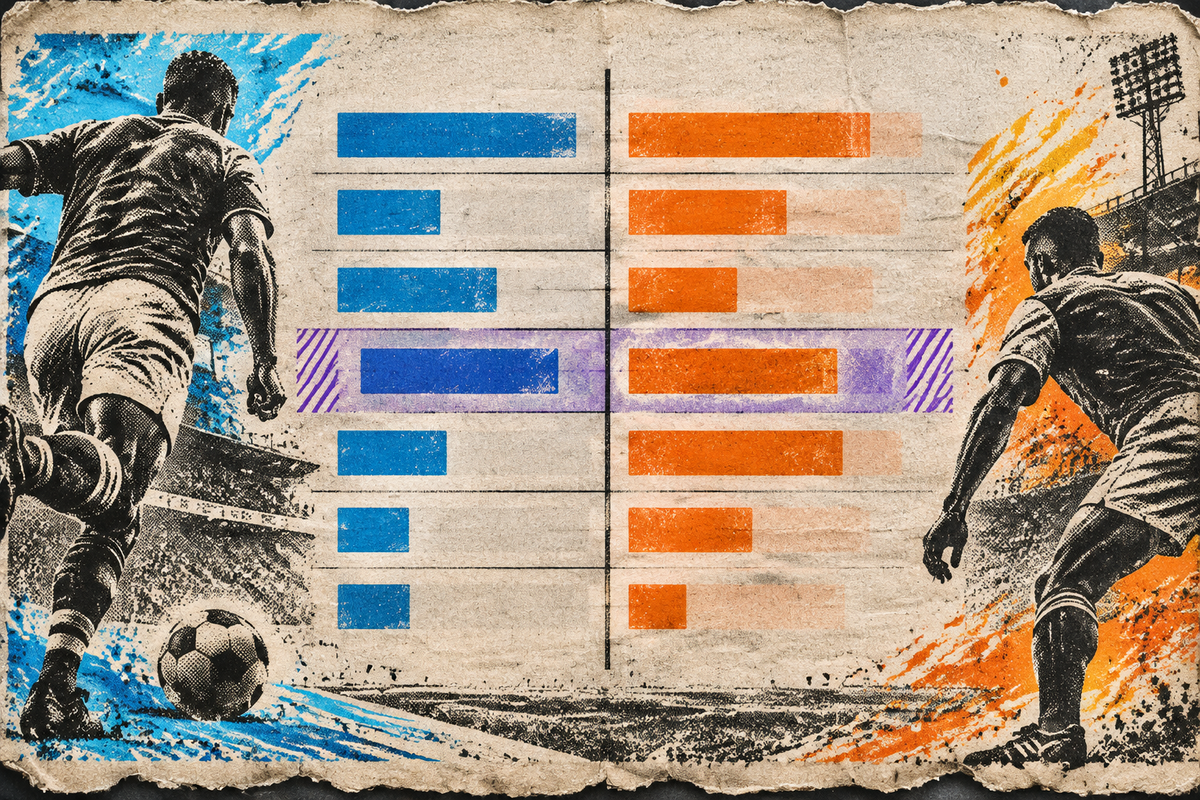
Do the expected value check too, and be honest about what it means. A 56% read at 1.91 returns about 7p of expected value per pound staked. Expected value is a long-run average, not a promise on any single match, and a run of losing overs is entirely normal inside a winning method.
In-play corners: where the number moves fastest
Live corner totals react to time and score before they react to corner counts. At 0-0 after 55 minutes with few corners, the in-play line drops sharply, because there is less time left to reach the pre-match total. That drop is sometimes too big.
The better in-play spots usually share a pattern: the game state says a team must push, the pressure is real (crosses, blocked shots, saves) but the corner count has not caught up, and the live line has already priced in a quiet game. What you are looking for is a mismatch between the pressure and the price, not just a low number on the board.
What you are not looking for is a chase. Doubling up after a slow first half because the over “must” land is how a small, sensible stake turns into a bad night. The line moved for a reason: there are fewer minutes left.
Where corner bets go wrong
Most bad corner bets fail on the same handful of points. Fix these and the market becomes a lot less random.
- Recency bias. A team’s last three corner counts feel predictive and usually are not. Ten games is a thin sample and it says nothing about tonight’s opponent.
- Ignoring the opponent. Corner rates are matchup-dependent. A crossing team against a deep block is a different proposition from the same team against a high line.
- Treating possession as pressure. Territory without crosses or shots does not create corners.
- Forgetting the push. Whole-number lines change the maths. A push is not a win.
- Betting past your bankroll. Corner markets are volatile. Stake sizes set for a coin-flip market, not a 9.5 total, are the ones that hurt.
Bet only where it is legal and at the legal age in your jurisdiction. Corner counts swing hard from week to week, so treat any edge as a long-run idea rather than a result you can count on in a single match.
Researching corners with StatsBench
StatsBench is a research desk, not a corner-tip service. The point is to get the match detail quickly: who is shooting, who is being tackled, which keeper faces volume, and what price the market is offering across the books it tracks.
For a corner view, start with the match previews and player prop boards for the league you are betting. Premier League games sit on the EPL prop board, and the daily Premier League predictions page gives you the current match numbers in one place. For other leagues, the football predictions hub and the football player props guide cover how the markets fit together.
Two more reads worth your time: the yellow card betting guide, because aggressive pressing teams tend to give up fouls and corners in the same phases, and the StatsBench home page if you want to see what the full research setup looks like across leagues. Build the read first. The bet is the last step, not the first.
Free account
See today’s football player props on StatsBench
Live lines, last-10 hit rates and the best price across 30+ books and pick’em apps. A free account opens the board.
Open the football player props board →
Prefer email? Get the daily picks newsletter.
Frequently Asked Questions
What does over 9.5 corners mean?
It means you need 10 or more corners in the match for the bet to win. Nine or fewer and the over loses. The half line removes the possibility of a push, so the stake is fully at risk.
Do corners count as a prop bet?
They can be framed that way, but total corners is usually treated as a team market rather than a player prop. The pricing logic is the same: you are taking a view on an event count against a posted line and a price.
How are corner totals worked out by bookmakers?
Traders start with each team’s corner rate, adjust for the opponent’s style and the venue, then factor in expected tempo and game state. If you disagree with one of those inputs for a solid reason, that is where a bet comes from.
Is corners betting profitable long term?
Only if you price the line better than the market more often than not. Most corner bettors lose to the margin over time, and corner counts are volatile enough that short winning or losing runs tell you very little about your method.
Should I bet total corners or one team’s corners?
Totals suit open games where both teams will attack. Team corners are better when you have a specific read on one side, like a low block inviting pressure all match, but the prices are usually shorter.
 Today's NBA picks



 Today's NFL picks



 Today's NHL picks



 Today's College Football picks



 Today's EPL picks



 Today's La Liga picks



 Today's Serie A picks



 Today's Bundesliga picks



 Today's Ligue 1 picks



 Today's EFL Championship picks



 Today's CS2 picks



 Today's LoL picks



 Today's Valorant picks
 Today's Dota 2 picks


 PHI
 DET
 BOS
 ATL
 TOR
 CLE
 NY
 WSH
 MIA
 CHA
 IND
 ORL
 BKN
 CHI
 MIL
 POR
 LAL
 HOU
 OKC
 SA
 MEM
 MIN
 GS
 DEN
 NO
 DAL
 PHX
 LAC
 UTAH
 SAC
 BUF
 DEN
 PIT
 JAX
 KC
 CIN
 NE
 CLE
 LV
 BAL
 HOU
 NYJ
 IND
 MIA
 TEN
 LAC
 SF
 MIN
 NYG
 CAR
 CHI
 DET
 GB
 SEA
 LAR
 TB
 ATL
 ARI
 DAL
 WSH
 NO
 PHI
 CAR
 BOS
 MTL
 OTT
 TB
 NJ
 FLA
 TOR
 BUF
 NYR
 DET
 WSH
 NYI
 CBJ
 PIT
 PHI
 EDM
 MIN
 VGK
 UTA
 DAL
 SEA
 COL
 NSH
 STL
 ANA
 CGY
 SJ
 WPG
 LA
 CHI
 VAN
 MIA
 UGA
 UTAH
 ND
 UCLA
 IU
 BYU
 UK
 ALA
 TEX
 OSU
 MISS
 TTU
 WAKE
 LSU
 TENN
 HOU
 USC
 MIZ
 BOIS
 IOWA
 UNM
 SC
 ARIZ
 FLA
 ARS
 MCI
 BHA
 CHE
 LIV
 BRE
 EVE
 BOU
 TOT
 AVL
 Hull City
 LEE
 NEW
 IPS
 FUL
 Coventry
 MUN
 CRY
 NFO
 SUN
 BAR
 ATM
 RMA
 BET
 RSO
 SEV
 ATH
 DEP
 VIL
 CEL
 ALA
 RAY
 GET
 ESY
 OSA
 RAC
 ELC
 LVT
 VAL
 MAL
 LAZ
 INT
 ROM
 COM
 MIL
 Frosinone
 JUV
 NAP
 BOL
 TOR
 GEN
 CAG
 ATA
 LEC
 PRM
 FIO
 SAS
 MON
 UDI
 VEN
 FCB
 BVB
 SCF
 RBL
 SVW
 B04
 SV Elversberg
 SGE
 M05
 FCA
 VFB
 TSG
 KOE
 SC Paderborn 07
 HSV
 FCU
 FC Schalke 04
 BMG
 PSG
 LOSC
 LYO
 PFC
 REN
 OM
 ASM
 NCE
 LEN
 B29
 LOR
 TOU
 STR
 AUX
 ANG
 Troyes
 Le Mans
 LEH