
A CS2 maps 1-2 kills prop adds a player’s kills from the first two maps of a series into a single number. You bet over or under that total. Map three never counts, even when the series goes the distance, so the line is really a two-map bet with a best-of-three schedule attached.
That sounds simple. It isn’t. Plenty of bettors treat the two-map number like a three-map number, or they forget that a 13-3 map hands a player far fewer rounds than a 16-14 grind. Counter-Strike 2 rewards people who count rounds before they count kills.
CS2 maps 1-2 kills: what the number actually counts
Map one kills plus map two kills. Nothing else. A 2-0 series gives you two maps of data and settles the bet. A 2-1 series gives you three maps played but still settles on the first two.
Two housekeeping checks before you take a side:
- Read your book or pick’em app’s rules on map replays and restarts. A replayed map can void or adjust the line.
- Confirm the player is on the server. Stand-in news lands late, and a swap changes the whole total.
Get those two wrong and nothing else in your research matters.
Why rounds matter more than anything else
Kills scale with rounds played. That’s the engine under every kill prop, and it’s the part most people skip. A map that ends 13-3 runs 16 rounds. A map that ends 16-14 runs 30. Nearly double the rounds, nearly double the chances to find a kill.
| Map score | Rounds played | What it does to a kill total |
|---|---|---|
| 13-0 | 13 | Shortest possible map, totals crater |
| 13-7 | 20 | Middle of the road |
| 16-14 | 30 | Grind, totals climb |
| Overtime | 30+ | Extra rounds on top of an already long map |
That table explains why the same player can look like a lock one night and a fade the next. Nothing about him changed. The maps just ran short, and short maps mean fewer rounds, fewer duels, fewer kills.
So the real question before you take an over isn’t “did he clear last week?” It’s “how many rounds will these two maps produce, and what share of his team’s kills does he take?”
What moves a combined kill total?
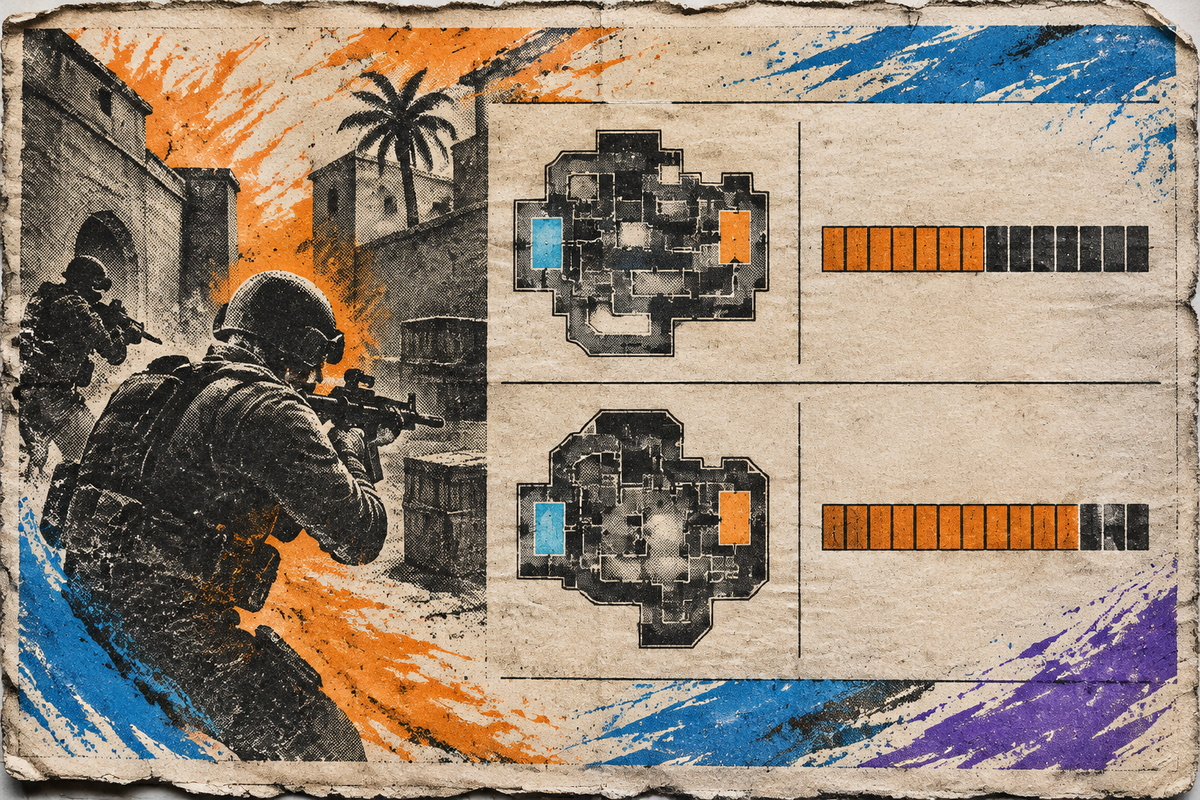
Five inputs do most of the work. Read them in this order, because the top of the list outranks the bottom every time.
- Map veto. Some maps trade round after round. Others turn into one-sided 13-5s. A player’s kill rate per round isn’t identical across a pool.
- Opponent quality. A close opponent forces long series of tight rounds. A weaker one can end a map early, which cuts rounds and kills along with it.
- Role. An AWPer hunts the opening pick and often sits on quiet totals when his team wins fast. An entry fragger lives in the chaos and piles up kills and deaths together.
- Side start. Starting CT or T shapes the first half. Some teams slow-play their T side and burn clock, which shrinks the round count.
- Series context. A team down 1-0 usually gets a tighter map two. A team up 1-0 and comfortable can close the second map in a hurry.
Stack those in the right direction and you get a long two-map total. Stack them wrong and a player with a healthy average misses a modest line.
How do you check hit rates without fooling yourself?
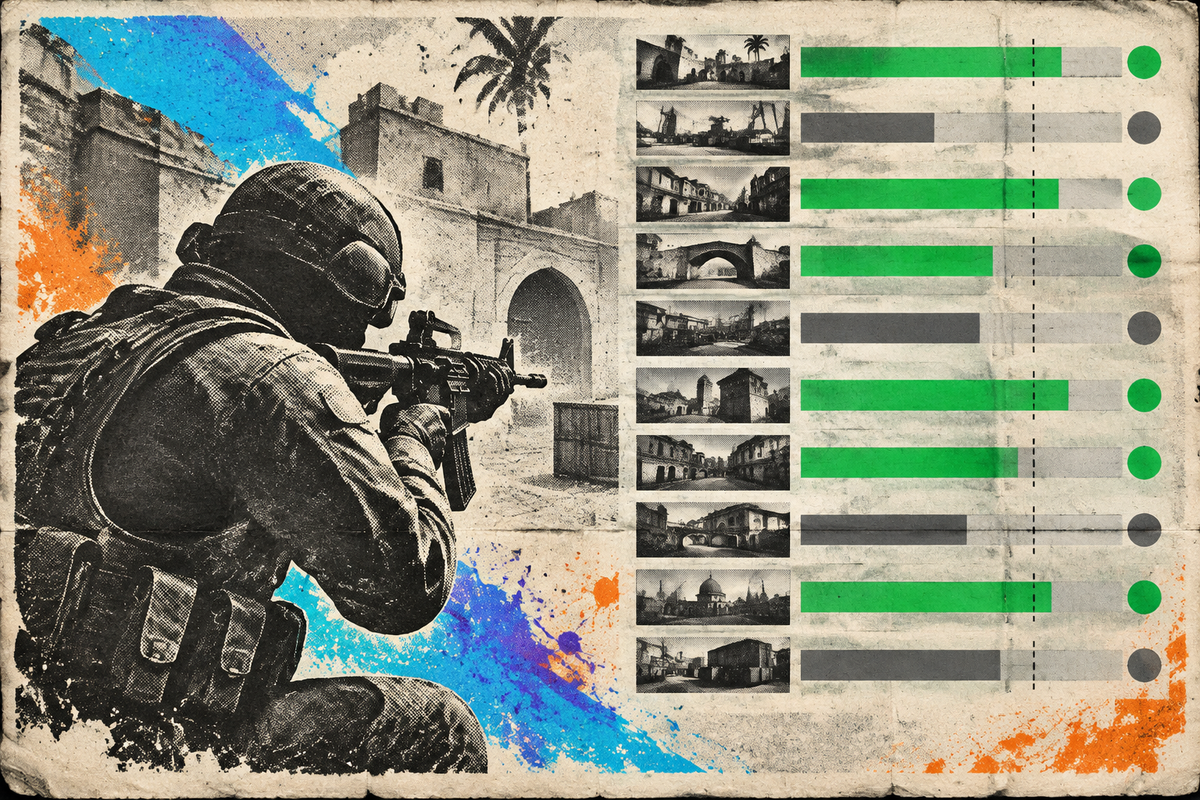
A hit rate is only as good as the sample behind it. Ten maps is a sketch. Forty is a picture. Pull the game log, count how many recent maps cleared the posted number, then check how many rounds those maps actually ran.
- Use the line the book is actually offering. A rate built against 17.5 says nothing about a 19.5 line.
- Count maps, not matches. A best-of-three is two or three data points, not one.
- Split map one from map two if you can. Some players start slow and warm up, and the split shows it.
- Note the opponents. A rate built against weaker teams travels badly into a top-tier match.
StatsBench keeps hit-rate charts and full game logs for every player, so you can see the sample instead of a screenshot with no context. The free CS2 props preview lets you look around without an account. If you want the reasoning behind a projected kill number, our guide to how kill lines are projected walks through it step by step.
What does the price tell you?
Two books can post the same 19.5 kills line at very different prices. A -120 on the over is a different bet than +100 on the same number, even though the line looks identical on both screens.
Convert them to implied probability and the gap shows up immediately. At -120 you need to win about 54.5% of the time to break even. At +100 the break-even point is 50%. Same line, roughly four and a half points of required accuracy.
That’s why line shopping beats a hot take. StatsBench compares the best price across 30+ sportsbooks, DFS apps and exchanges, including PrizePicks and Underdog, in one view. The free implied probability calculator turns any price into a break-even rate in a couple of clicks, and our breakdown of comparing CS2 prop prices covers the pick’em app side of it.
One more thing on price: on a two-sided market, look at both sides before you commit. Seeing where the over and the under each sit tells you more than staring at one number in isolation.
Do pistol rounds change a two-map total?
Pistol rounds are the cheapest rounds in Counter-Strike and the ones that set the economy for the next few. A team that takes both pistols on a map often closes it earlier, which trims rounds and trims kills. A team that drops them can drag the map into a messy 16-14.
That makes pistol data a useful input when you’re choosing between an over and an under on a round-dependent market. The CS2 Pistol Lab shows both teams’ rates for that market side by side, with the sample attached. It’s research, not a forecast, and it works best as one more piece of context next to the veto and the player’s role.
Mistakes that cost money on combined kill lines
- Treating it as a three-map bet. A 2-1 series still pays on two maps. If you priced in a third map, you paid for rounds that don’t count.
- Ignoring the veto. Map pool shapes pace more than most people think, and the veto lands before you bet.
- Using a stale line. A hit rate against last week’s number is decoration, not analysis.
- Betting before lineups lock. One stand-in change resets the whole total.
- Taking the first price you see. Across a full season, the gap between books is real money.
For the single-map version of this same problem, the guide to map 1 kills props covers how the line behaves when only one map counts. The two-map market has different variance, mostly because the map count is fixed while the round count isn’t.
A short checklist before you lock a side
Run this in order and it takes about three minutes.
- Confirm the market counts two maps, and know what your app does with a replay or a forfeit.
- Check the player is confirmed and not a late stand-in.
- Estimate total rounds from the veto, not from the team names alone.
- Pull the game log and count maps cleared against the exact posted line, with the sample size noted.
- Check the price at two or three books or apps before you click.
- Size it like one of many bets, not like the bet that fixes the week.
Every prop in the StatsBench player view also shows the split behind the number, so you can see how often a player has landed on each side. That’s the difference between a guess and a documented sample. Official match data is worth cross-checking too, and HLTV remains the standard reference for CS2 results and player stat lines.
Bet within your means. This is entertainment with a long-run math problem attached, 21+ where legal, and support is available at 1-800-GAMBLER if it stops being fun.
For the wider picture on how the individual player markets fit together, start with our CS2 player props overview and work backwards from there.
Free preview
See today’s CS2 player props on StatsBench
Live lines, last-10 hit rates and the best price across 30+ books and pick’em apps. No account needed to look.
Open the CS2 player props board →
Prefer email? Get the daily picks newsletter.
Frequently Asked Questions
What does maps 1-2 mean in a CS2 kills prop?
It means the player’s kills from map one plus his kills from map two, added into one number. If the series ends 2-0, that’s the whole match. If it goes 2-1, the third map is ignored for this market.
Do map 3 kills count toward a maps 1-2 line?
No. The market is defined on the first two maps only, so a long deciding map can boost a player’s real stat line without touching your bet. Always read your operator’s rule page for exceptions on replays or forfeits.
Why is a maps 1-2 kills line higher than a single map line?
Because you’re adding two maps of kills instead of one. Two maps also mean two round counts, so the total swings with the length of each map rather than just one.
How do I find a player’s CS2 kill hit rate?
Pull his map-by-map game log and count how many recent maps cleared the specific line you’re betting, then note the sample size and the opponents. StatsBench shows hit-rate charts and game logs for every player, with a free CS2 preview board to browse first.
What voids a CS2 player prop?
It varies by sportsbook and pick’em app. Common triggers include a map replay, a forfeit, or a player being replaced after lines post. The rule page of the operator you use is the only version that counts.
 Today's NBA picks



 Today's NFL picks


 Today's NHL picks



 Today's College Football picks


 Today's EPL picks



 Today's La Liga picks



 Today's Serie A picks



 Today's Bundesliga picks



 Today's Ligue 1 picks


 Today's EFL Championship picks



 Today's CS2 picks
 Today's LoL picks



 Today's Valorant picks
 Today's Dota 2 picks

 PHI
 DET
 BOS
 ATL
 TOR
 CLE
 NY
 WSH
 MIA
 CHA
 IND
 ORL
 BKN
 CHI
 MIL
 POR
 LAL
 HOU
 OKC
 SA
 MEM
 MIN
 GS
 DEN
 NO
 DAL
 PHX
 LAC
 UTAH
 SAC
 BUF
 DEN
 PIT
 JAX
 KC
 CIN
 NE
 CLE
 LV
 BAL
 HOU
 NYJ
 IND
 MIA
 TEN
 LAC
 SF
 MIN
 NYG
 CAR
 CHI
 DET
 GB
 SEA
 LAR
 TB
 ATL
 ARI
 DAL
 WSH
 NO
 PHI
 CAR
 BOS
 MTL
 OTT
 TB
 NJ
 FLA
 TOR
 BUF
 NYR
 DET
 WSH
 NYI
 CBJ
 PIT
 PHI
 EDM
 MIN
 VGK
 UTA
 DAL
 SEA
 COL
 NSH
 STL
 ANA
 CGY
 SJ
 WPG
 LA
 CHI
 VAN
 MIA
 UGA
 UTAH
 ND
 UCLA
 IU
 BYU
 UK
 ALA
 TEX
 OSU
 MISS
 TTU
 WAKE
 LSU
 TENN
 HOU
 USC
 MIZ
 BOIS
 IOWA
 UNM
 SC
 ARIZ
 FLA
 ARS
 MCI
 BHA
 CHE
 LIV
 BRE
 EVE
 BOU
 TOT
 AVL
 Hull City
 LEE
 NEW
 IPS
 FUL
 Coventry
 MUN
 CRY
 NFO
 SUN
 BAR
 ATM
 RMA
 BET
 RSO
 SEV
 ATH
 DEP
 VIL
 CEL
 ALA
 RAY
 GET
 ESY
 OSA
 RAC
 ELC
 LVT
 VAL
 MAL
 LAZ
 INT
 ROM
 COM
 MIL
 Frosinone
 JUV
 NAP
 BOL
 TOR
 GEN
 CAG
 ATA
 LEC
 PRM
 FIO
 SAS
 MON
 UDI
 VEN
 FCB
 BVB
 SCF
 RBL
 SVW
 B04
 SV Elversberg
 SGE
 M05
 FCA
 VFB
 TSG
 KOE
 SC Paderborn 07
 HSV
 FCU
 FC Schalke 04
 BMG
 PSG
 LOSC
 LYO
 PFC
 REN
 OM
 ASM
 NCE
 LEN
 B29
 LOR
 TOU
 STR
 AUX
 ANG
 Troyes
 Le Mans
 LEH