
Longest reception props pay on one catch. Not a total, not a touchdown, just the single longest grab a receiver makes all afternoon. That makes them one of the oddest markets on an NFL board, and one of the easiest to misprice.
Here’s how the line works, why a max stat behaves nothing like receiving yards, and how to check a number against real data before you bet it.
How Do Longest Reception Props Work?
The bet looks simple. A book posts a line like “longest reception: 18.5 yards” and you pick the over or the under. If the player’s longest catch goes for 19 yards or more, the over cashes. If his best grab stays at 18 or fewer, the under wins.
Catches, targets, and total yards don’t change the result unless they change that one play. A receiver can post a solid 5-catch, 70-yard afternoon and still lose an over of 24.5 if every grab was a short one.
Key takeaway: every target is a ticket in a small lottery, and only the biggest winner gets paid.
Most books grade it as net yards on the player’s single best catch. A completion behind the line adds nothing useful. A pass interference flag doesn’t count either, because there’s no reception on the play.
Why a Max Stat Is Harder to Price Than It Looks
Receiving yards scale with opportunity. More targets and more catches usually mean more yards, so books price that market around volume and role.
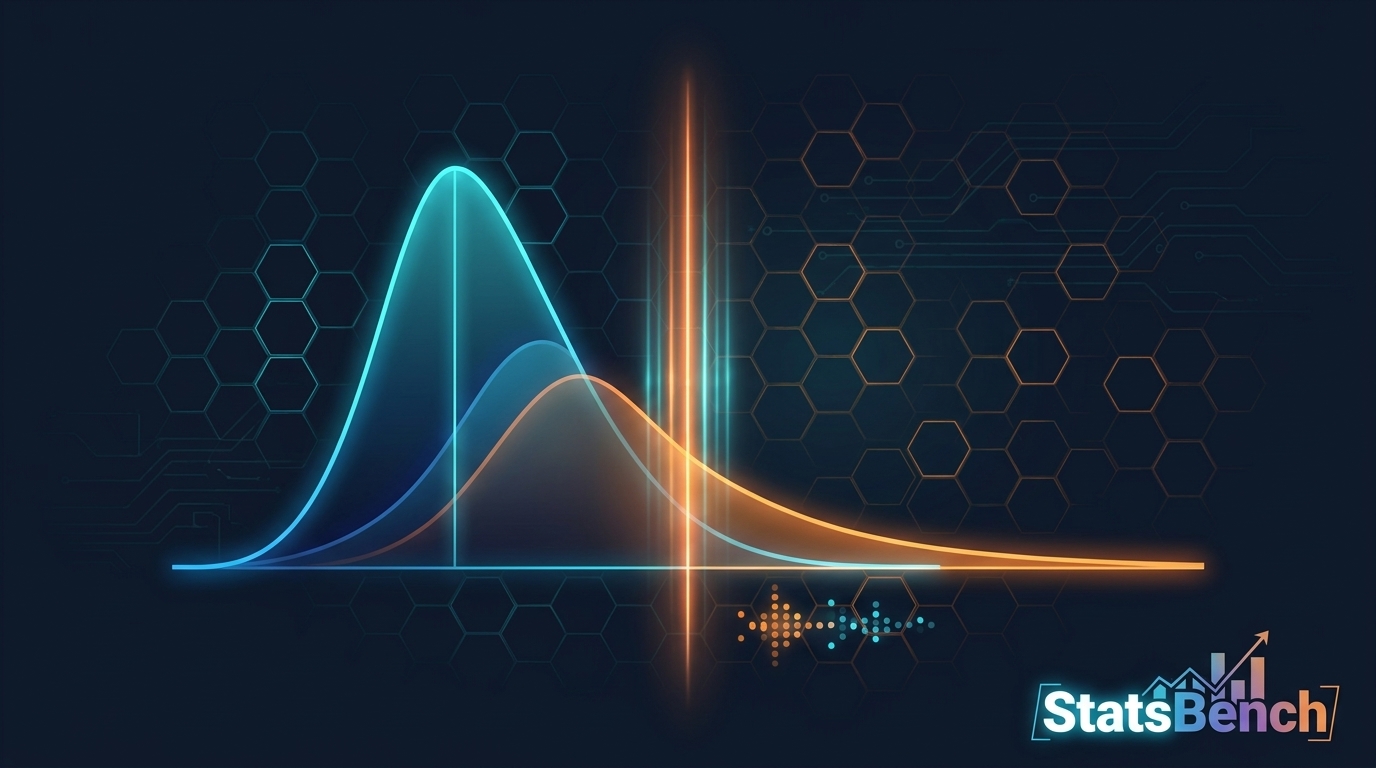
Longest reception doesn’t work that way. It hinges on whether one deeper throw connects, which is closer to a rare event than a steady rate. That’s why the distribution is lopsided: most games land in a narrow band, and a few explode past any line.
| Receiving yards | Longest reception | |
|---|---|---|
| What it measures | Sum of every catch | Best catch only |
| How one big play matters | Adds to the total | Can settle the bet alone |
| What the line tracks | Target volume and role | Route depth and one connection |
| What beats you | A quiet, low-volume game | A day without a deep ball |
That changes the research question. You aren’t projecting how many passes a player catches. You’re asking whether he runs deep often enough to get chances, and whether this defense lets one of them land.
If you want the volume-first version of this market, the receiving yards props guide covers that side in detail.
What the Data Says About a Real Line
Here’s a snapshot from a mid-September 2026 StatsBench cheatsheet, taken from a Lions at Bills slate.
Sam LaPorta (DET at BUF), longest reception over/under 18.5: 60% hit rate over his last 5 games (3 of 5), a 7.1% edge, at a best price of -105.
Read that slowly, because it teaches the whole market at once.
- 60% sounds strong. Three of five is not. Five games is a tiny window, and one catch flips the rate from 40% to 60%.
- A 7.1% edge is big for a prop. Edge is the gap between the posted price and StatsBench’s fair estimate for that line, a practical read on expected value. Big edges often show up in thin markets, and thin markets are exactly where you should check the sample twice.
- The best price is -105. That’s the top number across the books we track. The same bet at -115 is a meaningfully worse deal.
Game environment matters too. In the same snapshot, Jared Goff’s passing attempts line sat at 35.5 with a 60% hit rate over 10 games (6 of 10) and a 2% edge at a best price of -115. A pass-heavy script means more targets to spread around, which is a small tailwind for deep shots and a small headwind if the ball gets spread thin.
None of this says take the over. It says the price and the sample are both visible, and your job is to weigh them.
How Big a Sample Do You Need Before You Trust a Hit Rate?

Bigger than five games, and probably bigger than ten. For a market that turns on one explosive play, a short window mostly measures luck.
Fifteen to twenty games gives you a usable read on how often a player actually rips off a long catch. Pair that with role (does he run deep routes, or is he a chain-mover?) and you have something sturdier than a hot streak. Our breakdown of sample size in betting walks through how much data is enough for different markets.
There’s a second trap here. A high hit rate on a short price can still be a bad bet, and a lower hit rate at a fat plus number can be the better one. That trade-off is what hit rate versus edge is all about, and it shows up constantly in this market.
The Math Behind the Price
Shopping the number is the cheapest edge in this market. The same bet can sit at -105 at one book and -115 at another, and those prices are not close.
| Price | Break-even win rate |
|---|---|
| -105 | 51.2% |
| -110 | 52.4% |
| -115 | 53.5% |
Those are the implied probabilities baked into the juice. Win that bet at -105 instead of -115 and you’ve cut your break-even rate by more than two points. Do that all season and it adds up.
You can run the conversion yourself with the implied probability calculator or the odds converter.
What Actually Moves a Longest Reception Line
Five things do most of the work:
- Route depth. A receiver who lives 15 yards downfield gets more shots at a big gain than a tight end running shallow crossers.
- Matchup. Some secondaries funnel targets underneath and dare you to throw deep. Others get beaten over the top.
- Game script. A team trailing by two scores throws more. More throws mean more chances, even if each one is low percentage.
- Weather. Wind and heavy rain push play-callers toward shorter throws, which quietly caps the ceiling here.
- Target competition. If a team’s top two receivers are out, one player absorbs more targets, but he also draws the best corner.
None of that is hidden. Official game logs on NFL.com show you the raw catches and yardage. The trick is that books price the board fast, so the edges tend to sit in the middle, on the second and third pass catchers rather than the stars.
Where to Research These Lines on StatsBench
StatsBench scores every prop we track and puts the numbers side by side: hit rate, SB Score, consistency grade, and the best available price across roughly 60 sportsbooks. For NFL markets, start on the NFL props board and filter down to the reception markets.
Two filters do the heavy lifting here:
- Hit rate window. Check the rate over a longer span, not just the last five games.
- Best price. The board shows the top number available, so you can see whether your book is shorting you.
NFL boards go deeper than the obvious markets. If you like hunting thinner props, the tackles props guide covers another niche where line shopping matters as much as the read.
One last thing. Player props are research, not promises. Even a good number loses plenty of the time, and any single Sunday can go sideways. Bet within your means, keep it 21+, and if betting stops being fun, call 1-800-GAMBLER.
Live board
See today’s NFL player props on StatsBench
Live lines, last-10 hit rates and the best price across about 60 books.
Open the NFL player props board →
Prefer email? Get the daily picks newsletter.
Frequently Asked Questions
What is a longest reception prop?
It’s a bet on the yardage of a player’s single longest catch in a game. You pick over or under a posted line, and only his biggest reception of the day counts toward the result.
Is the over or the under better on longest reception props?
Neither side is automatically better. The value comes from the price and the matchup. A deep-route receiver against a defense that gives up explosive plays is a different bet than a possession tight end in a low-total game, so compare the number to the player’s actual role.
Does a short catch or a penalty count toward the longest reception?
Only completed catches count, and the stat uses net yards on the play. A pass interference flag or an incompletion doesn’t help the over, and a catch behind the line adds little to a player’s best grab.
How many games of data should I look at before betting one?
More than five. A 3-of-5 sample can flip on a single play. Fifteen to twenty games gives you a far better read on how often a player actually breaks off a long catch, and pairing that with role and matchup context beats chasing a hot streak.
Where can I compare longest reception lines across sportsbooks?
StatsBench tracks odds across roughly 60 sportsbooks and shows the best available price on each prop, including on the NFL props board. The same market can be -105 at one book and -115 at another, and over a season that gap matters a lot.