
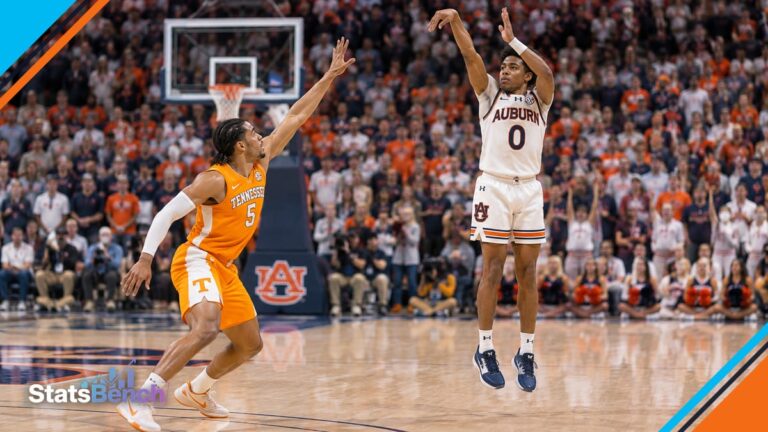
NCAAB picks against the spread come down to one number: the margin, not the winner. You can call the right team and still lose the bet, because the line already prices in how good that team is. So the entire job is projecting the final margin. Pace, possessions, home court, schedule spot, and how many minutes the starters actually play all feed into it.
What does an ATS pick actually mean?
A spread is a margin line. If a team is -7.5, it has to win by eight or more for the favorite bet to cash. The underdog covers by losing by seven or fewer, or by winning outright.
An ATS record counts how often a team beat that number, not how often it won. A 12-4 team can sit at 6-10 against the spread, and that isn’t a contradiction. It usually means the market caught up and started pricing them higher than their results justified.
That gap between wins and covers is where the interesting work lives. If the meaning of the spread is already clear to you, the next question is what actually moves the number.
Why college basketball spreads are wider than NBA spreads
Two reasons: the talent gap is bigger and the information is thinner.
Division I basketball runs deep into programs that would lose by 30 to a top-10 team on a neutral floor. The market knows it and hangs big numbers. The NBA sits in a much tighter band, because even the worst roster has professional shot-makers on it.
On top of that, college rosters turn over every year. New freshmen, transfers, and rotations coaches are still figuring out in November. You’re often pricing a team off two games of evidence. The market is working with the same thin file, which is exactly why the early season produces soft numbers.
Pace and totals change the math more than people think
Two teams can average the same points per game at completely different speeds. One jogs up the floor and grinds out a short game. The other presses, runs, and adds possessions on both ends.
Possessions matter because margin scales with them. A 12-point-per-100-possessions edge turns into a bigger final margin in a fast game and a smaller one in a slow game. Project a spread without projecting pace and you’re guessing at the denominator.
Style clashes are the interesting part. When a fast team plays a slow one, somebody’s preferred tempo has to lose. The coach who controls pace usually decides whether the total and the spread both come in under the market’s expectation. Watch who dictates early. That tells you whose game it is.
Home court in college is not a rounding error
College home court is worth more than the pro version. Student sections sit on top of the floor, conference travel is a grind, and some buildings have shooting backgrounds and altitude that visiting teams genuinely hate.
Two things follow. First, a team’s home and road splits often look like two different programs, and that’s real signal rather than noise. Second, neutral-site games in November and March strip that edge out entirely. A team that covered consistently at home might be a completely different bet in a tournament gym with nobody behind it.
How to read a team’s ATS record without getting fooled
Split the record before you trust it. An overall ATS number blends home and road, favorite and underdog, power-conference opponents and buy games. Those are different bets wearing the same label.
- By venue. Home record, road record and neutral record, kept separate.
- By role. How the team does as a favorite versus as an underdog. Some programs cover when spotted points and leak value when laying them.
- By opponent quality. Beating the number against three low-major teams in November says less than going 3-1 against the spread in conference play.
- By line movement. Did the team beat the opener or the close? Closing line value is a better signal than a raw cover count.
Sample size is the other trap. Eight games in November is not an ATS record, it’s a vibe. Sample size in betting covers how much data a trend actually needs before it means anything.
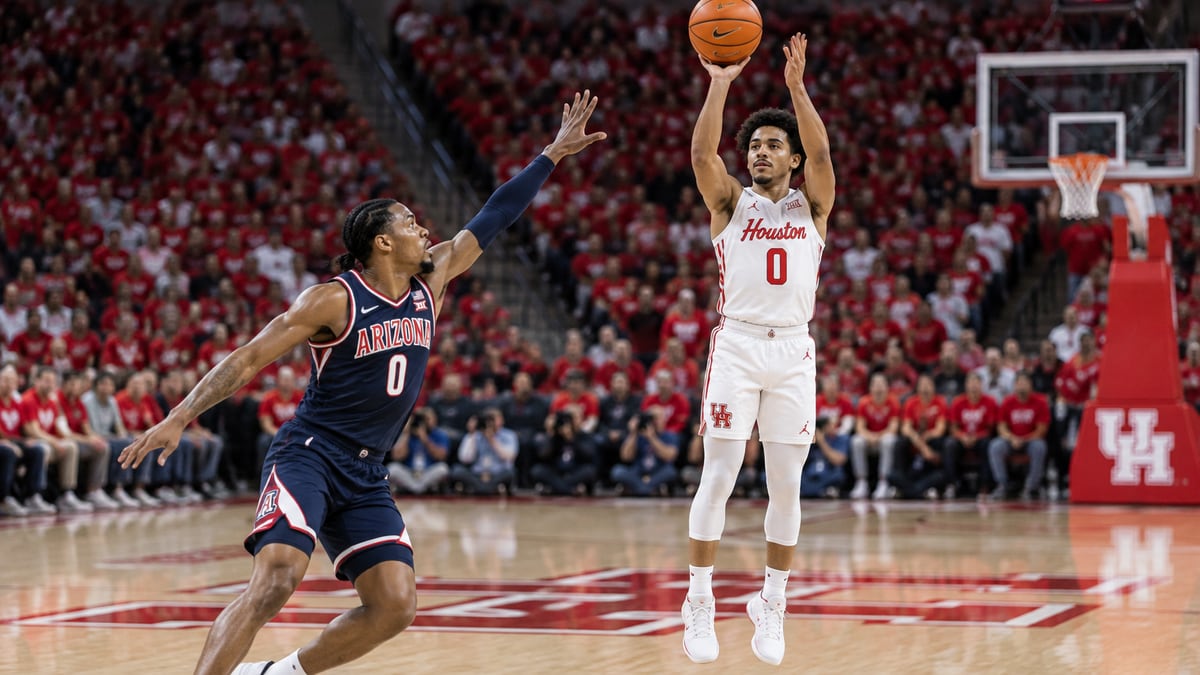
How to make NCAAB picks against the spread, step by step
The process is boring on purpose. Build your own number first, then go see what the market thinks. If you look at the spread before you handicap, you’re anchoring on someone else’s opinion.
- Project possessions and points. Roughly is fine. Two numbers per team: how fast, how efficient.
- Adjust for who actually plays. A starting guard out changes both the tempo and the shot quality.
- Add home court. A real adjustment for the venue, not a flat default.
- Check the schedule spot. Third game in three days, a long road trip, a look-ahead spot before a rivalry game.
- Compare to the market and shop the price. Two books can hang the same line at -110 and -105. Over a season, that difference is the whole margin.
Back-to-backs in tournaments are their own problem
Early-season multi-team events and conference tournaments cram three games into three or four days. Legs go, rotations shorten, and coaches manage minutes differently depending on whether they’re in the winner’s bracket or the consolation game.
The second night of a back-to-back is where lazy numbers show up. A team that needed overtime the night before, against a team that won by 25 and rested its starters for the last ten minutes, is not a fair fight even when the names suggest otherwise. Same goes for the third-place game, where motivation is genuinely hard to read.
Big spreads and garbage time
A 20-point line doesn’t just ask who wins. It asks how the last six minutes get played. Walk-ons, a press that stops working, a coach who empties the bench with a comfortable lead. Big favorites have more ways to fail to cover than the talent gap implies, and the underdog in a buy game is usually catching points from a team with nothing to gain.
That’s not a rule, it’s a risk to price. If your projection says the favorite wins by 22 and the line is 19.5, the bet depends on rotation decisions you can’t see yet.
What the numbers look like on a real slate
Here’s a dated example from a November 2026 StatsBench snapshot of NCAAB props. These are player markets, not team spreads, but the reading skill is identical: record and price together, or the record means nothing on its own.
| Player (game) | Market | Record | Best price |
|---|---|---|---|
| Jeremy Fears Jr. (MSU vs UNI) | Turnovers over 2.5 | 10/10 | +102 |
| Tomislav Buljan (MD vs UVA) | Rebounds over 6.5 | 10/10 | -141 |
| John Mobley Jr. (OSU at CONN) | Threes over 1.5 | 10/10 | -235 |
| Tomislav Buljan (MD vs UVA) | Pts + rebs + asts over 15.5 | 9/10 | -110 |
| Jalen Jackson (BUT vs PITT) | Offensive rebounds over 0.5 | 8/9 | -255 |
| Alex Condon (FLA vs MRMK) | Points over 11.5 | 8/10 | -115 |
| Darin Smith Jr. (RUTG vs BRY) | Pts + asts over 11.5 | 8/10 | -120 |
Three of those rows are 10/10. They are not the same bet. Mobley’s threes line at -235 needs to win about 70% of the time just to break even. Fears at +102 needs roughly 50%. Same record, wildly different bar to clear.
Middle of the board tells the same story. Buljan’s combo line at 9/10 is priced at -110, while Jackson’s offensive rebounds at 8/9 costs -255. The weaker-looking record is the friendlier price, and that trade-off is the entire job.
That habit carries straight over to team spreads. A cover rate without the price attached is half a stat. A team that went 7-3 as a 3-point favorite is a different story from one that went 7-3 laying 12 at home.
Where to check your own numbers
StatsBench is a research desk, not a picks service. Nothing here predicts a result. What the platform does is put the underlying numbers in one place so you can build your own line and compare it to the market.
- The NCAAB board. Filter player markets from the 10,000+ props a day available in season, with hit rates, SB Score and projections on every row. It needs a free account: the NCAAB prop board.
- Best price across 30+ sportsbooks, DFS apps and exchanges. Line shopping is the cheapest edge in betting, and it’s the last step of every pick.
- Calculators. Turn a spread price into a break-even rate before you commit. The implied probability calculator handles it in one step.
For the current slate laid out, the college basketball prop picks page runs daily. The college basketball hub collects the rest of the season’s guides.
One more thing, plainly. Spread betting is variance, not income. A good process still loses plenty of individual bets, and no read on pace or home court changes that. Bet within your means, keep it fun, and if it stops being fun, 1-800-GAMBLER is there. 21+. Rules and legality vary by region, so check where you live before you bet.
Free preview
See today’s college basketball player props on StatsBench
Live lines, hit rates and the best price across 30+ books and pick’em apps. A free preview shows today’s first props; a free account shows more.
Open the college basketball player props board →
Prefer email? Get the daily picks newsletter.
Frequently Asked Questions
What does ATS mean in college basketball?
ATS stands for against the spread. It describes whether a team beat the point spread rather than simply winning the game. A 5-1 team can be 2-4 ATS if it keeps winning by less than the market expected.
Is college basketball harder to handicap than the NBA?
It’s different, not automatically harder. College rosters turn over faster and injury information is thinner, so early-season numbers are less settled. The upside is that bigger talent gaps and wider spreads create more room for a disagreement with the market.
What’s a good ATS record in college basketball?
There’s no magic number, and a record alone never tells you if a team was profitable. What matters is the price at which those covers happened and which subsets they came from. A split by home and road, and by favorite and underdog, is far more useful than one overall figure.
Do back-to-backs matter in college basketball tournaments?
Yes. Multi-team events and conference tournaments can put three games in three or four days, which shortens rotations and changes how coaches manage minutes. The second night of a back-to-back and the third-place game are the spots where motivation and fatigue are hardest to project.
Does the NCAA tournament schedule affect spreads?
It does. Tournament games move to neutral floors, so home court comes out of the number, and quick turnarounds between rounds leave little prep time. Seed-based public perception also pushes lines further than the underlying matchup sometimes justifies.
 Today's NBA picks



 Today's NFL picks

 Today's NHL picks

 Today's College Football picks


 Today's College Basketball picks

 Today's CS2 picks
 Today's Valorant picks
 Today's Dota 2 picks

 BOS
 PHI
 DET
 ATL
 MIA
 NY
 CLE
 ORL
 TOR
 IND
 CHA
 WSH
 BKN
 CHI
 MIL
 SA
 LAL
 HOU
 POR
 MIN
 MEM
 OKC
 DEN
 GS
 DAL
 PHX
 LAC
 NO
 SAC
 UTAH
 BUF
 KC
 JAX
 CIN
 DEN
 PIT
 CLE
 NE
 BAL
 LV
 HOU
 IND
 NYJ
 MIA
 TEN
 LAC
 SF
 DET
 NYG
 CAR
 MIN
 CHI
 GB
 SEA
 LAR
 DAL
 WSH
 TB
 NO
 ATL
 ARI
 PHI
 CAR
 NJ
 TB
 MTL
 OTT
 BOS
 FLA
 NYR
 NYI
 WSH
 BUF
 DET
 TOR
 PHI
 PIT
 CBJ
 EDM
 MIN
 VGK
 COL
 NSH
 DAL
 ANA
 UTA
 WPG
 SJ
 STL
 SEA
 CGY
 LA
 CHI
 VAN
 UGA
 UTAH
 ND
 UCLA
 MIA
 IU
 ALA
 TEX
 TENN
 WAKE
 TTU
 BYU
 IOWA
 ORE
 BOIS
 OSU
 UK
 USC
 ARIZ
 HOU
 LOU
 LIB
 FLA
 MEM
 MISS
 MSU
 CONN
 UVA
 DUKE
 ILL
 KU
 SJU
 VAN
 MICH
 ARK
 GONZ
 NEB
 LSU
 Premier League table
 ARS
 BHA
 MCI
 LIV
 CHE
 EVE
 BOU
 BRE
 LEE
 AVL
 TOT
 NEW
 Hull City
 IPS
 FUL
 NFO
 Coventry
 MUN
 SUN
 CRY
 La Liga table
 BAR
 RMA
 ATM
 BET
 RSO
 SEV
 ATH
 VIL
 DEP
 RAC
 CEL
 ALA
 ESY
 RAY
 GET
 OSA
 LVT
 ELC
 VAL
 MAL
 Serie A table
 LAZ
 INT
 ROM
 MIL
 COM
 Frosinone
 JUV
 BOL
 CAG
 NAP
 TOR
 ATA
 GEN
 LEC
 FIO
 PRM
 SAS
 MON
 VEN
 UDI
 Bundesliga table
 FCB
 BVB
 SCF
 RBL
 B04
 SVW
 SV Elversberg
 VFB
 TSG
 SGE
 HSV
 M05
 SC Paderborn 07
 FCA
 KOE
 FCU
 FC Schalke 04
 BMG
 Ligue 1 table
 PSG
 LOSC
 PFC
 OM
 LYO
 NCE
 ASM
 REN
 B29
 LOR
 LEN
 TOU
 STR
 AUX
 Le Mans
 ANG
 Troyes
 LEH