
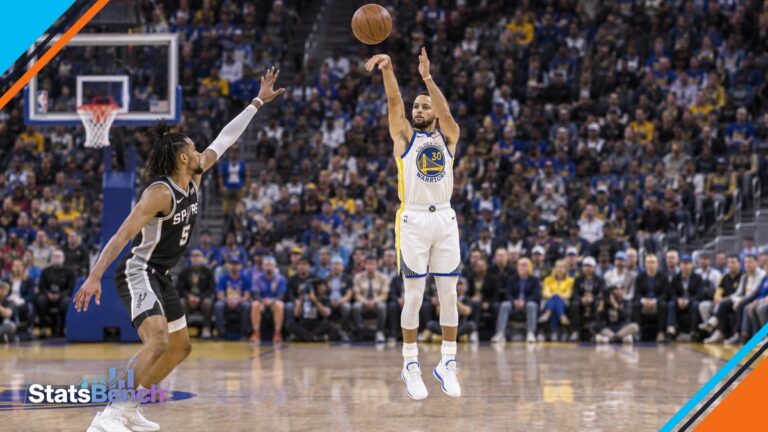
DraftKings betting splits show two percentages for the same market: the share of bets on each side, and the share of money on each side. Those two numbers disagree more often than you would expect, and the gap is the part worth studying.
Say one side draws most of the tickets but less than half the handle. That means a crowd of small bets is on one side and fewer, larger bets are on the other. It doesn’t tell you who is right. It tells you where to look next.
What Are DraftKings Betting Splits?
Betting splits break a market into two measures: percentage of tickets (how many bets) and percentage of handle (how much money those bets carried). DraftKings publishes splits on select games and markets, drawn from its own book. So what you see is DraftKings customers only, not a league-wide consensus.
Two practical consequences follow. Availability varies by sport, market and state, and sides and totals are far more likely to carry splits than an individual player prop. And the numbers describe one book’s position, not the truth about a game. Third-party sites republish splits too, but many of those pages are estimates or a blend of multiple books, so treat them as directional rather than exact.
Splits measure behavior at one book. They don’t measure what is going to happen.
Tickets vs Money: Why the Two Numbers Disagree
Percent of bets counts tickets. Percent of handle counts dollars. Those are different questions, and the gap between them is the only real information in the tool.
Divide handle share by ticket share and you get a rough sense of average bet size on that side relative to the other. A side with lots of tickets and little money is a crowd of small stakes. A side with fewer tickets and more money is a small number of larger positions.
| What the split looks like | What it usually means |
|---|---|
| Tickets and handle both heavy on one side | Broad agreement, little disagreement to work with |
| Heavy tickets, light handle | Many small bets on the popular side |
| Light tickets, heavy handle | Fewer, bigger bets leaning the other way |
| Roughly even on both | Split market, so look at a different game |
None of these patterns is automatically sharp. A large bettor can be wrong. A crowd can be right. Handle also includes hedges and arbitrage, so some of the money on the unfavored side may be someone covering an existing position rather than expressing a fresh opinion. That is one reason a split is a starting point and not a verdict.
Where Do You Find Betting Splits?
The splits are in the sportsbook itself, usually on the game page under a betting splits or percentages tab. You’ll see the same market listed with a bet percentage and a handle percentage for each side.
If you can’t find them on DraftKings for a given game, check whether the market is big enough. Splits tend to appear on the markets that draw volume: major spreads, moneylines and totals. A second-half team total in a low-profile college game may never show a split at all. For context on how this data gets used across books, our guide to betting splits and tickets vs money walks through the mechanics.
How Do You Use Splits Before You Bet?
Start with the price, not the split. A split means nothing until you know what number you’d be paid. Convert the odds to an implied probability first, so a heavy ticket share on a -200 side reads correctly. The implied probability calculator does that in one step, and the concept behind it is the same as expected value, which is the only frame that matters over a season.
Then work through four checks:
- Line movement. If the price moved toward the side with less handle, the book is responding to money. If it moved toward the tickets, that’s a different story.
- Sample size. A marquee NFL spread has thousands of tickets behind it. A Tuesday night mid-major total has dozens. The second one isn’t a signal, it’s noise.
- Who is in the pool. Primetime games and popular teams attract casual money. That skews the ticket percentage and says little about the price.
- Your own price. Splits say nothing about whether this book’s number is the best one available. That’s a separate job, and it’s what line shopping is for.
Public betting splits on moneylines and spreads also get covered team by team in our NBA public betting guide, which shows how to compare ticket share against money share on a single game.
Why Player Props Rarely Show Splits
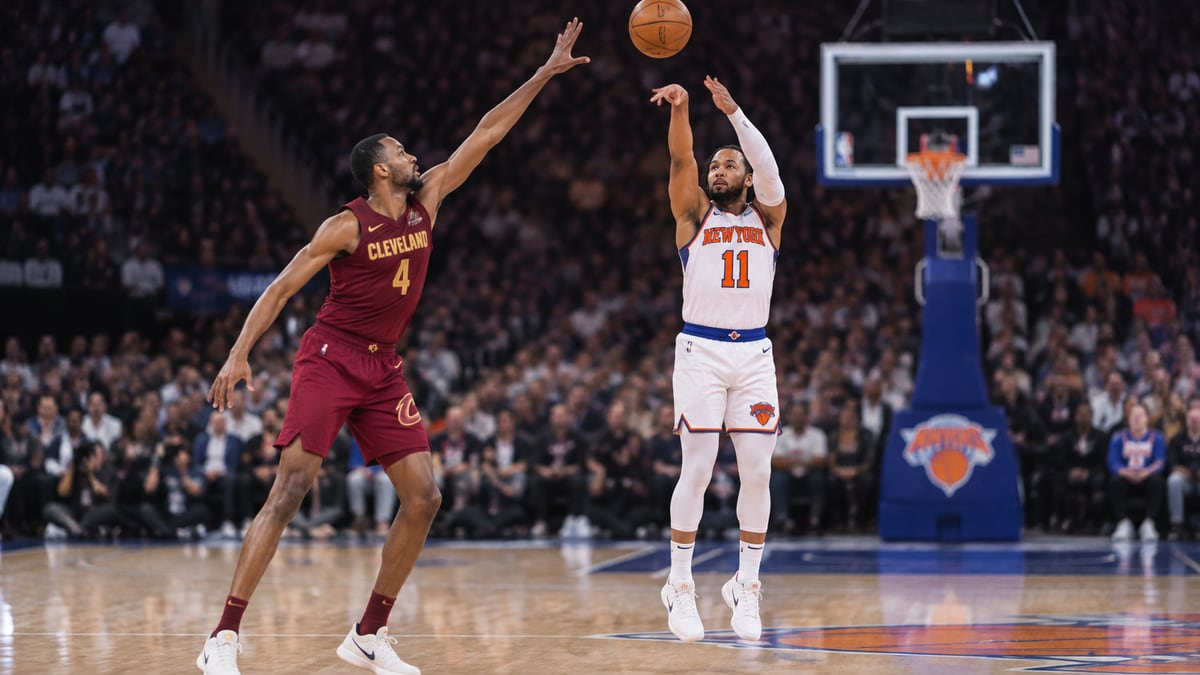
Prop markets are smaller and far more numerous. On a busy slate there are 10,000+ props across the leagues, and a split on a bench guard’s assists line would be built from a handful of tickets. That’s why player props usually don’t carry a public split, and why chasing one is mostly wasted effort.
For props, the research question changes. Instead of asking where the money went, you ask what this player has actually done and what price is on offer. A snapshot from a November 21, 2026 NBA slate shows how a record and a price sit next to each other on a prop board:
| Player | Prop | Hit rate (record) | Best price |
|---|---|---|---|
| Kel’el Ware (MIL @ PHI) | Steals + blocks over 0.5 | 100% (10/10) | -310 |
| Karl-Anthony Towns (NYK vs POR) | Double-double over 0.5 | 100% (10/10) | -370 |
| Jalen Brunson (NYK vs POR) | Threes over 2.5 | 90% (9/10) | -110 |
| Donovan Clingan (POR @ NYK) | Steals + blocks over 1.5 | 90% (9/10) | -210 |
| Robert Williams III (POR @ NYK) | Turnovers over 0.5 | 80% (8/10) | -116 |
Read it slowly. A 10/10 record at -370 implies roughly 78.7% to break even, so the market already assumes the over lands most nights. The interesting row is the one where the record and the price don’t match, like Brunson’s 9/10 threes at -110. That snapshot is a ranked selection of the slate’s strongest rows, not a random sample, so don’t read it as a base rate for anything.
Notice what the table doesn’t have: a split. Nobody publishes the ticket percentage on Towns over 0.5 double-doubles. You’re working from the player’s record, the matchup and the price, which is why every rate needs its record attached. Inside the NBA prop finder board, each row shows hit rate with the record, game logs, matchup data, a +EV % for both sides and the best price across 30+ sportsbooks, DFS apps and exchanges. That last part is the quiet edge: the same prop can sit at -116 in one place and -130 somewhere else.
Sleeper Picks and Splits: Where the Two Meet
Sleeper picks are plays the wider market hasn’t found yet. Splits help because they show which side the crowd has already piled into, so you can look somewhere else.
A reasonable process: find a market where the ticket share is lopsided but the handle share isn’t, then check whether the price has actually moved. If it hasn’t, the market may not believe the crowd. If it has moved against the crowd, that’s a stronger tell. Then do the boring work on the player or team, because a sleeper pick with no statistical reason behind it is just a long shot.
One trap: thin markets always look contrarian. If a market has almost no tickets on it, low ticket share means nothing at all. Sleeper picks only make sense where there’s enough volume for the split to be readable, and where the price is worth taking.
Three Ways Splits Mislead
Splits are a behavior snapshot, and snapshots go wrong in predictable ways.
1. Small samples look like signals. Twenty tickets can produce a dramatic looking percentage that means nothing. Ask how much money is actually behind the number.
2. The money isn’t always sharp. A book’s handle includes hedges, middles and people covering futures positions. Some of that money has no opinion about this game at all.
3. It’s one book’s book. A sportsbook can end up lopsided for reasons unconnected to professional money, and it may adjust its own price to balance. The percentages are shaped by the book’s liability as much as by anyone’s conviction.
Regulated US sportsbooks report to state regulators and publish their own house rules, and the American Gaming Association tracks the legal market overall. None of that makes a split predictive. It just makes the numbers auditable.
The honest summary: splits are a fast way to see where the crowd sits and where the bigger bets went. They are not an argument for a bet on their own. Pair them with a price, a sample size and a reason, and skip the games where the two percentages agree. If you want the full picture of how a sportsbook product fits alongside pick’em apps, the DraftKings Pick 6 guide covers that side of the app.
Bet within your means, expect variance even when the process is right, and remember this is 21+ entertainment, not income. If betting stops being fun, the National Council on Problem Gambling runs a 24-hour helpline at 1-800-GAMBLER. For live numbers on tonight’s board rather than the crowd’s behavior, the daily NBA player props page is the place to start.
Free preview
See today’s NBA player props on StatsBench
Live lines, hit rates and the best price across 30+ books and pick’em apps. A free preview shows today’s first props; a free account shows more.
Open the NBA player props board →
Prefer email? Get the daily picks newsletter.
Frequently Asked Questions
Are DraftKings betting splits accurate?
They are accurate for what they measure: the share of tickets and the share of money on each side at DraftKings, at the moment the page was updated. They are not a market-wide figure, so a split at one book can differ from another. Treat them as one book’s snapshot, not an industry consensus.
What is the difference between percent of bets and percent of handle?
Percent of bets counts how many tickets took a side. Percent of handle counts how much money those tickets carried. When the two diverge, the average bet size on each side is different, which usually means a smaller number of larger positions are leaning one way.
Do betting splits show you what sharps are betting?
Not directly. Handle includes hedges, arbitrage and anyone wagering big, and a large bettor can be wrong. Splits show you where the money is, and line movement plus price is what tells you whether the book responded to it.
Are betting splits available for player props?
Rarely. Prop markets are numerous and thin, so a split on a single prop would be built from very few tickets and would not mean much. For props, use hit rates with the record attached, matchup data and the best available price instead.
Can you use splits to find sleeper picks?
You can use them as a filter. A lopsided ticket share with a more balanced handle share, in a market with real volume and a price that hasn’t moved, is worth a closer look. It is not a reason to bet on its own, so back it with actual player or team data.
 Today's NBA picks



 Today's NFL picks

 Today's NHL picks



 Today's College Football picks



 Today's College Basketball picks

 Today's EPL picks



 Today's La Liga picks



 Today's Serie A picks



 Today's Bundesliga picks



 Today's Ligue 1 picks



 Today's MLS picks



 Today's EFL Championship picks



 Today's CS2 picks



 Today's Valorant picks
 Today's Dota 2 picks



 PHI
 BOS
 DET
 ATL
 MIA
 NY
 CLE
 ORL
 TOR
 WSH
 IND
 CHA
 CHI
 BKN
 MIL
 LAL
 SA
 MEM
 HOU
 MIN
 POR
 DEN
 OKC
 PHX
 DAL
 GS
 NO
 LAC
 UTAH
 SAC
 BUF
 KC
 JAX
 CIN
 DEN
 PIT
 CLE
 NE
 HOU
 LV
 BAL
 IND
 NYJ
 LAC
 MIA
 TEN
 SF
 DET
 NYG
 CAR
 MIN
 CHI
 GB
 SEA
 LAR
 DAL
 WSH
 TB
 NO
 ATL
 ARI
 PHI
 CAR
 TB
 MTL
 OTT
 NJ
 BOS
 NYR
 FLA
 NYI
 BUF
 PHI
 WSH
 DET
 TOR
 CBJ
 PIT
 MIN
 EDM
 VGK
 DAL
 COL
 NSH
 UTA
 WPG
 STL
 ANA
 SJ
 SEA
 CGY
 LA
 CHI
 VAN
 UGA
 UTAH
 ND
 UCLA
 MIA
 IU
 ALA
 TEX
 TENN
 WAKE
 TTU
 BYU
 IOWA
 ORE
 BOIS
 OSU
 UK
 USC
 ARIZ
 HOU
 LOU
 LIB
 FLA
 MEM
 MISS
 MSU
 CONN
 UVA
 DUKE
 ILL
 KU
 SJU
 VAN
 MICH
 ARK
 GONZ
 NEB
 LSU
 ARS
 BHA
 MCI
 LIV
 CHE
 EVE
 BOU
 BRE
 LEE
 AVL
 TOT
 NEW
 Hull City
 IPS
 FUL
 NFO
 Coventry
 MUN
 SUN
 CRY
 BAR
 RMA
 ATM
 BET
 RSO
 SEV
 ATH
 VIL
 DEP
 ESY
 RAC
 CEL
 ALA
 RAY
 GET
 OSA
 LVT
 ELC
 VAL
 MAL
 LAZ
 INT
 ROM
 MIL
 COM
 Frosinone
 JUV
 BOL
 CAG
 NAP
 TOR
 ATA
 GEN
 LEC
 FIO
 PRM
 SAS
 MON
 VEN
 UDI
 FCB
 BVB
 SCF
 RBL
 B04
 SVW
 SV Elversberg
 VFB
 TSG
 SGE
 HSV
 M05
 SC Paderborn 07
 KOE
 FCA
 FCU
 FC Schalke 04
 BMG
 PSG
 LOSC
 PFC
 OM
 LYO
 NCE
 ASM
 REN
 B29
 LOR
 LEN
 TOU
 Troyes
 STR
 AUX
 Le Mans
 ANG
 LEH
 Champions League table
 Como
 BRU
 SCP
 Real Betis
 Lask Linz
 Manchester United
 GAL
 FEN
 AS Roma
 SHK
 Viking
 PSV
 BOD
 FC Porto
 AEK Athens FC
 Sabah FA
 FEY
 Lens
 SLA
 SLV