
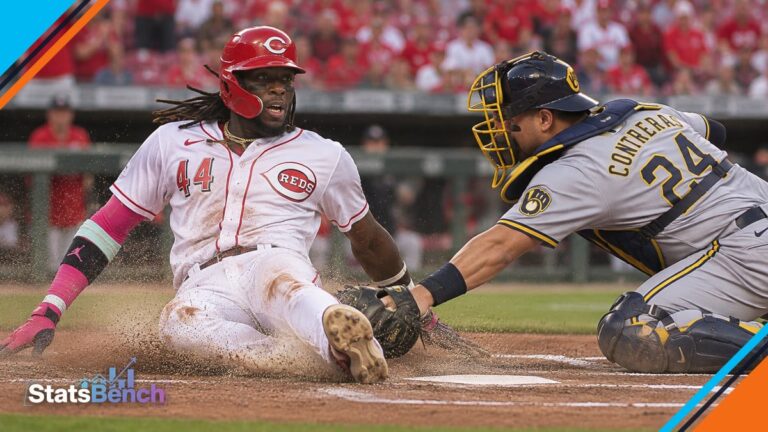
A run line is baseball’s version of a point spread. It moves the final score by 1.5 runs, so a -1.5 favorite has to win by two or more, while a +1.5 underdog cashes if it wins the game or loses by exactly one run. The half run makes a push impossible, and that is why the price sits near even money even when one team is a heavy moneyline favorite.
That is the short answer. The useful part is knowing why the price looks the way it does, when the handicap is a fair trade, and how the same idea shows up in hockey as the puck line.
What Does Run Line Mean in Baseball Betting?
It means you are betting on the margin of victory, not just on who wins. Every MLB game gets a 1.5-run line at the major books, and each side carries its own price.
Picture a game where the home team is -200 on the moneyline. Asking that team to win by two or more is a harder bet, so the -1.5 side might pay around +130. The other side, +1.5, might sit near -150. Same game, same result, two very different risks.
That gap is the point of the market. A -200 moneyline is a poor use of bankroll for most bettors. The run line turns the same opinion into something close to a coin flip, or into a plus-money ticket if you want the favorite to cover.
Run lines are game markets, though. They are not where a data-driven bettor usually finds the cleanest edge, because the handicap is set by the book and does not move much. Keep that in mind as you read the rest.
How +1.5 and -1.5 Actually Work
The handicap is applied to the final score after the last out. Nothing else about the game changes.
| Final score | -1.5 favorite | +1.5 underdog |
|---|---|---|
| Favorite wins 5-4 | Loses (won by one) | Wins |
| Favorite wins 6-4 | Wins (won by two) | Loses |
| Underdog wins 3-2 | Loses | Wins |
| Favorite wins 9-1 | Wins | Loses |

There is no push. The 1.5 makes a tie on the handicap impossible, unlike a football spread that can land on the exact number. Your ticket either wins or loses, full stop.
One detail worth knowing: the standard number is 1.5, but some books post alternate run lines at 2.5 or 3.5 with adjusted prices. Those are useful if you expect a blowout, and they are usually worse value than the main line because the book widens the vig on them.
Run Line vs Moneyline vs Puck Line
Three markets, one question: how far does the scoreboard have to move before your ticket cashes?
| Market | What you are betting | Typical price shape |
|---|---|---|
| Moneyline | Who wins, no handicap | Wide, from about -300 to +250 |
| Run line (+/- 1.5) | Who wins after a 1.5-run adjustment | Closer to even, often -150 to +150 |
| Puck line (+/- 1.5) | The same idea in hockey, 1.5 goals | Similar, near even money |
If you only know straight prices, the adjustment can feel strange at first. Our moneyline meaning piece covers the unadjusted version, and a run line is simply that price with a handicap bolted on.
What Is a Puck Line?
A puck line is the hockey version of the same bet: a 1.5-goal handicap that turns a heavy favorite into a near even-money proposition. You see it on every NHL game, rather than a spread that shifts game to game.
Hockey adds a wrinkle baseball does not have. Empty-net goals are common in the final two minutes, and they decide a lot of -1.5 tickets. A team can control play for 58 minutes, win 2-1, and still lose the puck line. If you research NHL sides, the NHL prop board shows how the same game is priced on the player side.
Both markets share the same weakness. The handicap tells you the price, not how the game will be played. That read is on you, and it is the only part that can be an edge.
How Run Line Prices Are Built
Every run line price converts to an implied probability, and the two sides together add up to more than 100 percent. The extra is the vig, or the book’s cut.
Suppose the favorite is +150 on the -1.5 and the underdog is -170 on the +1.5. Convert both:
- +150 implies 100 / (150 + 100) = 40.0 percent
- -170 implies 170 / (170 + 100) = 63.0 percent
Add them up and you get 103 percent. That three-point gap is what you have to beat. The free implied probability calculator handles the conversion in one step, and a de-vig tool shows what the market thinks each side is worth once the juice comes off.
A plus-money run line is not a value bet by itself. +150 means you need to win 40 times out of 100 to break even. If your read says the favorite covers more often than that, you have something. If it just feels likely, you do not. The arbitrage math post explains why the two sides of any market rarely line up to exactly 100.
What to Check Before You Bet a Run Line
The handicap is fixed, but the inputs that decide it are not. Work through these first:
- Starting pitchers. A bullpen game or a starter on short rest changes how many runs a team allows and how deep it pitches into a tight game.
- Bullpen usage. Three relievers who worked yesterday is a real problem for the team that gets to the seventh tied.
- Park and weather. Wind blowing out at a small park pushes toward the -1.5 side. Wind blowing in keeps games in one-run range.
- Lineup handedness. A lineup stacked with lefties against a lefty starter tends to score less, which favors +1.5.
- Price across books. The gap between -1.5 at +130 and -1.5 at +150 is real value before you even handicap the game. Our line shopping guide covers the habit.
Because run lines are game markets, the player side is often where the same game script becomes easier to attack. A starter’s strikeout line, a leadoff hitter’s total bases, an RBI prop: all of those ride on the same factors that decide whether a favorite wins by one or by four. The MLB props preview shows how that board is laid out, and the MLB prop picks page is where daily numbers run during the season. Official scores and standings live at MLB.com if you want to check anything yourself.
Can You Put a Run Line in a Parlay?
Yes, and it is usually a mistake to build one around two run lines from the same game. Books often restrict or void same-game combinations that are clearly correlated, and even when they allow it, you are paying vig twice on the same opinion.
Where a run line does work in a parlay is as the anchor. A -1.5 leg on a big home favorite at plus money adds value to a ticket that would otherwise be all short-priced moneylines. Run the numbers before you commit, since parlay math compounds fast in both directions. The free parlay calculator shows the true payout and the combined implied probability behind it.
The trap is length. Each extra leg multiplies the book’s margin, so a five-leg ticket with two run lines needs a lot to go right. Two or three legs built around one strong read beats a long shot every time in expected value terms.
When the Run Line Beats the Moneyline
Two spots stand out. First, a big favorite with a thin rotation, where the moneyline price is unplayable but the run line gives you plus money on the same opinion. Second, a strong home team facing a soft starter, where a two-run win is closer to the base case than a one-run coin flip.
The reverse is just as true. One-run games are a big slice of every MLB season, so +1.5 on a live underdog is a genuinely useful side and often the softer number. That underdog framing is worth separating from the everyday use of the word, which our underdog meaning explainer covers.
None of this makes a bet a certainty. A plus-money run line loses more often than it wins by design, and any profit only shows up over a large sample. Keep stakes small, treat it as research and entertainment, and remember it is 21 and over in legal US markets. If betting stops being fun, the national helpline is 1-800-GAMBLER.
Free preview
See today’s MLB player props on StatsBench
Live lines, last-10 hit rates and the best price across 30+ books and pick’em apps. No account needed to look.
Open the MLB player props board →
Prefer email? Get the daily picks newsletter.
Frequently Asked Questions
What is a run line in simple terms?
It is a 1.5-run handicap on an MLB game. The favorite is listed at -1.5 and must win by two or more, while the underdog is listed at +1.5 and cashes if it wins or loses by a single run. There are no pushes because of the half run.
Is a puck line the same as a run line?
Structurally yes, just in a different sport. A puck line is a 1.5-goal handicap on an NHL game. The main practical difference is that empty-net goals swing hockey results late, so a -1.5 puck line can flip on a play that has nothing to do with how the game was actually contested.
Why is a run line close to even money when the moneyline is not?
Because asking a team to win by two runs is much harder than asking it to win. Books price the handicap so both sides sit near even money, then adjust for the starting pitchers, the park and the lineup. A -200 moneyline favorite might be +130 on the -1.5.
Should I bet +1.5 or the moneyline on an underdog?
It depends on the price gap and how the game is likely to be pitched. A low-scoring matchup with two good starters leans toward +1.5 because one-run games are common. A matchup you expect to be lopsided leans toward the moneyline, which pays more but needs an outright win.
Do run line bets push?
Not at the standard 1.5 number. The half run makes a tie on the handicap impossible, so every ticket wins or loses. Alternate run lines at 2.5 or 3.5 also avoid pushes for the same reason.
 Today's NBA picks



 Today's NFL picks



 Today's NHL picks


 Today's College Football picks



 Today's College Basketball picks



 Today's Champions League picks



 Today's EFL Championship picks



 Today's CS2 picks



 Today's Valorant picks



 Today's Dota 2 picks


 PHI
 BOS
 ATL
 DET
 NY
 MIA
 CLE
 ORL
 WSH
 TOR
 IND
 CHI
 CHA
 BKN
 MIL
 SA
 LAL
 MIN
 HOU
 MEM
 POR
 DEN
 DAL
 PHX
 OKC
 GS
 NO
 LAC
 UTAH
 SAC
 BUF
 DEN
 JAX
 CIN
 KC
 CLE
 PIT
 NE
 HOU
 LV
 BAL
 NYJ
 IND
 LAC
 MIA
 TEN
 SF
 DET
 NYG
 CAR
 CHI
 MIN
 GB
 SEA
 LAR
 DAL
 WSH
 TB
 ATL
 NO
 PHI
 ARI
 CAR
 OTT
 TB
 NJ
 MTL
 BOS
 FLA
 NYR
 NYI
 BUF
 PHI
 TOR
 WSH
 DET
 CBJ
 PIT
 MIN
 EDM
 VGK
 DAL
 COL
 NSH
 STL
 WPG
 UTA
 SJ
 SEA
 ANA
 CGY
 LA
 CHI
 VAN
 UGA
 UTAH
 ND
 MIA
 TEX
 ALA
 TENN
 WAKE
 TTU
 UCLA
 BYU
 IU
 IOWA
 ORE
 USC
 ARIZ
 HOU
 LOU
 OU
 FLA
 LIB
 BOIS
 MISS
 MIZ
 OSU
 UVA
 ILL
 CONN
 MSU
 KU
 SJU
 VAN
 DUKE
 LSU
 NEB
 GONZ
 MEM
 Premier League table
 ARS
 BHA
 MCI
 LIV
 BOU
 BRE
 LEE
 CHE
 EVE
 TOT
 Hull City
 AVL
 NEW
 Coventry
 FUL
 IPS
 NFO
 SUN
 MUN
 CRY
 La Liga table
 BAR
 RMA
 ATM
 BET
 RSO
 SEV
 RAC
 ATH
 ALA
 VIL
 ESY
 DEP
 OSA
 CEL
 LVT
 RAY
 VAL
 GET
 ELC
 MAL
 Serie A table
 LAZ
 ROM
 INT
 MIL
 COM
 JUV
 Frosinone
 NAP
 BOL
 GEN
 CAG
 ATA
 TOR
 MON
 LEC
 FIO
 PRM
 SAS
 UDI
 VEN
 Bundesliga table
 BVB
 FCB
 SCF
 RBL
 B04
 SVW
 SGE
 VFB
 SV Elversberg
 FCA
 TSG
 HSV
 M05
 KOE
 SC Paderborn 07
 FC Schalke 04
 FCU
 BMG
 Ligue 1 table
 PSG
 PFC
 LOSC
 LYO
 OM
 B29
 NCE
 ASM
 REN
 LOR
 LEN
 TOU
 Le Mans
 Troyes
 AUX
 STR
 ANG
 LEH
 Como
 Real Betis
 BRU
 SCP
 GAL
 BOD
 Lask Linz
 Manchester United
 FC Porto
 FEN
 AS Roma
 SHK
 Viking
 PSV
 Sabah FA
 AEK Athens FC
 FEY
 Lens
 SLA
 SLV