
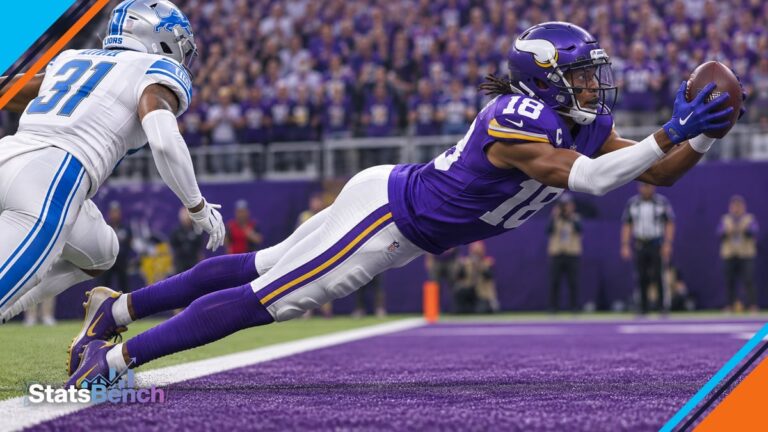
Sleeper picks get talked about as if they mean the same thing everywhere. They don’t. In a pick’em contest, a sleeper is a leg that makes your card better than the field’s card. At a sportsbook, a sleeper is just a bet, and the only thing that matters is whether the price is wrong.
Same player. Same stat line. Two completely different jobs. Once you see the split, you stop researching the two formats the same way.
What a sleeper pick is in a pick’em contest
A sleeper in a pick’em is a leg the rest of the field is likely to skip, on a projection you think is too soft. Note the second half of that sentence. Being contrarian, on its own, is worth nothing.
Most pick’em formats work on fixed multipliers. You choose a set number of players, every leg has to hit, and your payout is tied to how many legs you took. The field does not set your return. So the popular idea that a low-owned player is automatically a better pick falls apart fast. If the number is fair, a lonely pick is just a lonely pick.
What the format does change is how much each leg costs you. Everything has to land. Add a fourth leg and you have taken on one more way to lose the whole card. That is the real price of a sleeper in pick’em, and it is why the leg needs to be a genuine edge rather than a fun story.
If you want the mechanics first, our guide to how DraftKings Pick 6 works covers the rules and payout structure.
Sleeper picks at a sportsbook are a price question
At a sportsbook there is no field to beat. You get paid at the odds, so a sleeper is only a good bet when the best available price beats your own estimate of the probability. Nothing else matters, including how unknown the player is.
That flips the research. Instead of asking whether a player is underrated, ask whether the number is wrong and whether you can get a better price than the one on screen. A player everyone likes at a bad price is a bad bet. A player nobody talks about at a good price is a good one.
This is where line shopping does the quiet work. StatsBench shows the best price across 30+ sportsbooks, DFS apps and exchanges for each prop, and every prop carries a +EV % you can sort by. That percentage is a long-run estimate, not a promise. You can pull up the whole NFL board in the Prop Finder, and often the gap between the best price and the worst is bigger than the edge you talked yourself into.
Hit rate is not a probability
Here is the trap in both formats. A hit-rate chart tells you what already happened. The price tells you what the market expects next. They are not the same number, and confusing them is how a 9/10 record turns into an overpriced ticket.
| Player | Prop | Recent record | Best price | Break-even |
|---|---|---|---|---|
| James Cook III | Anytime TD o/u 0.5 | 9/10 | -108 | 51.9% |
| Ty Johnson | Receptions o/u 1.5 | 9/10 | -182 | 64.5% |
| CeeDee Lamb | Receptions o/u 6.5 | 8/10 | -137 | 57.8% |
| Jahmyr Gibbs | Rush attempts o/u 19.5 | 8/10 | -110 | 52.4% |
| Dak Prescott | Pass yards o/u 261.5 | 7/10 | -112 | 52.8% |
| Josh Allen | Interceptions o/u 0.5 | 7/10 | -110 | 52.4% |
Source: StatsBench NFL prop data, recent snapshot.
Look at Ty Johnson’s receptions line. Nine of ten, priced at -182. That price needs 64.5% to break even, which you can check in seconds with the implied probability calculator. The record looks stronger than the number does. That is not a reason to avoid it. It is a reason to ask whether those ten games looked anything like this matchup.
James Cook’s anytime touchdown line is the mirror image. Nine of ten at -108, which needs only 51.9%. Same record, wildly different price. One of those two is a far cheaper way to buy the same hit rate, and that is the entire conversation.

Ten games is also ten games. A 9/10 is a real signal and a small sample at the same time. The Josh Allen interception over is the kind of leg nobody posts about, and it lands at 7/10 with a -110 price. That is what an actual sleeper looks like on a sportsbook: unpopular side, ordinary price, honest sample.
The line gap is where pick’em sleepers actually live
Pick’em apps set their own projections and you cannot shop them. That is the constraint. What you can do is hold the app’s number against the sportsbook consensus and see which way it leans.
If an app posts 6.5 receptions for a receiver while the books sit at 5.5, the app is asking you to take the harder side of the same bet. If the app posts 4.5 against a book consensus of 5.5, you are getting a number the market does not agree with. That gap, not ownership, is the sleeper edge in a pick’em.
This is also why one research pass serves both formats. Pull the hit rate, check the matchup, then look at where the number sits relative to the market. On the sportsbook side you also get to choose your price. On the pick’em side you get one number and a yes-or-no decision.
Public betting data helps a little, but only a little. Betting splits show tickets versus money on a game, which tells you which side the crowd is on. They do not tell you prop ownership inside a pick’em app, so do not use them as a stand-in for it.
Side-by-side: which format suits your sleeper
| Pick’em contest | Sportsbook prop | |
|---|---|---|
| What decides value | Whether every leg hits, plus the gap between the app’s projection and the market | Your estimated probability against the best available price |
| What a sleeper is | A leg with a soft projection that others skip | Any player priced above your estimate |
| Can you shop it? | No, the projection is fixed | Yes, across 30+ books, DFS apps and exchanges |
| Biggest risk | One leg sinks the entire card | Paying a price that needs more than you think |
| Best use of a long shot | Usually a drag, since one miss ends it | Fine at a small stake if the price is generous |
Pick’em rewards card construction. Sportsbooks reward price hunting. Mixing the two habits is how people end up forcing contrarian legs into cards and ignoring the price on a straight bet.
Building a card around one low-owned leg
Start with legs you would bet straight at a sportsbook. If you would not take the prop at that price, do not take it in a pick’em just because the player is interesting.
- Cap the card. Every extra leg adds payout and adds a way to lose.
- Put the contrarian leg where the projection gap is widest, not where the story is best.
- Check that the legs are not secretly the same bet. Two receivers in a low-volume passing game move together.
- Run the joint math before you submit. The parlay calculator does it in one step.
Round numbers make the point. Five legs at roughly 60% each land about 7.8% of the time. The multiplier has to be generous enough to cover that, and one weak leg drags the whole estimate down quickly. If you want a deeper look at how the two products differ, we compared DraftKings player props with pick’em apps line by line.
What to check before you lock anything in
- Sample size. Ten games is a starting point, not proof. Look at role, snap share and opponent.
- Price versus record. Convert the odds to a break-even rate before you fall for a hit rate.
- Line gap. Compare the pick’em projection with the sportsbook number on the same stat.
- Correlation. Legs in the same game or the same offense are not independent.
- Stake. A card that needs five things to go right should be smaller than a single bet.
Every prop on the board carries a hit rate, a matchup and a price. That is the material you need for either format, and it is the same material whether the player is a household name or a third receiver. The difference is what you do with it. If you want to go deeper on reading records properly, this piece on hit rate versus edge is the next step.
Bet within your means. Any edge here is a long-run idea, not a promise, and variance cuts both ways. 21+, and if betting stops being fun, help is available at 1-800-GAMBLER.
Free preview
See today’s NBA player props on StatsBench
Live lines, hit rates and the best price across 30+ books and pick’em apps. A free preview shows today’s first props; a free account shows more.
Open the NBA player props board →
Prefer email? Get the daily picks newsletter.
Frequently Asked Questions
What is a sleeper pick?
A sleeper pick is a lower-profile player or less popular side of a prop that most bettors skip. It only has value when the price or projection is actually wrong, so being unknown is not the same as being a good bet.
Are sleeper picks better in pick’em contests or at sportsbooks?
They serve different purposes. In a pick’em, a low-owned leg only helps if the app’s projection is softer than the market, because every leg must hit. At a sportsbook, a sleeper is purely a price question and line shopping across 30+ books does the heavy lifting.
Does low ownership matter in DraftKings Pick 6?
Not directly. Pick 6 uses fixed payout multipliers tied to how many legs you take, so the field does not set your return. What matters is whether the projection on that leg is mispriced compared with the sportsbook consensus.
How many legs should a pick’em card have?
Fewer than most people use. Each added leg increases the payout but multiplies your chance of losing the whole card, so only add a leg when it is an edge you would bet on its own.
Do hit rates predict player props?
No. A hit rate describes what already happened in a small sample. The price tells you what the market expects, and the break-even percentage implied by the odds is the number to compare against your own estimate.
 Today's NBA picks



 Today's NFL picks

 Today's NHL picks


 Today's College Football picks


 Today's College Basketball picks


 Today's Champions League picks



 Today's EPL picks



 Today's La Liga picks



 Today's Serie A picks



 Today's MLS picks



 Today's EFL Championship picks



 Today's CS2 picks


 Today's Valorant picks


 Today's Dota 2 picks



 PHI
 ATL
 BOS
 NY
 DET
 MIA
 CLE
 ORL
 WSH
 TOR
 IND
 CHA
 CHI
 BKN
 MIL
 SA
 LAL
 MIN
 HOU
 MEM
 DEN
 POR
 DAL
 OKC
 PHX
 GS
 NO
 LAC
 UTAH
 SAC
 BUF
 DEN
 CIN
 JAX
 KC
 CLE
 PIT
 NE
 HOU
 LV
 BAL
 NYJ
 IND
 LAC
 MIA
 TEN
 SF
 DET
 NYG
 CAR
 CHI
 MIN
 GB
 SEA
 LAR
 DAL
 WSH
 TB
 ATL
 NO
 PHI
 ARI
 CAR
 OTT
 TB
 MTL
 BOS
 NJ
 FLA
 NYI
 NYR
 BUF
 PHI
 WSH
 DET
 TOR
 CBJ
 PIT
 MIN
 EDM
 VGK
 DAL
 COL
 NSH
 STL
 UTA
 WPG
 SJ
 ANA
 CGY
 SEA
 CHI
 LA
 VAN
 UGA
 UTAH
 ND
 MIA
 TEX
 ALA
 TENN
 WAKE
 TTU
 UCLA
 BYU
 IU
 IOWA
 ORE
 USC
 ARIZ
 HOU
 LOU
 OU
 FLA
 LIB
 BOIS
 MISS
 MIZ
 OSU
 MSU
 CONN
 UVA
 DUKE
 ILL
 KU
 SJU
 VAN
 MICH
 ARK
 GONZ
 NEB
 LSU
 ARS
 BHA
 MCI
 LIV
 BOU
 LEE
 EVE
 CHE
 TOT
 BRE
 Hull City
 AVL
 NEW
 Coventry
 FUL
 IPS
 NFO
 SUN
 MUN
 CRY
 BAR
 RMA
 ATM
 BET
 RSO
 SEV
 RAC
 ATH
 ALA
 VIL
 ESY
 DEP
 OSA
 CEL
 RAY
 VAL
 GET
 LVT
 ELC
 MAL
 LAZ
 ROM
 INT
 MIL
 COM
 JUV
 Frosinone
 NAP
 BOL
 GEN
 CAG
 ATA
 TOR
 LEC
 FIO
 PRM
 SAS
 MON
 UDI
 VEN
 Bundesliga table
 BVB
 FCB
 SCF
 RBL
 B04
 SVW
 SGE
 VFB
 SV Elversberg
 FCA
 TSG
 HSV
 M05
 KOE
 SC Paderborn 07
 FC Schalke 04
 FCU
 BMG
 Ligue 1 table
 PSG
 PFC
 LOSC
 LYO
 OM
 B29
 NCE
 ASM
 REN
 LOR
 LEN
 TOU
 Le Mans
 Troyes
 AUX
 STR
 ANG
 LEH
 Como
 BRU
 SCP
 Real Betis
 Lask Linz
 Manchester United
 GAL
 FEN
 AS Roma
 SHK
 Viking
 PSV
 BOD
 FC Porto
 AEK Athens FC
 Sabah FA
 FEY
 Lens
 SLA
 SLV