
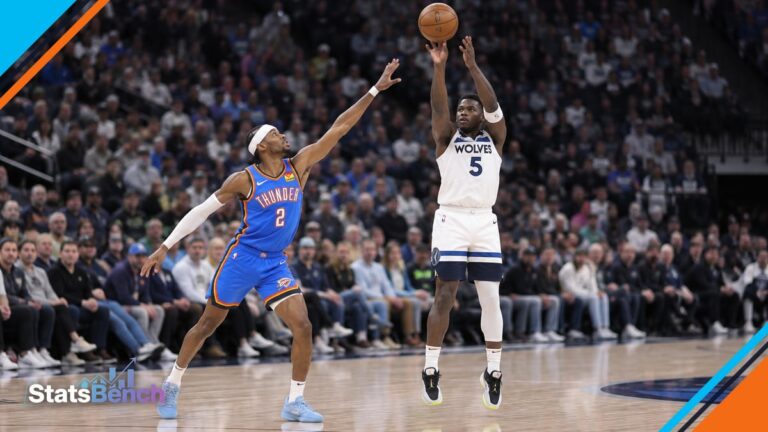
NBA consensus picks tell you what a crowd thinks. Expert picks tell you what one person thinks. Neither tells you what the price already reflects, and that gap is where a lot of bettors lose their edge before the ball goes up.
This is a straight comparison of the two: what each one actually measures, where each one breaks down, and how to use either without handing over your judgment.
What NBA Consensus Picks Actually Measure
A consensus pick is a tally, not a probability. A site collects picks from a group of contributors, counts how many landed on each side, and prints a percentage.
So when you see 78% on the over, that means 78% of the people in that sample chose the over. It says nothing about how often the over cashes. Those are two different questions, and consensus feeds only answer the first.
A consensus number does give you three useful things:
- Direction. Which side the group leans.
- Depth. Whether it’s a 55/45 split or a 90/10 rout.
- Timing. When the lean changes, usually after injury news or a big line move.
What it doesn’t give you: the price, the matchup, or a graded record. Most feeds never publish who is in the sample or how those people were chosen. A pool of contest entries and a pool of newsletter subscribers can print the same percentage and mean completely different things.
What NBA Expert Picks Are Actually Worth
An expert pick is one person’s read on a game, published under their name. The quality range is enormous. Some analysts publish a graded record with every play. Others post a dozen picks a night and let the winners get screenshotted.
The only thing that separates the two is a public, verifiable log. Our breakdown of what NBA expert picks are actually worth goes deeper, but the short version is simple: a record with the losses included is information, a highlighted win streak is marketing.
There’s also a volume problem. An analyst filing 12 plays a night is producing content, not narrowing a board. The best information usually comes from someone who posts two props and explains why the other eight didn’t make the cut.
NBA Consensus Picks vs. Expert Picks, Side by Side
Different inputs, different failure modes. Here’s the comparison in one place.
| Consensus picks | Expert picks | |
|---|---|---|
| What it measures | Share of a group on each side | One analyst’s judgment |
| Sample transparency | Usually unnamed | Varies, sometimes named and graded |
| Main failure mode | Herd piles onto the obvious side | One person’s blind spot, or content volume |
| Typical input | Picks, contest entries, polls | Film, stats, matchup work |
| Price awareness | Rarely any | Sometimes, often not |
| Best use | Spotting where the crowd and the line disagree | Learning a method you can test yourself |
Neither column gives you a number you can price. That’s the core problem with both.
The Price Already Knows What the Crowd Thinks
Here’s the trap. When a prop looks obvious, the book has usually priced it that way. A perfect-looking record is not a discovery. It’s the start of a math question.
Take a snapshot from the StatsBench NBA board in November 2026. Six rows, sorted here by record rather than by anything else:
| Prop | Record | Best price |
|---|---|---|
| Kris Dunn, rebounds + assists over 3.5 | 10/10 | -260 |
| Ryan Kalkbrenner, rebounds + assists over 3.5 | 10/10 | -270 |
| Ja’Kobe Walter, turnovers over 0.5 | 10/10 | -190 |
| Tari Eason, rebounds + assists over 5.5 | 9/10 | -220 |
| Jalen Green, turnovers over 1.5 | 9/10 | -145 |
| Donovan Clingan, steals over 0.5 | 8/10 | -106 |
Three rows are a clean 10 for 10. Two of those prices are brutal. At -260 you need to win about 72% of the time just to break even. At -270 it’s roughly 73%. Run it yourself with the implied probability calculator before you get excited about a perfect ten.
Now look at the bottom of the table. An 8/10 record at -106 breaks even around 51%. That is a very different bet from a 10/10 record at -270, even though the record looks worse.
Ten games is also ten games. A 10/10 run happens to close-to-coin-flip props more often than most people expect. Sample size and price do more work than the percentage printed next to a player’s name.
And if the vig itself is unclear, the vig and hold calculator shows you what the book is charging on either side.
A Third Column: Consensus on the Number
There’s a version of consensus that earns its keep, and it isn’t about opinions. It’s about price.
Every prop on StatsBench carries a +EV percentage, and the board can be sorted by Best EV. That isn’t a prediction. It’s a read on where the current line sits relative to the best number you can actually get, across 30+ sportsbooks, DFS apps and exchanges. A popular prop can still be a bad price. A quiet prop can be the best number on the board.
Back to that same November 2026 snapshot. Tari Eason at 5.5 rebounds plus assists was 9/10 with a best price of -220. Jalen Green at 1.5 turnovers was also 9/10, best price -145. Same record, very different cost. That difference is the entire job.
The NBA prop finder board is where you filter by market, sort by hit rate or EV, and see the best available price before you commit. Research and your own judgment, not a pick handed to you.
How to Read a Consensus Number Before You Bet It
Twenty seconds of checking beats an hour of scrolling. Work through these in order.
- Who’s in the sample? Named, graded contributors are worth more than an anonymous pool.
- Is the line the same? A pick made at 22.5 points means little if the line is now 24.5.
- What’s the record, with the sample attached? 8/10 and 80/100 are not the same claim.
- What price can you get? Compare your book against the best available number before you decide anything.
- Does the matchup agree? Pace, defensive rank and minutes all move a prop line for a reason. If they contradict the crowd, find out why.
When the Crowd Beats the Expert
Consensus has one clear advantage: speed. Late scratches, a starter ruled out 40 minutes before tip, a minutes restriction announced at shootaround. A crowd absorbs that faster than any single analyst, and the line moves with it.
That’s why public betting data is worth understanding. Tickets versus money tells you whether the crowd is loud or actually big. Those aren’t the same thing, and only one of them shows up in the number.
Official box scores at NBA.com and the historical game logs at Basketball-Reference are the fastest way to confirm what actually happened before you trust anyone’s summary of it.
When the Expert Beats the Crowd
Thin markets. A backup guard’s assist line, a third-string big’s rebound number, a player returning from a two-week absence. Crowds default to the headline name in these spots, and the pricing is often softer because fewer people are looking.
Someone who watched the last four games and checked the rotation has a real advantage there. That’s the case for doing your own work rather than outsourcing it. If you want a starting point, our guide to vetting free NBA picks covers how to audit a record before you trust it, and the piece on NBA computer picks covers what a model can and can’t tell you.
So Which Should You Use?
Use consensus as a question, not a verdict. If 80% of a group is on one side, the useful follow-up is why the price hasn’t moved to match.
Use expert picks as a hypothesis. Someone has done work you haven’t done yet. Test the reasoning against the matchup data and the price, then decide for yourself.
Then let the number settle it. Hit rate with the sample attached. Best available price across books, DFS apps and exchanges. A matchup that either supports the case or quietly kills it. That’s the part neither column in the table above gives you.
If you want to see the approach applied to a live board, the NBA player props page runs through the day’s numbers with the records and prices attached.
One last thing worth saying plainly: none of this is a guarantee. Any edge is long-run, a bad week is normal, and variance doesn’t care how good your process was. Bet within your means, 21+, and treat it as research and entertainment rather than income.
Free preview
See today’s NBA player props on StatsBench
Live lines, hit rates and the best price across 30+ books and pick’em apps. A free preview shows today’s first props; a free account shows more.
Open the NBA player props board →
Prefer email? Get the daily picks newsletter.
Frequently Asked Questions
Are NBA consensus picks reliable?
They’re reliable as a read on what a group chose, not as a prediction of what wins. A consensus percentage tells you the direction and depth of the crowd. You still have to check the price, the sample and the matchup before it means anything for your bet.
What’s the difference between consensus picks and expert picks?
Consensus picks aggregate many people’s choices into one percentage, usually without naming who is in the sample. Expert picks are one analyst’s reasoning, published under their name. Consensus is faster, expert picks are deeper, and neither one prices the prop for you.
How many games should a prop hit rate cover?
More than ten. A 10/10 record is a nice run, but it can happen to a near coin-flip prop often enough that it shouldn’t change your mind on its own. Look at a full season or a large block of games, and always pair the record with the price you’d have to pay.
Do consensus picks account for the betting line?
Almost never. Consensus feeds count which side people chose, not what number they took it at. If the line has moved since the picks were logged, the percentage you’re reading may already be out of date.
Where can I see the best price on an NBA prop?
StatsBench compares prices across 30+ sportsbooks, DFS apps and exchanges, and shows the best available number next to each prop along with its hit rate and +EV percentage. The NBA prop finder board is the place to start.
 Today's NBA picks



 Today's NFL picks


 Today's NHL picks



 Today's College Football picks


 Today's College Basketball picks



 Today's Champions League picks



 Today's MLS picks



 Today's EFL Championship picks



 Today's CS2 picks


 Today's Valorant picks


 Today's Dota 2 picks


 PHI
 ATL
 BOS
 NY
 DET
 MIA
 CLE
 ORL
 WSH
 TOR
 IND
 CHI
 CHA
 BKN
 MIL
 SA
 LAL
 MIN
 HOU
 MEM
 DEN
 POR
 DAL
 PHX
 OKC
 GS
 NO
 LAC
 UTAH
 SAC
 BUF
 DEN
 JAX
 CIN
 KC
 CLE
 PIT
 NE
 HOU
 LV
 BAL
 NYJ
 IND
 LAC
 MIA
 TEN
 SF
 DET
 NYG
 CAR
 CHI
 MIN
 GB
 SEA
 LAR
 DAL
 WSH
 TB
 ATL
 NO
 PHI
 ARI
 CAR
 OTT
 TB
 NJ
 MTL
 BOS
 FLA
 NYR
 NYI
 BUF
 PHI
 TOR
 WSH
 DET
 CBJ
 PIT
 MIN
 EDM
 VGK
 DAL
 COL
 NSH
 STL
 WPG
 UTA
 SJ
 SEA
 ANA
 CGY
 LA
 CHI
 VAN
 UGA
 UTAH
 ND
 MIA
 TEX
 ALA
 TENN
 WAKE
 TTU
 UCLA
 BYU
 IU
 IOWA
 ORE
 USC
 ARIZ
 HOU
 LOU
 OU
 FLA
 LIB
 BOIS
 MISS
 MIZ
 OSU
 UVA
 ILL
 CONN
 MSU
 KU
 SJU
 VAN
 DUKE
 LSU
 NEB
 GONZ
 MEM
 Premier League table
 ARS
 BHA
 MCI
 LIV
 BOU
 BRE
 LEE
 CHE
 EVE
 TOT
 Hull City
 AVL
 NEW
 Coventry
 FUL
 IPS
 NFO
 SUN
 MUN
 CRY
 La Liga table
 BAR
 RMA
 ATM
 BET
 RSO
 SEV
 RAC
 ATH
 ALA
 VIL
 ESY
 DEP
 OSA
 CEL
 LVT
 RAY
 VAL
 GET
 ELC
 MAL
 Serie A table
 LAZ
 ROM
 INT
 MIL
 COM
 JUV
 Frosinone
 NAP
 BOL
 GEN
 CAG
 ATA
 TOR
 MON
 LEC
 FIO
 PRM
 SAS
 UDI
 VEN
 Bundesliga table
 BVB
 FCB
 SCF
 RBL
 B04
 SVW
 SGE
 VFB
 SV Elversberg
 FCA
 TSG
 HSV
 M05
 KOE
 SC Paderborn 07
 FC Schalke 04
 FCU
 BMG
 Ligue 1 table
 PSG
 PFC
 LOSC
 LYO
 OM
 B29
 NCE
 ASM
 REN
 LOR
 LEN
 TOU
 Le Mans
 Troyes
 AUX
 STR
 ANG
 LEH
 Como
 Real Betis
 BRU
 SCP
 GAL
 BOD
 Lask Linz
 Manchester United
 FC Porto
 FEN
 AS Roma
 SHK
 Viking
 PSV
 Sabah FA
 AEK Athens FC
 FEY
 Lens
 SLA
 SLV