
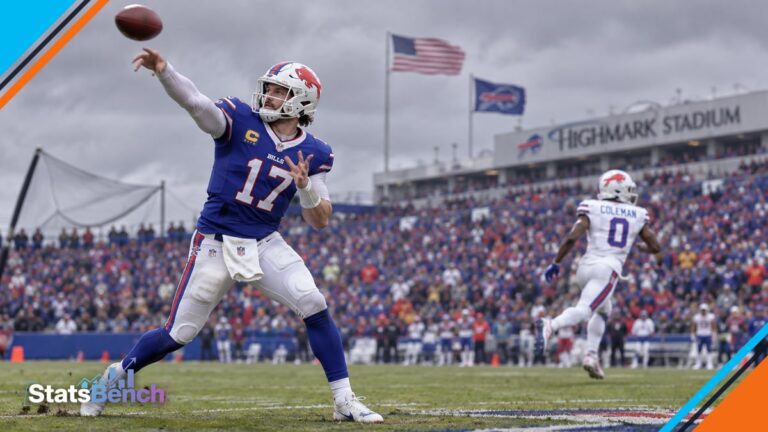
An NFL weather report is the cheapest piece of research in prop betting, and the easiest one to misuse. Wind changes how the ball flies far more than rain changes how it grips. So the number that matters most is sustained wind at kickoff, measured at the stadium, not a citywide forecast covering 30 miles.
Here is the part most bettors skip. The books read the same forecast. A 20 mph wind is already sitting inside the passing yards line. Your edge lives in the gap between the forecast and the number, plus the price you can find, not in the forecast by itself.
So this is a method, not a weather blog. What to look at, which props weather actually touches, and where the adjustment tends to lag.
What an NFL weather report actually tells you
A useful forecast gives you four things: sustained wind, gusts, wind direction, and timing. Most free forecasts give you the first one and stop, which is why bettors end up chasing a 12 mph reading that means nothing.
- Sustained vs. gusts. A 12 mph average with 28 mph gusts plays like a different game than a flat 12 mph.
- Direction. A hard crosswind is worse for kickers than a straight headwind. It also tells you which end zone is the hard one.
- Timing. A front arriving at halftime matters less than one arriving at warmups.
- Roof. Every domed stadium deletes the variable completely. Retractable roofs are their own problem, because the decision often comes about 90 minutes before kickoff.
Pull the hourly forecast for the stadium’s coordinates, not the metro area. Then check the roof status before you touch a kicking prop in Dallas, Houston, Atlanta, Indianapolis or Las Vegas. If the roof is closed, throw the forecast away.
Key takeaway: if you cannot name the wind speed, direction and gust ceiling at kickoff, you do not have weather information. You have a vibe.
Wind hurts passing props more than rain does
Rain gets the attention. Wind does the damage.
A wet ball adds drops and can nudge a coordinator toward the run game. But plenty of quarterbacks throw for 280 in light rain, because the ball still travels on the line the thrower intended. Wind is different. It bends anything with hang time: deep outs, post routes, punts, field goals. The further the ball travels, the more the air wins.
That is why the first props to move in a windy game are usually passing yards, longest reception and completion overs on a vertical passing attack. Meanwhile rushing attempts and rushing yards can tick the other way, since a team protecting a lead in bad conditions leans on the ground game.
- Directly hurt: passing yards overs, longest reception overs, deep completion props, long field goal props.
- Indirectly helped: rushing attempts, rushing yards, and unders on the passing market.
- Barely touched: tackles, solo tackles, and most defensive props tied to snap count rather than ball flight.
Note that last group. Weather reshuffles the shape of a game, and game shape drives volume. A windy, low-scoring game means more defensive snaps and more tackle chances, which is the quiet reason a linebacker’s tackle line deserves a second look in a 20 mph forecast.
The wind bands worth remembering
There is no magic number, but the market’s adjustment clusters in bands. Treat these as a working rule of thumb, not a formula anyone publishes.
| Sustained wind | What it usually means for props |
|---|---|
| Under 10 mph | Noise. Ignore the forecast and handicap the matchup. |
| 10 to 14 mph | Deep passing and long kicks get slightly less attractive. Lines barely move, so a soft number can survive here. |
| 15 to 19 mph | Real haircut on passing yards, longest reception and kicking props. Expect the market to have moved by kickoff. |
| 20 mph and up | Passing overs get expensive for a reason. Rushing volume and deep-passing unders become the natural side. |
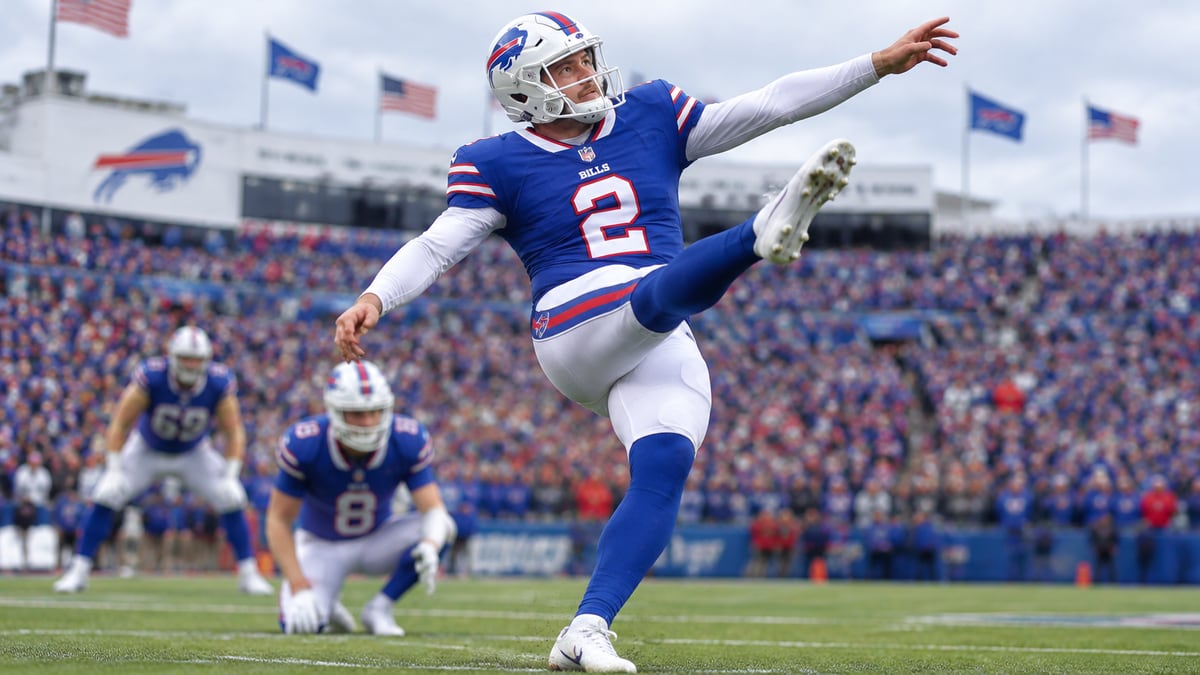
One caveat that matters more than the bands. Wind in an open stadium swirls. A forecast reads as a clean number, but the flags inside the bowl rarely agree with each other. Anything between 15 and 25 mph is a genuine coin flip on how the deep ball behaves, which is why price shopping beats prediction.
Kicking props are the purest weather bet
If you only apply weather to one market, apply it to kickers. A football is a heavy, spinning object being asked to fly 50 yards. Wind is not a subtle input there.
Take a dated example from a November 2026 slate on the StatsBench NFL board. Matt Gay, kicking points over 4.5, had hit 10 of his last 10 (100%) at a best price of -130. That record is real. It also describes a set of games that already happened, in whatever conditions they happened in. If Sunday’s forecast reads 22 mph with gusts past 30, the 10 of 10 is telling you about a different job than the one in front of him.
This is the trap with any hit rate. A record is a summary of the past, never a forecast of the conditions. Same for the receiving market: Theo Johnson’s longest reception over 7.5 showed 10 of 10 at -110, while Travis Hunter’s identical market showed 9 of 10 at -115. Two strong records, two different prices, and neither one knows about the wind yet.
A kicker’s coach also makes decisions weather forces. Fourth and 4 from the 35 in calm air is a field goal try. In a crosswind, it can become a punt. That decision changes the prop more than any model does.
Where wind shows up in NFL pick’em lines
Pick’em apps price a player against a fixed line and a payout, and those lines do not always move as fast as sportsbook prices do. That lag is the interesting part.
Say the forecast turns overnight and the book number on a receiver’s longest reception slides a couple of yards. If the pick’em line still sits where it was on Tuesday, you now have two different versions of the same player in front of you. One reflects the wind. One does not.
The everyday version of this is simpler. Pick’em formats reward picking the right side of a player’s typical range, so the question is whether the conditions push him above or below that range. A running back with a longest rush line of 5.5, like Bryce Young’s 9 of 10 record at -115 in that same November slate, is a very different bet in a game where the offense is protecting a lead in 20 mph wind than in a dome.
Practical rule: in pick’em formats, weather is your differentiator. In sportsbook props, weather is already in the price, so the differentiator becomes the price itself. Same forecast, two different jobs.
A five-minute routine before you bet a windy game
Weather research should take minutes, not hours. Here is the order that keeps it short.
- Pull the hourly forecast for the stadium from the National Weather Service, not the city. Look at the kickoff hour and the two hours after it.
- Confirm the roof. Open, closed, or undecided. If it is closed, stop here.
- Read the direction against the stadium. Which end zone is into the wind? That is where deep shots and long kicks die.
- Rank the affected props. Passing overs first, longest reception second, kicking third, then the rushing volume that picks up the slack.
- Compare the price, not the pick. Run each number through the implied probability calculator so a -165 and a -140 are the same language.
If step four does not change your read on a prop, you have not found an edge. You have found a forecast. Those are not the same thing, and the difference is where most weather bettors lose money.
Bet the gap, not the forecast
Weather is a filter, not a pick. It tells you which props to look at and which ones to leave alone. It never tells you the outcome, and the books are not sitting still waiting for you to notice the wind.
The honest version of this edge: the market prices weather broadly, but the price you receive varies by book, and the adjustment on a specific player’s specific line can lag the forecast for a day. That gap is small. It is also repeatable over a season, which is the only kind of edge that survives variance.
Pair the forecast with the rest of the picture. Confirm who is actually playing with our guide to NFL inactives, check whether the crowd is on the other side with the read on NFL public betting, and build the rest of your handicap from the NFL picks against the spread research hub. When you want live numbers instead of a method, the weekly NFL prop board is where the current slate lives.
Bet within your means, treat any edge as a long-run number rather than a Sunday promise, and remember this is 21+ entertainment and research, not financial advice.
Free preview
See today’s NFL player props on StatsBench
Live lines, hit rates and the best price across 30+ books and pick’em apps. A free preview shows today’s first props; a free account shows more.
Open the NFL player props board →
Prefer email? Get the daily picks newsletter.
Frequently Asked Questions
How much wind actually affects NFL prop bets?
Under about 10 mph sustained, wind is noise and you should ignore it. From roughly 15 mph upward the market starts cutting deep passing and kicking numbers, and past 20 mph the adjustment is real. Those bands are a handicapping rule of thumb, not a published formula.
Does rain matter as much as wind for passing props?
Usually not. Light rain adds drops and can push a play caller toward the run, but quarterbacks still throw for big yardage in it. Wind bends the ball in flight, so it hits deep passing and longest reception props harder than rain does.
Which NFL props are most weather-sensitive?
Kicking props first, then passing yards, longest reception and deep completion overs. Rushing attempts and rushing yards can tick up when a team protects a lead in bad conditions. Tackle props are mostly driven by snap count, so weather moves them less directly.
Should I use the weather report in NFL pick’em entries?
Yes, and it can matter more there than at a sportsbook. Pick’em lines do not always move as quickly as book prices, so a forecast that changes your view on a player may not yet be reflected in the line you are taking. Compare both before you decide.
Where should I get an NFL weather report?
Use the National Weather Service hourly forecast for the stadium’s coordinates and check the kickoff hour plus the two hours after. Then confirm the roof status. A citywide forecast or a dome game removes most of the value of the exercise.
 Today's NBA picks


 Today's NFL picks

 Today's NHL picks


 Today's College Football picks



 Today's College Basketball picks

 Today's EPL picks



 Today's La Liga picks



 Today's Serie A picks



 Today's Bundesliga picks



 Today's Ligue 1 picks



 Today's MLS picks



 Today's EFL Championship picks



 Today's CS2 picks


 Today's Valorant picks
 Today's Dota 2 picks



 PHI
 BOS
 DET
 ATL
 MIA
 NY
 CLE
 ORL
 TOR
 WSH
 IND
 CHA
 CHI
 BKN
 MIL
 LAL
 SA
 MEM
 HOU
 MIN
 POR
 DEN
 OKC
 PHX
 DAL
 GS
 NO
 LAC
 UTAH
 SAC
 BUF
 KC
 JAX
 CIN
 DEN
 PIT
 CLE
 NE
 HOU
 LV
 BAL
 IND
 NYJ
 LAC
 MIA
 TEN
 SF
 DET
 NYG
 CAR
 MIN
 CHI
 GB
 SEA
 LAR
 DAL
 WSH
 TB
 NO
 ATL
 ARI
 PHI
 CAR
 TB
 MTL
 OTT
 NJ
 BOS
 NYR
 FLA
 NYI
 BUF
 PHI
 WSH
 DET
 TOR
 CBJ
 PIT
 MIN
 EDM
 VGK
 DAL
 COL
 NSH
 UTA
 WPG
 STL
 ANA
 SJ
 SEA
 CGY
 LA
 CHI
 VAN
 UGA
 UTAH
 ND
 UCLA
 MIA
 IU
 ALA
 TEX
 TENN
 WAKE
 TTU
 BYU
 IOWA
 ORE
 BOIS
 OSU
 UK
 USC
 ARIZ
 HOU
 LOU
 LIB
 FLA
 MEM
 MISS
 MSU
 CONN
 UVA
 DUKE
 ILL
 KU
 SJU
 VAN
 MICH
 ARK
 GONZ
 NEB
 LSU
 ARS
 BHA
 MCI
 LIV
 CHE
 EVE
 BOU
 BRE
 LEE
 AVL
 TOT
 NEW
 Hull City
 IPS
 FUL
 NFO
 Coventry
 MUN
 SUN
 CRY
 BAR
 RMA
 ATM
 BET
 RSO
 SEV
 ATH
 VIL
 DEP
 ESY
 RAC
 CEL
 ALA
 RAY
 GET
 OSA
 LVT
 ELC
 VAL
 MAL
 LAZ
 INT
 ROM
 MIL
 COM
 Frosinone
 JUV
 BOL
 CAG
 NAP
 TOR
 ATA
 GEN
 LEC
 FIO
 PRM
 SAS
 MON
 VEN
 UDI
 FCB
 BVB
 SCF
 RBL
 B04
 SVW
 SV Elversberg
 VFB
 TSG
 SGE
 HSV
 M05
 SC Paderborn 07
 KOE
 FCA
 FCU
 FC Schalke 04
 BMG
 PSG
 LOSC
 PFC
 OM
 LYO
 NCE
 ASM
 REN
 B29
 LOR
 LEN
 TOU
 Troyes
 STR
 AUX
 Le Mans
 ANG
 LEH
 Champions League table
 Como
 BRU
 SCP
 Real Betis
 Lask Linz
 Manchester United
 GAL
 FEN
 AS Roma
 SHK
 Viking
 PSV
 BOD
 FC Porto
 AEK Athens FC
 Sabah FA
 FEY
 Lens
 SLA
 SLV