
NFL tight end props are the least crowded market on the board most weeks. Receivers and quarterbacks soak up the betting volume, so their lines get sharpened quickly. Tight end lines draw fewer bets, which means fewer people are correcting them when the price drifts.
That’s an opening, not a guarantee. A quiet market just means a stale number can survive a little longer. You still have to be right more often than the price implies, and that plays out over a long sample rather than one Sunday afternoon. Here’s how to research tight end receiving yards, receptions, and longest reception lines in 2026.
Why tight end lines lag behind the news
Books build tight end markets from recent production and last season’s role. The trouble is that a tight end’s role changes faster than his stat line does. One week he’s inline blocking on 25 snaps. The next, the offense is in 11 personnel and he’s running routes on most dropbacks.
Three things drive that swing:
- Personnel and injuries. When a team loses its WR2, the tight end usually absorbs a chunk of those targets.
- Game script. A team down 10 points in the second half throws more, and the receiving tight end eats.
- Coverage matchup. Some defenses live in nickel and put a safety on the tight end. Others leave a linebacker alone in space.
Snap count hides most of this. A tight end can play 70% of snaps and run 12 routes. Route participation is the number that actually predicts catches, and it’s the first thing to pull.
NFL tight end props: the checklist before you bet
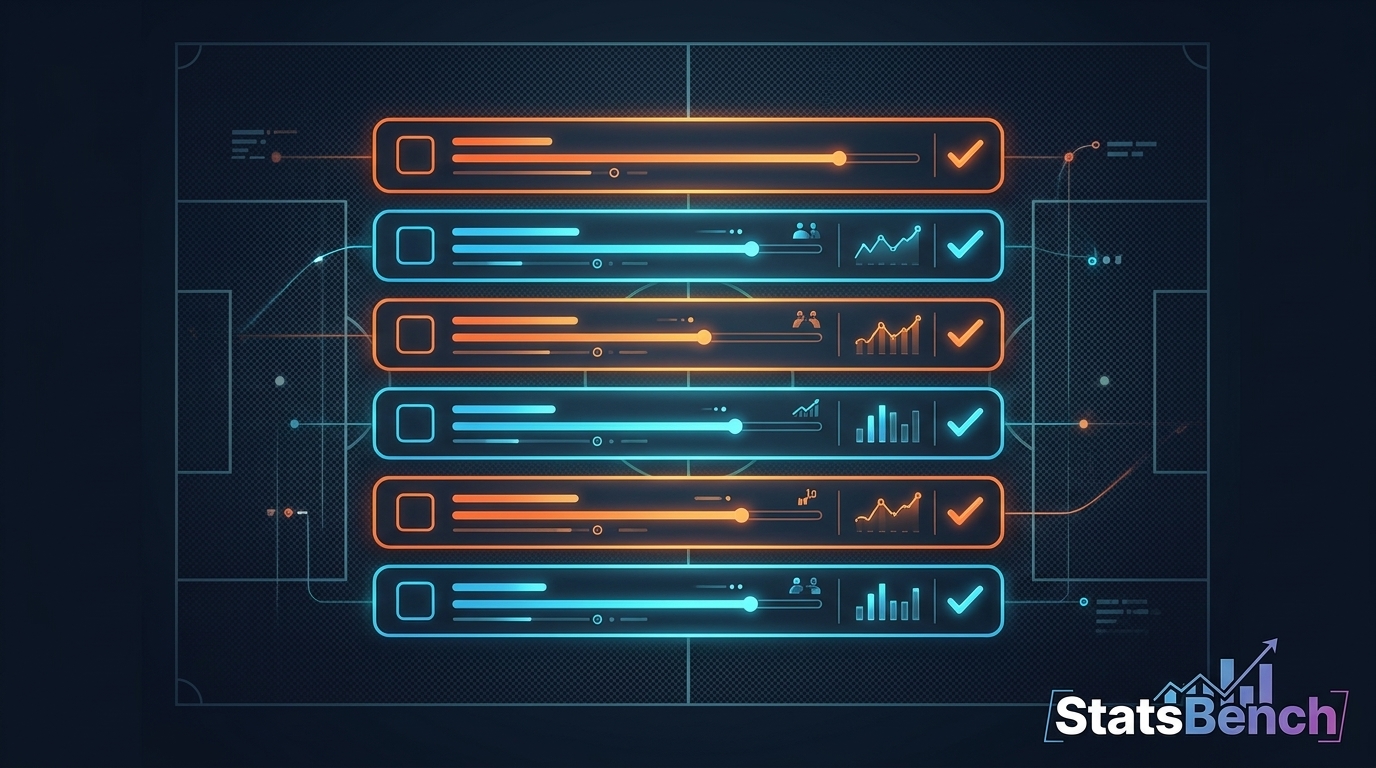
Run every tight end line through the same six questions. A line that survives all six deserves a closer look. A line that fails three of them is a pass, no matter how good the last box score looked.
- Routes run, not snaps played. Check the last three games. A blocking-first tight end with 40 snaps and 10 routes is not a receiving threat.
- Targets per route run. Above 20% and he’s a real part of the passing game. Under 10% and you’re betting on a leak-out, not a weapon.
- Depth of target. A 28.5 receiving yards line means very different things for a chain-mover at 6 yards a catch and a seam threat at 12.
- Red zone usage. Goal line targets swing longest reception markets hard. Two red zone looks a game changes the math.
- Defensive rank vs the position. Some teams bleed catches to tight ends every season. StatsBench’s Defensive Rankings vs Position exists for exactly this filter.
- Spread and total. A 5-point underdog throws more. A 44-point total means fewer drives than a 52-point game.
Notice what isn’t on the list: receiving touchdowns. Tight end touchdown props carry the thinnest samples in the sport. One target at the 4-yard line decides the bet, so randomness swamps the research.
Is a 60% hit rate good? Not over 10 games
A tight end who cleared 28.5 receiving yards in 6 of his last 10 games shows a 60% hit rate. That sounds strong. On its own, it’s close to meaningless.
Ten games can’t separate a coin flip from a genuinely different player. Run the same 10 games again and the same guy might go 4 for 10. Hit rate is a filter that narrows a list, not a conclusion. Sample size is what turns a streak into a signal, and 10 games is not a sample.
Price is the other half. Convert the number you’re offered into an implied probability. A -112 line has to win 52.8% of the time to break even. Move to -120 and the bar rises to 54.5%. Same player, same stat, different math.
Do that with the implied probability calculator instead of in your head at 1 a.m. It also shows the gap between the two sides, which is the vig you’re handing over.
A dated snapshot: what the board looked like on September 30, 2026

Here’s a real slice of StatsBench’s prop snapshot from September 30, 2026, taken from the Pittsburgh-Cleveland game. Four markets, one game, and a useful contrast.
| Player | Market | Line | Hit rate (L10) | Edge | Best price |
|---|---|---|---|---|---|
| Pat Freiermuth (PIT) | Receiving yards | 28.5 | 60% (6/10) | +4.8% | -112 |
| Pat Freiermuth (PIT) | Longest reception | 14.5 | 60% (6/10) | +3.6% | -110 |
| Aaron Rodgers (PIT) | Passing yards | 210.5 | 60% (6/10) | +9.4% | -110 |
| DK Metcalf (PIT) | Receptions | 3.5 | 60% (6/10) | +0.5% | -116 |
Two things stand out. First, four different markets all show the same 60% hit rate, which is a good reminder that a 6-for-10 record is ordinary. Second, the edges are nothing alike. The tight end’s receiving yards line sat 4.8% above the fair price. The receiver’s receptions line sat at 0.5%, which is noise.
That’s the whole idea. Same game, same sample size, and only one of those numbers is worth your attention.
It also shows how these markets connect. Freiermuth’s receiving yards depend on Rodgers’s passing volume. If you like the tight end, you’re taking a view on the quarterback, which matters when you stack legs in a same-game parlay.
Edge is a read, not a payout. The column compares the offered price to a fair price built from sharp books. It says the number is good. It says nothing about whether the next game goes your way.
You can sort the same view on the NFL props board by SB Score, hit rate, consistency, and matchup.
How to price a tight end prop line yourself
You don’t need a model to avoid bad numbers. You need three steps.
- Convert the offered price into an implied probability.
- Strip the vig to find the market’s fair price (de-vig calculator).
- Compare your own estimate to that fair number. If your estimate is higher by more than your margin of error, you have a bet.
Step two is where most people stop. Both sides of a prop add up to more than 100%, and the extra is the book’s cut. On a market that adds to 105%, roughly five cents belongs to the house. Removing the vig tells you the number you actually have to beat.
Thin markets can carry more margin than a primetime spread, because there’s less competition pushing the price around. That’s the trade with tight end lines: fewer eyes on the number, more room for a stale price to sit.
How much should you stake on a tight end prop?
Finding a good price is half the job. The other half is not torching your bankroll on a bad Sunday. Even a genuinely +EV bet loses often, because the edge is small and the swings are large.
Flat staking works. If you want to size by edge, fractional Kelly is the standard. StatsBench’s Kelly presets run at 0.15, 0.30, and 0.50 of full Kelly with a 5% bankroll cap, and you can test your own numbers with the Kelly calculator.
What matters more than the formula is honesty about the math. Good bets lose all the time, and a 6-of-10 run tells you almost nothing about the next 10 games.
Pick a unit you could lose 20 times in a row without changing how you bet. Keep it fun, stay 21+, and call 1-800-GAMBLER if it stops being either.
Running the checklist across a full slate
Six questions times 12 tight ends is 72 lookups. Nobody does that by hand on a Sunday morning.
Pull the board, filter to receiving yards, receptions, and longest reception, then sort by consistency and defensive matchup instead of chasing the longest odds. A tight end at -115 with a steady role usually beats a +180 flier with one big game on his record.
Save the filter once you build it. The same shape of edge shows up most weeks, and the NFL prop finder keeps the work to a few minutes instead of an hour in a spreadsheet.
Live board
See today’s NFL player props on StatsBench
Live lines, last-10 hit rates and the best price across about 60 books.
Open the NFL player props board →
Prefer email? Get the daily picks newsletter.
Frequently Asked Questions
What are NFL tight end props?
They’re prop bets on a tight end’s individual stats, most often receiving yards, receptions, and longest reception. The book posts a line and you bet over or under. Touchdown props exist too, but the samples behind them are thin.
Are tight end props easier to beat than receiver props?
They get less betting volume, so prices can sit stale longer than a star receiver’s line. That cuts both ways: the margin is often wider and there’s less public data to lean on. Treat it as a softer market, not a free one.
How many games do I need before a hit rate means something?
More than 10. A 6-of-10 record is common for players with very different true rates, so a short sample tells you what happened, not what will. Use a full season where you can, and look at recent role changes separately.
What counts as a good edge on a prop?
There’s no magic number. A positive edge just means the offered price beats the fair price. Bigger gaps are rarer and often come with a reason, so check the matchup before assuming the market is wrong.
Where can I compare tight end prop prices?
The StatsBench NFL props board sorts props by SB Score, hit rate, consistency, and matchup, and shows the best available price across roughly 60 sportsbooks. Line shopping is free expected value even before you place a bet.