
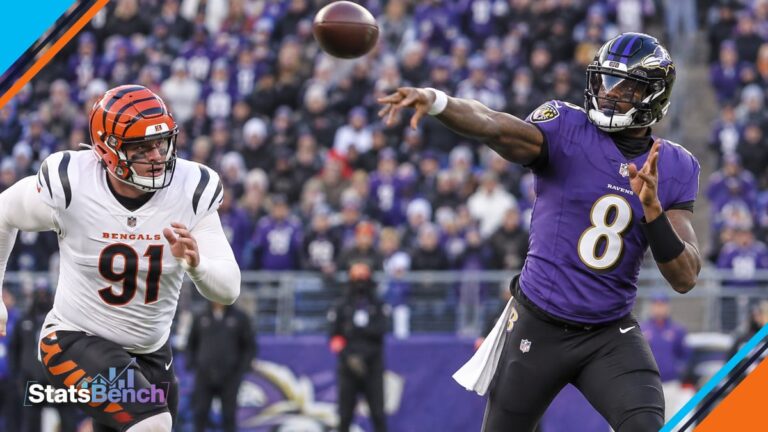
An NFL pick’em means one of two things, and they barely resemble each other. In a pool, you pick game winners each week and whoever gets the most right collects the pot. On a pick’em app, you stack two to six player props on one slip and the payout table decides what you win. Same phrase, two different games.
Confusing them is the fastest way to lose money. A pool is a social contest with a small entry and no real vig. An app slip is a parlay with a fixed multiplier, and the multiplier is where the house margin hides. Let’s separate them.
What is an NFL pick’em, exactly?
It’s a contest format, not a bet type. You’re either competing against a field of other people or against a payout table the app sets in advance. That single difference changes everything about how you should play.
- Pick’em pools. A group picks winners every week, either straight up or against the spread. Most correct picks takes the pot, or the pool splits it among the top finishers.
- Pick’em apps. You build a slip from player stat lines. More legs means a bigger multiplier and a lower chance of cashing.
Pools run all season and reward accumulation. Apps reset every slate and reward a single good read. If you search the term in August, you probably want a pool. If you search it in November, you probably want the app.
| Pick’em pool | Pick’em app | |
|---|---|---|
| What you pick | Game winners | Player stat lines |
| Time frame | Season long, weekly cards | One slate, one slip |
| How you win | Most correct picks vs. the field | Every leg correct, or a Flex allowance |
| Payout | Pot split among winners | Fixed multiplier set by the app |
| Margin | Usually none, or a small entry fee | Priced into the multiplier |
How a weekly pick’em pool works
A standard pool card is every game on the slate, usually 14 to 16 in a normal week. You make one selection per game and submit before the first kickoff. Thursday night games are the usual trap, since the card locks early and half the league hasn’t played yet.
Scoring comes in three common shapes:
- Straight count. One point per correct pick. Ties split or roll to the next week.
- Confidence points. You rank each pick from 1 to 16. Your most confident game is worth the most points.
- Survivor. One team per week, no repeats, and a single loss eliminates you. Technically a cousin of the format rather than a true pick’em, but most pools run both.
Pool edges come from information timing, not from stat models. A pool entry is free or cheap, so your job is to be right more often than a coin flip on the games where the market hasn’t fully settled. Injured quarterbacks and short weeks create the gaps.
How pick’em apps work
PrizePicks and Underdog are the two names most people mean. You choose two to six player props, then pick over or under on each. The app sets the multiplier from a published table, and the table shrinks as you add legs.
There are two slip styles. In a Power Play, every leg has to hit. In a Flex Play, you can miss one or sometimes two legs and still get a reduced payout. Flex costs you upside in exchange for a cushion. We broke the tradeoff down in Flex Play vs Power Play if you want the math.
One thing to notice: the app sets the stat line, not you. If a receiver’s line sits at 3.5 receptions and he’s hit 4 or more in eight of his last ten, the line is already telling you something. Your job is to check whether the price pays enough for the risk, not to guess whether he’s good.
The DraftKings version adds its own twist on entry sizes. How DraftKings Pick 6 Works covers the rules and payout tiers for that format specifically.
Straight up or against the spread?
Pick’em pools come in both flavors, and the difference is enormous.
Straight up means you pick the winner with no point spread. The Chiefs beating the Raiders is a correct pick no matter the margin, so heavy favorites are close to automatic. That flattens the field and turns most weeks into a tiebreaker.
Against the spread means the underdog gets points. A 10-point underdog covers if it loses by 9 or fewer, or wins outright. Now every game is roughly a coin flip, which is the point. Pools that use the spread are harder and more interesting.
If you’re new to spread betting, the hub guide on NFL picks against the spread walks through how lines are built and why they move. Start there before joining a spread pool, because straight-up habits carry over badly.
Either way, no pool entry guarantees anything. You’re in a field of people making the same picks with the same public information.
Where the math bites on app slips
The single most useful habit with a pick’em app is converting the multiplier into implied probability and comparing it to what the legs are actually worth.
A slip of three props priced near -110 each has a combined implied probability around 30% once you multiply the individual numbers. If the app’s payout table offers a return that implies 25%, you’re being shortchanged on the risk. The reverse is a better price, and it’s worth taking.
Two free tools do that work. The parlay calculator converts your combined odds into a payout, and the implied probability calculator turns a price into a percentage. Run the app’s advertised multiplier through both before you commit. It takes 30 seconds and it’s the difference between a fair slip and a donation.
Correlation matters too. Stacking a quarterback’s passing yards with his top receiver’s receptions looks like two legs but behaves like one and a half. When the game script goes wrong, both legs fail together. Same-game correlation is why apps price those combos tighter.
What a real NFL slate looks like in the data
Here’s a dated snapshot from the StatsBench board in November 2026. It shows the range of records you’ll see on a single week’s card, and the prices that come with them.
| Player | Market | Hit rate | Best price |
|---|---|---|---|
| Theo Johnson | Longest reception over 7.5 | 100% (10/10) | -110 |
| Calvin Ridley | Longest reception over 9.5 | 100% (10/10) | +125 |
| Keenan Allen | Receptions over 2.5 | 90% (9/10) | -110 |
| Caleb Williams | Passing yards over 240.5 | 80% (8/10) | -110 |
| Kyle Monangai | Longest reception over 9.5 | 80% (8/10) | +230 |
| Alvin Kamara | Longest rush over 4.5 | 80% (8/10) | -108 |
Look at the top two rows. Theo Johnson and Calvin Ridley both carry a 10/10 record over the last ten games, and one pays -110 while the other pays +125. Identical records, very different prices. The record tells you how often the thing happened. The price tells you whether it’s worth backing again.
That gap is the whole argument for checking both numbers before you fill a slip. An 8/10 record at +230 is a different proposition than an 8/10 record at -110, and neither one is a promise about Sunday.
You can pull the same view for any slate in the NFL prop finder, which needs a free account. It lists the hit rate, the record, and the best available price across books, DFS apps and exchanges side by side.
What to check before you build a slip
A hit rate built on stale information is worse than no hit rate. Three checks come before everything else.
Is the player actually playing?
Snap counts and inactive lists change the math more than any matchup. A receiver who logs 30% of snaps one week and 80% the next has a hit rate that describes two different players. Our guide to NFL inactives explains how to read the pregame report and what time it lands.
What is the weather doing?
Wind above 15 mph suppresses passing volume and kicking accuracy in ways that don’t show up in a ten-game log. Cold alone matters less than people think, but wind and precipitation are real. NFL weather report covers which markets move first.
Where is the public money?
Ticket counts and money percentages tell different stories, and a lopsided ticket count often explains a line move you’d otherwise misread. NFL public betting breaks down how to read both columns without overreacting.
Chip in a look at the week’s NFL player props card for a sense of what the board looks like right now, then go build your own reads.
Which format should you actually play?
If you want a low-cost season-long contest with friends, a pool is hard to beat. There’s no margin, the field is soft, and the research burden is light. If you want to test a read on a specific player and get paid the same day, an app slip is the tool, provided you check the multiplier against the true odds every time.
Both formats share one rule: they’re entertainment with a cost. Bet within your means, expect long losing stretches even when you’re right about the process, and remember it’s 21+ where legal. If it stops being fun, 1-800-GAMBLER is there.
Free preview
See today’s NFL player props on StatsBench
Live lines, hit rates and the best price across 30+ books and pick’em apps. A free preview shows today’s first props; a free account shows more.
Open the NFL player props board →
Prefer email? Get the daily picks newsletter.
Frequently Asked Questions
Is an NFL pick’em the same thing as a parlay?
Functionally, yes. A pick’em app slip combines multiple legs into one payout, which is how a parlay works. The difference is that the app sets a fixed multiplier from a published table instead of using the sportsbook’s combined odds, so the multiplier is the thing to check against the true price.
Do pick’em pools use the point spread?
Some do and some don’t. Straight-up pools just ask for the winner, which makes heavy favorites close to automatic. Spread pools give the underdog points, which pushes every game toward a coin flip and makes the contest much harder to win.
What happens if a leg pushes on a pick’em app?
Rules vary by app and by format. Most commonly the pushed leg is removed and the slip is re-priced at the next lowest tier, or the leg is treated as a void and the remaining legs stand. Read the app’s specific rule before you submit, because Power Play and Flex Play often handle it differently.
How many legs should you put on a pick’em slip?
Fewer legs means a better chance of cashing and a smaller multiplier. Two or three well-researched legs is a reasonable starting point while you learn how the payout table compares to the true combined odds. Adding legs multiplies risk faster than it multiplies payout.
Are pick’em apps legal?
Legality depends on where you are, and the rules differ between states and countries. Some jurisdictions treat pick’em apps as fantasy contests and others regulate them as sports wagering. Check your local rules and the app’s own eligibility terms before signing up, and remember the age requirement is 21+ where legal.
 Today's NBA picks


 Today's NFL picks
 Today's NHL picks


 Today's College Basketball picks



 Today's EPL picks



 Today's La Liga picks


 Today's Serie A picks



 Today's Bundesliga picks



 Today's Ligue 1 picks



 Today's MLS picks



 Today's EFL Championship picks



 Today's CS2 picks


 Today's Valorant picks



 Today's Dota 2 picks



 PHI
 BOS
 DET
 ATL
 NY
 MIA
 CLE
 ORL
 TOR
 WSH
 IND
 CHA
 CHI
 BKN
 MIL
 SA
 LAL
 MIN
 HOU
 MEM
 DEN
 POR
 OKC
 DAL
 PHX
 GS
 NO
 LAC
 UTAH
 SAC
 BUF
 KC
 JAX
 CIN
 DEN
 PIT
 CLE
 NE
 HOU
 LV
 BAL
 IND
 NYJ
 LAC
 MIA
 TEN
 SF
 DET
 NYG
 CAR
 MIN
 CHI
 GB
 SEA
 LAR
 DAL
 WSH
 TB
 NO
 ATL
 ARI
 PHI
 CAR
 OTT
 TB
 MTL
 BOS
 NJ
 FLA
 NYR
 NYI
 PHI
 BUF
 WSH
 DET
 TOR
 CBJ
 PIT
 MIN
 EDM
 VGK
 DAL
 COL
 NSH
 UTA
 STL
 WPG
 SJ
 ANA
 CGY
 SEA
 LA
 CHI
 VAN
 College Football rankings
 UGA
 UTAH
 ND
 UCLA
 MIA
 IU
 ALA
 TEX
 TENN
 WAKE
 TTU
 BYU
 IOWA
 ORE
 BOIS
 OSU
 UK
 USC
 ARIZ
 HOU
 LOU
 LIB
 FLA
 MEM
 MISS
 MSU
 CONN
 UVA
 DUKE
 ILL
 KU
 SJU
 VAN
 MICH
 ARK
 GONZ
 NEB
 LSU
 ARS
 BHA
 MCI
 BOU
 LIV
 LEE
 EVE
 CHE
 TOT
 BRE
 AVL
 NEW
 Coventry
 Hull City
 FUL
 IPS
 NFO
 SUN
 MUN
 CRY
 BAR
 RMA
 ATM
 BET
 RSO
 SEV
 ATH
 ALA
 VIL
 ESY
 DEP
 RAC
 CEL
 RAY
 GET
 OSA
 VAL
 LVT
 ELC
 MAL
 LAZ
 ROM
 INT
 COM
 MIL
 Frosinone
 NAP
 JUV
 BOL
 CAG
 ATA
 TOR
 GEN
 LEC
 FIO
 PRM
 SAS
 MON
 VEN
 UDI
 BVB
 FCB
 SCF
 RBL
 B04
 SVW
 SGE
 VFB
 SV Elversberg
 TSG
 HSV
 M05
 KOE
 SC Paderborn 07
 FCA
 FC Schalke 04
 FCU
 BMG
 PSG
 LOSC
 PFC
 LYO
 OM
 B29
 NCE
 ASM
 REN
 LOR
 LEN
 TOU
 Troyes
 AUX
 STR
 Le Mans
 ANG
 LEH
 Champions League table
 Como
 BRU
 SCP
 Real Betis
 Lask Linz
 Manchester United
 GAL
 FEN
 AS Roma
 SHK
 Viking
 PSV
 BOD
 FC Porto
 AEK Athens FC
 Sabah FA
 FEY
 Lens
 SLA
 SLV