
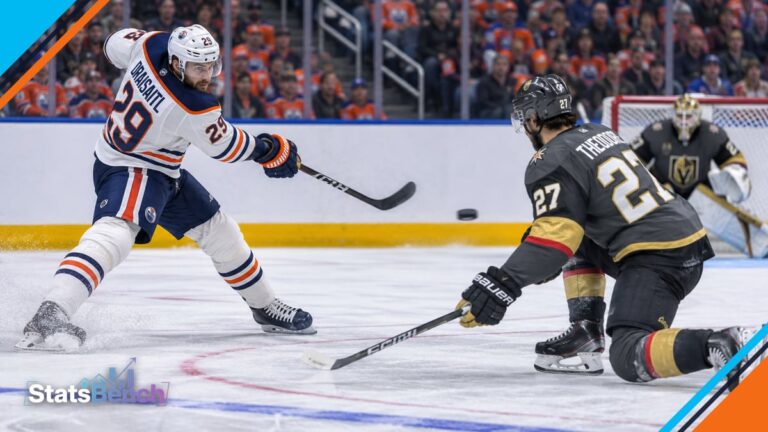
Arbitrage betting means backing every side of the same market at prices that add up to less than 100% implied probability. Do that and the return is the same whichever side wins. The math is easy. Finding two books that disagree by enough is the work.
Most explanations stop at the formula and call it a day. That skips the parts that decide whether you actually make anything: where stale prices come from, which markets can produce a real gap, and what your account looks like after you hit one.
What is arbitrage betting, in plain numbers?
An arbitrage is two or more bets on one event that return the same amount regardless of the result. You need opposite sides, at two different books, whose implied probabilities sum to under 100%.
Implied probability is just the price turned into a percentage. A -135 price implies 57.4%. A +145 price implies 40.8%. Add those two and you get 98.2%. That 1.8% shortfall is the arb.

| Book | Side | Price | Implied % | Stake | Returns |
|---|---|---|---|---|---|
| Book A | Favorite -1.5 | +145 | 40.8% | $41.53 | $101.75 |
| Book B | Underdog +1.5 | -135 | 57.4% | $58.47 | $101.78 |
| Combined | 98.2% | $100.00 | $101.75 | ||
Size the stakes so both outcomes pay the same, which means splitting your money by implied probability rather than by feel. Either result here returns about $101.75 on $100 risked. Profit: roughly $1.75.
That is what a live arb looks like. One to three percent. If a calculator shows you 8% or 12%, one of three things is true. The price is stale and about to move, the two bets are not on the same market, or you misread a settlement rule.
Neither side has to be the favorite. A +145 price and a -135 price are just two percentages to add together. If the vocabulary is new, our explainer on what underdog means in betting covers the pricing side of that in plain English.
Why does a gap exist at all?
Books price the same event differently because they carry different liabilities, react to news at different speeds, and copy different numbers. A gap is not a gift. It is one book being slower, or heavier on one side, than another.
- News lag. A lineup card, a scratched goalie or a weather report lands, and one book reposts the number while another sits on yesterday’s.
- Liability. A book holding a pile of money on one side will shade the other side to pull money back.
- Different inputs. Some books build their own number. Others follow a feed.
- Market shape. The more outcomes a market has, the more chances two books fall out of line.
Two-way markets are the cleanest place to look, because there is no tie price to account for and no third outcome to misprice.
Can you arbitrage a run line?
Yes, and it is one of the cleaner spots to try. A run line is a fixed 1.5-run handicap in baseball with only two sides and no push, so any real disagreement between books on the same game becomes a straight two-way arb.
The run line is priced off the moneyline, which is the useful part. A book slow to move its moneyline after a lineup change will be slow on the run line too. When one shop shows -1.5 at +145 and another shows +1.5 at -135, one of those numbers is older than the other.
Two checks before you fire. Confirm both books settle on the final score including extra innings. And confirm both are the standard 1.5 line, because a -1.5 run line and a +2.5 run line are different bets. Pairing those is a middle, not an arb.
Our MLB props preview shows the same market across our odds feed, which is a fast way to see how far the best available price sits from the price at a single book.
Can you arbitrage a puck line?
Yes, with one extra rule to check. The puck line is hockey’s fixed 1.5-goal handicap and it is also a two-way market, so the math is identical to the run line. The settlement rules are not.
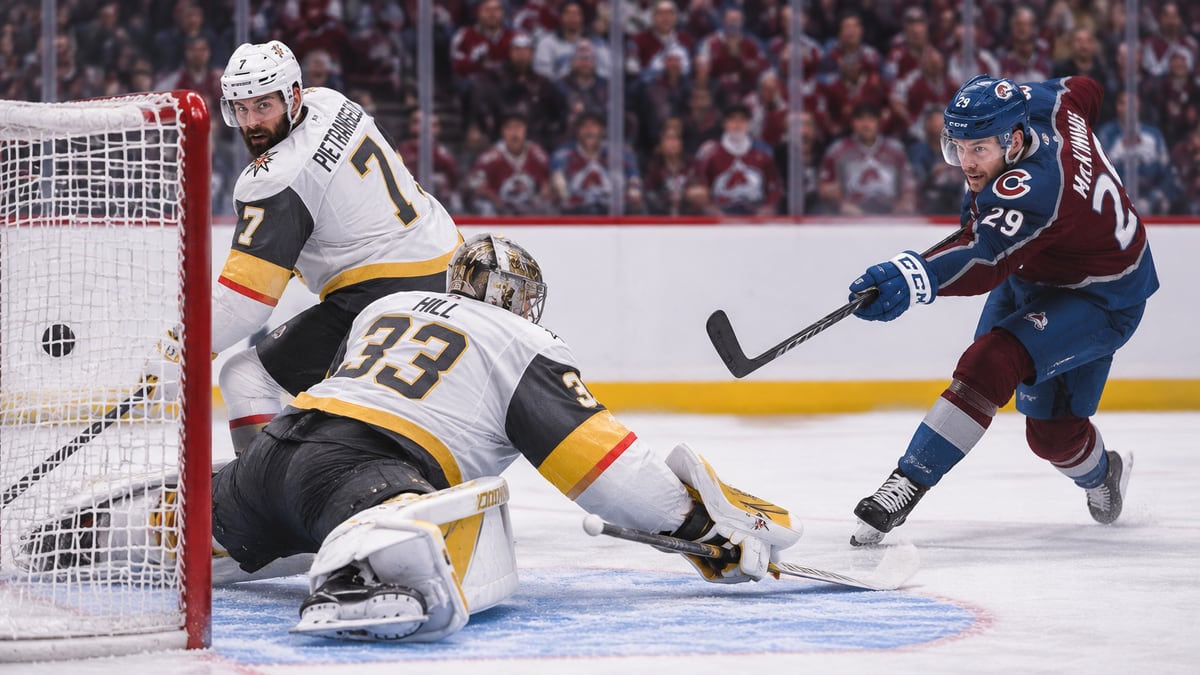
Puck lines settle on the final score, overtime and shootout included. Some books post a moneyline that is regulation only, a three-way market with a tie price attached. Pair a puck line with a regulation moneyline and you are not arbitraging. You have a position with a third outcome hanging over it.
Goalie news is the other moving part. Confirming a starter can push a puck line and its price in one direction at every book, but not at the same speed. That is where a gap opens, and it is also where a gap closes while you are still typing your stake. The NHL prop board is a reasonable place to watch how one number is priced across books, DFS apps and exchanges before you commit.
Do arbs get your account limited?
Often, yes. Three risks do most of the damage, and none of them show up in the calculator.
- Limits. Books watch for arb patterns. Hit the same shop with the same style of bet and the maximum stake drops, then the account goes.
- Voids. Palpable error and obvious mistake clauses let a book cancel a bet after you have already placed the other leg. Now you are exposed.
- Timing. Leg one fills, leg two moves. You are left holding a single bet you never wanted.
Then add rule differences (push conditions, extra innings, dead heat) and payment risk at a book you have never withdrawn from. An arb that returns 1.5% is not worth a real chance of a void. Bet within your means, and only with money you can leave sitting in two accounts.
Is a middle the same as an arb?
No, but it is close enough to be worth understanding. A middle is two bets on the same game at different handicaps, where one specific margin makes both tickets win.
Example: -1.5 at +145 and +2.5 at -110. If the favorite wins by exactly two, both cash. Every other outcome returns one win and one loss, which usually costs you a small amount.
So a middle is not a two-book arb. You are paying a premium for a shot at both sides landing. Run lines and puck lines make middles easy to build because the alternate handicaps are already on the board, and middles are far easier to get down than a true arb across two books.
How do you check an arb in under a minute?
Run the same five steps every time. Skipping step four is how most people turn an arb into a position.
- Convert both prices to implied probability with the implied probability calculator.
- Add the two numbers. Over 100% means the book has the edge. Under 100% means there is a gap.
- Split the stakes by implied probability, not by gut, using the payout calculator.
- Confirm both bets are the same market, the same line and the same settlement rule.
- Sanity-check the price against the fair number with the de-vig calculator and the hold calculator.
If the gap is under about a percent, most of it disappears into time and account risk. Skip it. And if you are converting between American, decimal and fractional prices, the odds converter saves the arithmetic.
The reason arbs are rare is the vig. Both sides carry a margin, so the sum sits above 100% at almost every book. Our walkthrough on removing the vig shows what that margin costs you on a normal bet.
What can you do instead, every night?
Full arbs are scarce and they attract limits. Price shopping is the same skill aimed at a bet you can actually keep placing: one side, at the best number available, every time.
A real example from the StatsBench board. On a late-November 2026 NHL slate, Tomas Hertl’s points over 0.5 was listed at -125 as the best available price, with a 9/10 hit rate on the sample. Take that same prop at -140 somewhere else and the difference in payout is roughly the size of a small arb, without needing a second account to disagree with the first.
StatsBench shows the best price across 30+ sportsbooks, DFS apps and exchanges on every prop, plus a +EV% on each one and the option to sort by Best EV. That is the mechanic an arb hunter is chasing, pointed at a single bet rather than two. If you want the concept behind the price itself, start with what a moneyline bet is and then the line shopping method. Arbitrage is the arithmetic. Shopping is the habit that pays.
Sports betting is 21+ where legal and varies by jurisdiction. No edge is certain, and every number above is a long-run idea rather than a result you should count on tonight.
Free calculator
Run the numbers with the StatsBench implied probability calculator
Instant, free, no account.
Open the implied probability calculator →
Prefer email? Get the daily picks newsletter.
Frequently Asked Questions
Is arbitrage betting actually profitable?
Yes, but by a thin margin. Most real arbs return one to three percent on the money staked, and they depend on both legs filling at the prices you found. The profit is real, the volume is small, and execution risk eats a chunk of it.
What is the minimum implied probability sum for an arb?
Anything under 100% is technically an arb. In practice, a combined implied probability above roughly 99% leaves so little on the table that time, account limits and one voided leg outweigh the gain.
Why do run lines and puck lines produce arbs more often than moneylines?
Because both are two-way markets with a fixed 1.5 handicap and no push. There is no tie price and no third outcome, so you only need two books to disagree on two prices instead of aligning three.
Can you arbitrage a puck line with a regulation moneyline?
No. A puck line settles on the final score including overtime and shootouts, while a regulation moneyline settles at 60 minutes. A draw at the end of regulation means one leg wins and the other loses, so that pairing is a position, not an arb.
Does arbitrage betting get accounts closed?
It can. Books watch for the pattern of betting both sides and cutting stakes sharply, and obvious mistake clauses allow bets to be voided after the other leg is placed. That is why many experienced bettors treat price shopping as the sustainable version of the same edge.
 Today's NBA picks



 Today's NFL picks


 Today's NHL picks



 Today's College Football picks


 Today's College Basketball picks


 Today's Champions League picks



 Today's MLS picks



 Today's EFL Championship picks



 Today's CS2 picks


 Today's Valorant picks


 Today's Dota 2 picks



 PHI
 ATL
 BOS
 NY
 DET
 MIA
 CLE
 ORL
 WSH
 TOR
 IND
 CHI
 CHA
 BKN
 MIL
 SA
 LAL
 MIN
 HOU
 MEM
 DEN
 POR
 DAL
 PHX
 OKC
 GS
 NO
 LAC
 UTAH
 SAC
 BUF
 DEN
 JAX
 CIN
 KC
 CLE
 PIT
 NE
 HOU
 LV
 BAL
 NYJ
 IND
 LAC
 MIA
 TEN
 SF
 DET
 NYG
 CAR
 CHI
 MIN
 GB
 SEA
 LAR
 DAL
 WSH
 TB
 ATL
 NO
 PHI
 ARI
 CAR
 OTT
 TB
 NJ
 MTL
 BOS
 FLA
 NYR
 NYI
 BUF
 PHI
 TOR
 WSH
 DET
 CBJ
 PIT
 MIN
 EDM
 VGK
 DAL
 COL
 NSH
 STL
 WPG
 UTA
 SJ
 SEA
 ANA
 CGY
 LA
 CHI
 VAN
 UGA
 UTAH
 ND
 MIA
 TEX
 ALA
 TENN
 WAKE
 TTU
 UCLA
 BYU
 IU
 IOWA
 ORE
 USC
 ARIZ
 HOU
 LOU
 OU
 FLA
 LIB
 BOIS
 MISS
 MIZ
 OSU
 UVA
 ILL
 CONN
 MSU
 KU
 SJU
 VAN
 DUKE
 LSU
 NEB
 GONZ
 MEM
 Premier League table
 ARS
 BHA
 MCI
 LIV
 BOU
 BRE
 LEE
 CHE
 EVE
 TOT
 Hull City
 AVL
 NEW
 Coventry
 FUL
 IPS
 NFO
 SUN
 MUN
 CRY
 La Liga table
 BAR
 RMA
 ATM
 BET
 RSO
 SEV
 RAC
 ATH
 ALA
 VIL
 ESY
 DEP
 OSA
 CEL
 LVT
 RAY
 VAL
 GET
 ELC
 MAL
 Serie A table
 LAZ
 ROM
 INT
 MIL
 COM
 JUV
 Frosinone
 NAP
 BOL
 GEN
 CAG
 ATA
 TOR
 MON
 LEC
 FIO
 PRM
 SAS
 UDI
 VEN
 Bundesliga table
 BVB
 FCB
 SCF
 RBL
 B04
 SVW
 SGE
 VFB
 SV Elversberg
 FCA
 TSG
 HSV
 M05
 KOE
 SC Paderborn 07
 FC Schalke 04
 FCU
 BMG
 Ligue 1 table
 PSG
 PFC
 LOSC
 LYO
 OM
 B29
 NCE
 ASM
 REN
 LOR
 LEN
 TOU
 Le Mans
 Troyes
 AUX
 STR
 ANG
 LEH
 Como
 BRU
 SCP
 Real Betis
 Lask Linz
 Manchester United
 GAL
 FEN
 AS Roma
 SHK
 Viking
 PSV
 BOD
 FC Porto
 AEK Athens FC
 Sabah FA
 FEY
 Lens
 SLA
 SLV