
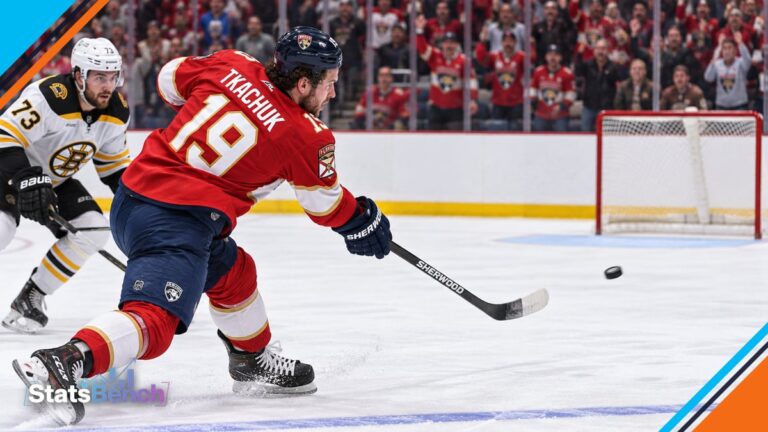
A puck line is hockey’s point spread, and it does one job: it moves the favorite 1.5 goals. The favorite has to win by two or more. The underdog only has to lose by one, or win outright. That’s the whole market. It is 1.5 or nothing, every game, at every book.
That fixed number changes the bet completely compared with a moneyline, and it changes how you should price it. Plain definition first, then the parts that decide whether a spread is worth your money.
What is a puck line in hockey betting?
It’s a handicap of 1.5 goals applied to the final score. Take the favorite at -1.5 and you need a two-goal win. A 3-2 result loses. A 4-2 result cashes.
Take the underdog at +1.5 and a one-goal loss pays. So does an outright win. Only a two-goal loss or worse beats you. The +1.5 side is the hockey version of an underdog bet, and that word gets used loosely across sports, so it’s worth pinning down what underdog meaning actually covers.
- Favorite -1.5: must win by two goals or more.
- Underdog +1.5: cashes on a one-goal loss and on any win.
- No push: no hockey game ends 1.5 goals apart, so one side always wins.
Does the goal line include overtime and shootouts?
Yes, both. The catch is how the result gets recorded. A game decided in overtime or a shootout officially finishes with a one-goal margin, so it always beats the -1.5 favorite and always cashes the +1.5 underdog.
Some books also post a 60-minute version, priced as a three-way market with a tie at the end of regulation as its own result. That’s a different bet with a different price. Read the market name before you click.
Why the number never moves off 1.5
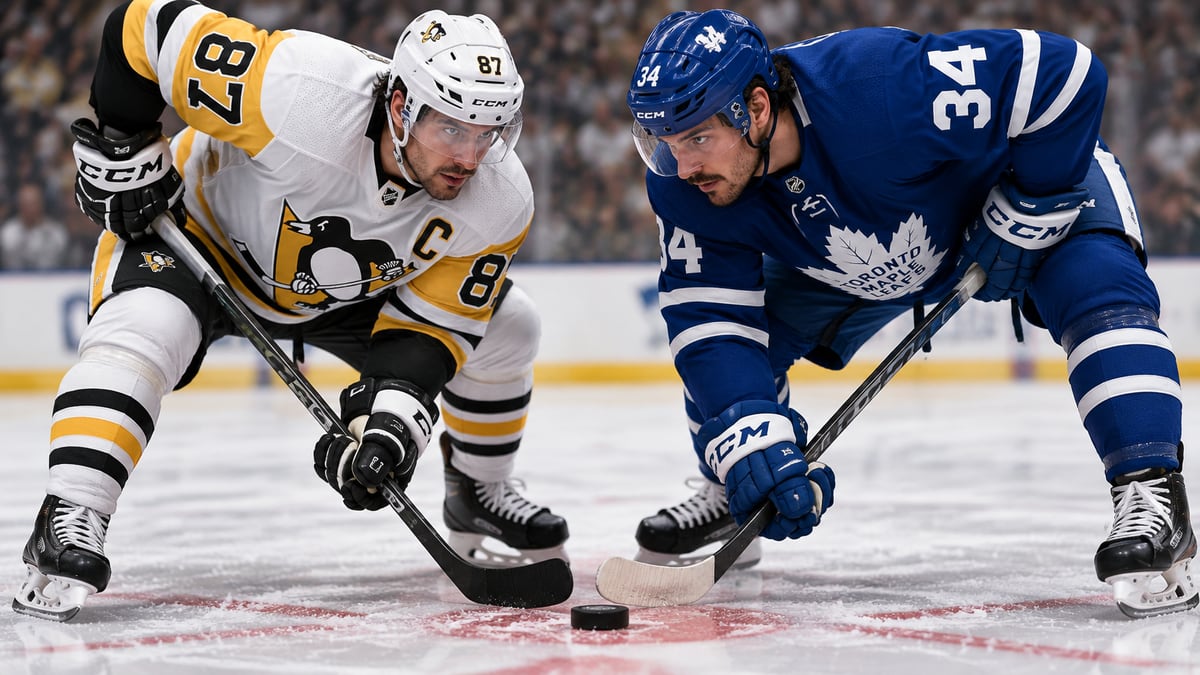
Books set a spread where the money splits, and in hockey that lands on 1.5. Games are low-scoring, and a large share of them finish one goal apart. Shift the handicap to 2.5 and the favorite side dies. Shift it to 0.5 and the underdog side dies.
So the number stays put and the price moves instead. That’s the habit to build here: on this market you shop the odds, not the line.
How the price does the work
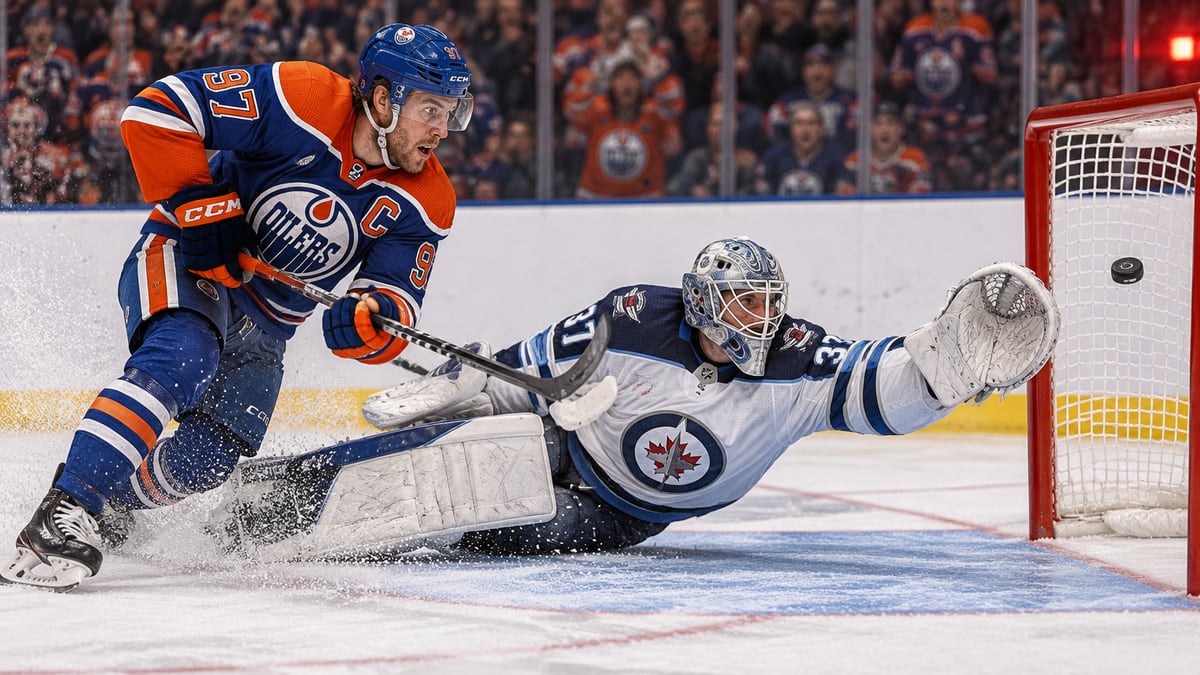
Both sides carry a price, and the price holds the actual information. Here’s an illustration with round numbers, not a quote from any sportsbook.
| Side | Price | Implied probability |
|---|---|---|
| Favorite -1.5 | +180 | 35.7% |
| Underdog +1.5 | -220 | 68.8% |
Add those two implied probabilities and you get 104.5%. Everything above 100 is the book’s margin, the vig you have to clear before a bet is worth making.
The implied probability calculator converts any price in a second. The vig calculator shows what the hold costs on a two-sided market, and the de-vig calculator strips it out so you can see the book’s honest read on each side. Do that for a handful of NHL games and the pattern is obvious: books hang a near-even price on both sides, then shade it as money arrives.
Puck line vs moneyline: which one should you bet?
The moneyline asks who wins. This spread asks by how much. On a big favorite the moneyline might sit at -250 while the -1.5 version pays +150. You’re trading certainty for a payout.
That trade is only good when two-goal wins are underpriced. If a team wins 4-1 twice a month and grinds out 2-1 the rest of the time, the extra goal is a tax on every ugly win. Before laying -1.5, check how the team actually wins. We break the win-probability market down in moneyline meaning.
One working rule: the heavier the moneyline favorite, the worse the -1.5 usually is. The better spots are mid-priced favorites with a real scoring edge, not the -300 teams that win 2-1 and beat your ticket.
The empty net decides more of these than people admit
Picture 2-1 with 90 seconds left. The trailing team pulls the goalie and the spread is suddenly live. A clean clear and an empty-netter makes it 3-1 and cashes the favorite. A scramble and a late save keeps it 2-1 and cashes the underdog.
That’s why the last minute carries more weight here than on a moneyline ticket. It’s not a reason to avoid the market. It is a reason to know you’re still exposed until the horn.
How it compares to a run line
Baseball’s run line is the same construction: a fixed 1.5 handicap. Same number, different sport, very different math. Baseball teams score more often, so a two-run win is more common, which is why baseball’s +1.5 side is usually priced much shorter. Don’t carry hockey intuition into a baseball market, or the reverse.
Fixed handicaps also produce price gaps between books. Those gaps are the cleanest edge available in either market, and they’re thinner than the threads suggest. The arbitrage guide has the math and the catch.
What an NHL slate actually looks like
Here’s a snapshot from a late November 2026 slate, pulled from StatsBench. These are player props, not team spreads, but they show the same pricing tension you’re trying to solve on a hockey spread.
- Wyatt Johnston (DAL @ STL), points over 0.5: 9/10, best price -145, which implies roughly 59%.
- Cutter Gauthier (ANA vs LAK), goals over 0.5: 8/10, best price -105.
- Tage Thompson (BUF vs PIT), goals over 0.5: 6/10, best price +102.
- Roope Hintz (DAL @ STL), assists over 0.5: 6/10, best price +145, roughly 41% implied.
Read the two DAL @ STL rows together. Johnston’s points over is the safer outcome and it costs -145. Hintz’s assists over hits far less often and pays +145. Same game, same roster, opposite ends of the price scale. StatsBench ranks these rows by strength, so it’s a selection rather than a full market sweep.
The lesson transfers straight to the goal line. A 9/10 record at -145 and a 6/10 record at +145 can both be bad bets if the price is wrong for the rate. The rate tells you how often. The price tells you whether it’s worth paying for. That’s the entire skill in this market, and it’s the same skill on a team handicap.
Where bettors get the 1.5 wrong
Most of the damage comes from three habits.
- Backing -1.5 because you like the team. Liking a team is a moneyline thesis, not a spread thesis.
- Ignoring the empty net, then calling it bad luck. The late goal is baked into the price.
- Taking the first number you see. On a market where the handicap never moves, price is the only lever, so line shopping does real work here.
None of this makes any single bet a certainty. It’s a long-run game, and one bounce in the final minute can turn a good decision into a loss. The goal is to be right on price over hundreds of tickets, not to be perfect on one.
How to research a hockey spread before you bet
Start with the obvious. Who’s in net, who played last night, and how each team has been winning. Then price it. Work out the implied probability of both sides before you pick one, and compare the number across books instead of assuming they’re all the same.
The NHL prop board is where the player-level research lives: hit rates with their records, game logs, and the best price across 30+ sportsbooks, DFS apps and exchanges. Team spreads and player props are separate markets, but they run on the same games and the same scoreboard, and studying who is scoring tells you plenty about whether a team is likely to win by two.
For today’s numbers, the NHL player props page tracks the current slate. Team-by-team results and standings are at NHL.com, and the general concept of spread betting is covered on Wikipedia.
Last thing. Spread betting is entertainment with real variance attached. Bet within your means, at legal sportsbooks in your jurisdiction, 21+ where that applies. If it stops being fun, 1-800-GAMBLER is there.
Free preview
See today’s NHL player props on StatsBench
Live lines, hit rates and the best price across 30+ books and pick’em apps. A free preview shows today’s first props; a free account shows more.
Open the NHL player props board →
Prefer email? Get the daily picks newsletter.
Frequently Asked Questions
What does -1.5 mean on a puck line?
It means the favorite must win by two goals or more for the bet to cash. A one-goal win, including a win in overtime or a shootout, loses the -1.5 ticket. The underdog side is +1.5, which wins on a one-goal loss or an outright win.
Why is the puck line always 1.5 goals?
Because that’s the handicap where money splits close to evenly in a low-scoring sport. Moving it to 2.5 would make the favorite side nearly unplayable, and moving it to 0.5 would kill the underdog side. Books keep the number fixed and adjust the price instead.
Does the puck line include overtime?
Yes, but a game decided in overtime or a shootout counts as a one-goal result. So the -1.5 favorite still loses and the +1.5 underdog still cashes. Some books post a separate 60-minute market where a regulation tie is its own result, which is a different bet.
Is a puck line the same as a run line?
The structure is identical, a fixed 1.5 handicap, but the sports behave differently. Baseball games produce more multi-run margins, so the +1.5 side is typically priced much shorter there. Treat the two markets as separate pricing problems.
 Today's NBA picks


 Today's NFL picks

 Today's NHL picks



 Today's College Football picks



 Today's College Basketball picks



 Today's EPL picks



 Today's La Liga picks



 Today's Serie A picks



 Today's Bundesliga picks



 Today's Ligue 1 picks



 Today's MLS picks



 Today's EFL Championship picks



 Today's CS2 picks



 Today's Valorant picks

 Today's Dota 2 picks


 PHI
 BOS
 NY
 ATL
 DET
 MIA
 CLE
 ORL
 WSH
 TOR
 CHI
 IND
 CHA
 BKN
 MIL
 LAL
 SA
 MIN
 HOU
 MEM
 POR
 DEN
 DAL
 GS
 PHX
 OKC
 NO
 LAC
 UTAH
 SAC
 BUF
 DEN
 JAX
 CIN
 KC
 CLE
 PIT
 NE
 HOU
 LV
 BAL
 NYJ
 IND
 LAC
 MIA
 TEN
 SF
 CHI
 NYG
 CAR
 DET
 MIN
 LAR
 SEA
 GB
 DAL
 WSH
 TB
 ATL
 NO
 PHI
 ARI
 CAR
 OTT
 NJ
 TB
 MTL
 BOS
 FLA
 NYI
 NYR
 BUF
 PHI
 WSH
 DET
 TOR
 CBJ
 PIT
 MIN
 EDM
 VGK
 DAL
 COL
 NSH
 WPG
 STL
 UTA
 ANA
 CGY
 SJ
 SEA
 CHI
 LA
 VAN
 UGA
 UTAH
 ND
 MIA
 TEX
 ALA
 TENN
 WAKE
 TTU
 UCLA
 BYU
 IU
 IOWA
 ORE
 USC
 ARIZ
 HOU
 LOU
 OU
 FLA
 LIB
 BOIS
 MISS
 MIZ
 OSU
 UVA
 ILL
 CONN
 MSU
 KU
 SJU
 VAN
 DUKE
 LSU
 NEB
 GONZ
 MEM
 ARS
 BHA
 MCI
 LIV
 BOU
 BRE
 LEE
 CHE
 EVE
 TOT
 Hull City
 AVL
 NEW
 Coventry
 FUL
 IPS
 NFO
 SUN
 MUN
 CRY
 BAR
 RMA
 ATM
 BET
 RSO
 SEV
 RAC
 ATH
 ALA
 VIL
 ESY
 DEP
 OSA
 CEL
 LVT
 RAY
 VAL
 GET
 ELC
 MAL
 LAZ
 ROM
 INT
 MIL
 COM
 JUV
 Frosinone
 NAP
 BOL
 GEN
 CAG
 ATA
 TOR
 MON
 LEC
 FIO
 PRM
 SAS
 UDI
 VEN
 BVB
 FCB
 SCF
 RBL
 B04
 SVW
 SGE
 VFB
 SV Elversberg
 FCA
 TSG
 HSV
 M05
 KOE
 SC Paderborn 07
 FC Schalke 04
 FCU
 BMG
 PSG
 PFC
 LOSC
 LYO
 OM
 B29
 NCE
 ASM
 REN
 LOR
 LEN
 TOU
 Le Mans
 Troyes
 AUX
 STR
 ANG
 LEH